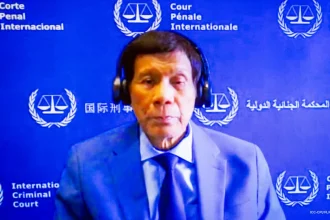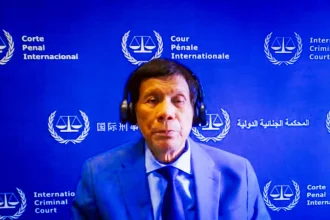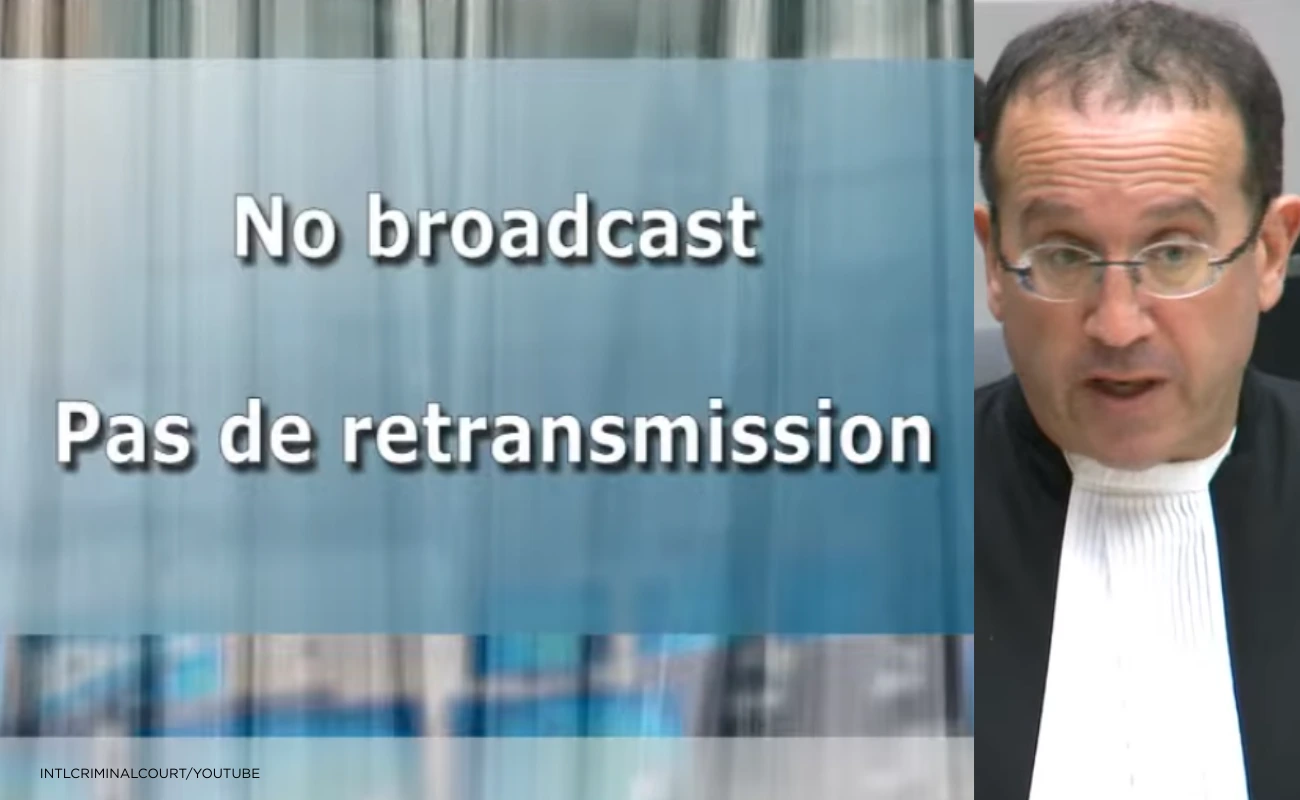

Metro Manila, Philippines – Filipinos tuned in to the International Criminal Court (ICC) pre-trial hearing on former President Rodrigo Duterte’s crimes against humanity case may have observed a number of instances of silence and long “no broadcast” moments on Thursday, Feb. 26.
British-Israeli lawyer Nicholas Kaufman, Duterte’s lead counsel, presented the rebuttal to the prosecution’s evidence and arguments in a bid to convince the ICC Pre-Trial Chamber I not to confirm Duterte’s charges linked to the war on drugs.
Those instances were not accidental as the chamber explained it had to censor some parts of the arguments.
While it’s a live broadcast, the streaming of the court session has a 30-minute delay for security reasons.
In starting the third session of Thursday’s hearing, Presiding Judge Iulia Motoc said the prosecution applied for the redactions as these “would be a problem and could lead to hearings being held in closed session.” The defense opposed the request.
The hidden excerpts: identifying information.
“The defense disclosed information on several occasions that allowed for the identification of victims and witnesses…that must not be disclosed so as to ensure protection of witnesses and victims,” said Motoc in French and translated to English during the broadcast.
Motoc said the identifying information included the positions held and nicknames of victims and witnesses, noting that they were not general details to the events within the case.
“This was the appropriate recourse to implement the chamber’s duty to protect the safety and well-being, including psychological well-being, the dignity, and privacy of victims and witnesses, in accordance with Article 68 of the Rome Statute, without having to hold the hearing in private or closed session,” the judge said.
“Thus, the chamber has decided to maintain the redactions that were applied earlier, and reminds the defense not to disclose information that may not be necessary and information that could identify witnesses and victims, in accordance with Article 8 of the Code of Conduct for Counsel,” she said.
Motoc reminded all parties to carefully word their submissions in open court so that they avoid disclosing confidential information. With this, she said they could keep away from conducting closed sessions to ensure transparency in the proceedings.
The ICC Pre-Trial Chamber I authorized over 500 victims to participate in the pre-trial proceedings for Duterte’s case.
The confirmation of charges hearing will continue on its last day on Friday, Feb. 26.
The defense will finish its submission on the merits of the case. Then the prosecution, common legal representative of the victims, and defense teams will deliver their closing statements.
Another session will be held for the annual hearing of Duterte’s detention review on Friday.
The decision whether to confirm or not the charges against Duterte will be released within 60 days after the hearing.