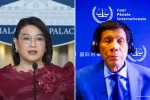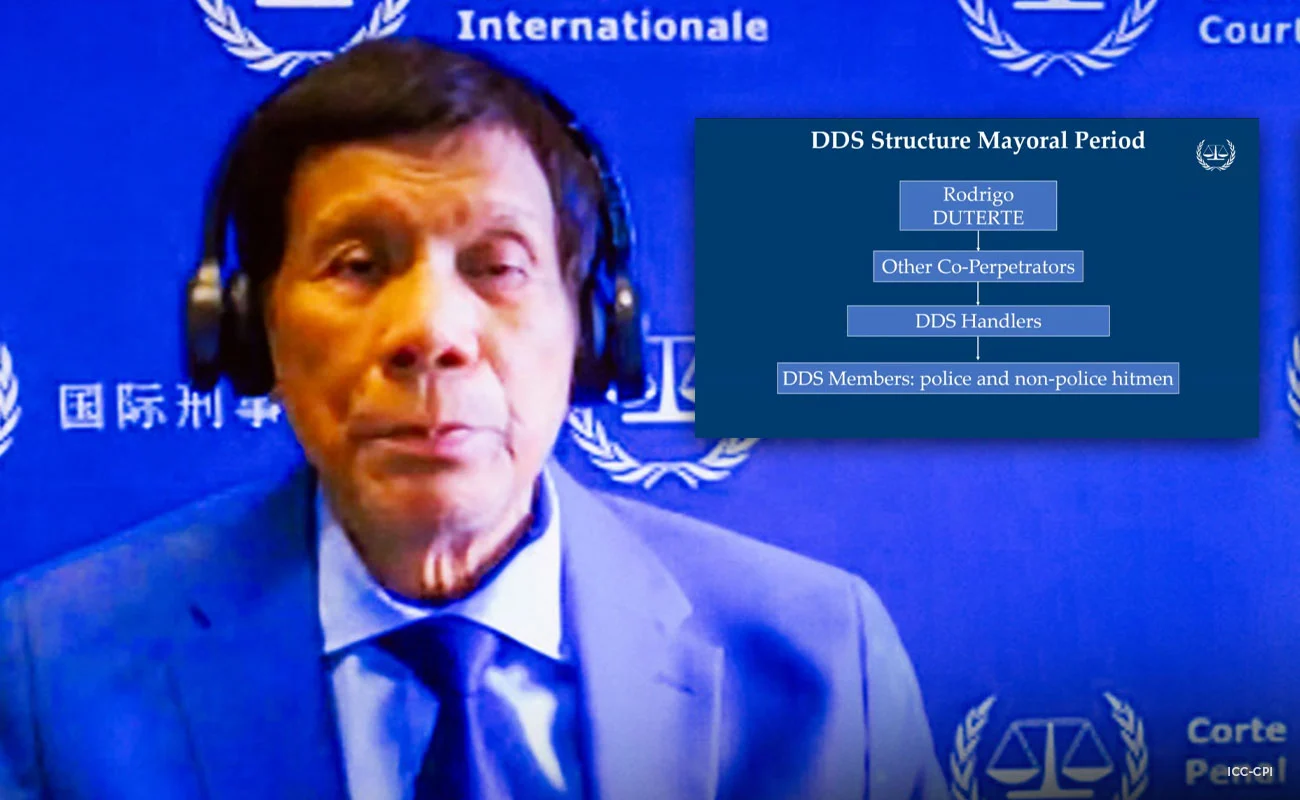


Metro Manila, Philippines – Prosecutors told the International Criminal Court (ICC) that former President Rodrigo Duterte created death squads in Davao City for extrajudicial killings during arguments for the crimes against humanity to go into a full trial.
On Monday, Feb. 23, the prosecution told the ICC Pre-Trial Chamber I that Duterte was at the very top of the Davao Death Squad (DDS), a group of police and other hired killers, that he provided arms and funds, and he authorized the killings of targets in a crackdown on crime and drugs.
“That is four times, three of them under oath, that he admitted having a death squad in Davao, including saying he is the death squad,” ICC senior trial lawyer Julian Nicholls said during the submission of merits.
“That’s not hyperbole, that’s not bluster, that’s him telling the truth, and he feels safe and that he can bank on his continued impunity,” Nicholl said.
RELATED: Lawyer defends Duterte hyperbole in ICC
He also cited witness statements that Duterte gave the “clearance” for killing operations of the DDS, because “without Duterte’s approval, you will be charged.”
The first count of murder covered 19 victims, including three children, killed by the DDS in or around Davao City during Duterte’s mayoral period.
The prosecution will continue to provide the submission on merits for the two more counts of murder and attempted murder before the pre-trial chamber throughout this week.
The pre-trial judges will only determine at the confirmation of charges hearing whether there is sufficient evidence in the case to go to trial.
Davao model to nationwide-level
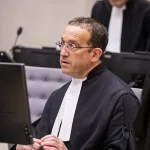
ICC Deputy Prosecutor Mame Mandiaye Niang clarified the Davao model was expanded nationwide when Duterte became president in 2016, known as the war on drugs.
Niang cited an insider who said that the “police killed because of the directive of the president.”
“Some direct perpetrators complied because of their blind loyalty to Mr. Duterte. Some did it out of fear, and others were encouraged to comply by promises of money and rewards,” he said.
He said the killings turned into a competition for promotion, with some reaching quotas.
“Others felt there was no other choice to comply, with one insider explaining it was simply not possible not to obey Mr. Duterte’s command,” he said.
Prosecutors also named some of Duterte’s co-perpetrators, including Senators Ronald “Bato” dela Rosa and Christopher Lawrence “Bong” Go, who were allegedly given national posts to implement the policy.
Niang said the evidence they have submitted requires confirmation as the charges were serious.
“While this court cannot reunite victims with their loved ones, it can help reveal the truth about what happened to them and bring a sense of justice to the victims,” Niang said in his opening statement.
“Mr. Duterte must be held into account, and this case should be confirmed for trial,” he said.
‘Last boat for drug war victims’
Lawyers representing the drug war victims also appealed to the pre-trial judges for a full trial, as the families’ victims hold on to the proceedings as their “last boat.”
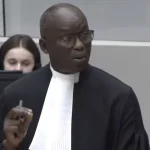
Joel Butuyan told the judges that there is no other recourse for them, citing the opinion of Ombudsman Jesus Crispin “Boying” Remulla that the war on drugs will be difficult to investigate in the country.
“If this chamber prevents this boat from sailing by not confirming the charges, the victims will forever be moored in an island where the nights are filled with screams and cries of their massacred loved ones,” Butuyan said.
He also warned that if charges were not confirmed, Duterte might return to the Philippines as a “conquering hero” who “vanquished the ICC.”
But if evidence and testimonies can be presented in a full trial, Butuyan said this will shed light on Duterte’s crimes and help “rekindle the embers of humanity” in the hearts of his supporters.
The Pre-Trial Chamber I approved over 500 victims to participate in the pre-trial proceedings.
Around 6,000 people were killed under the war on drugs, according to government figures, but human rights groups claim higher figures.