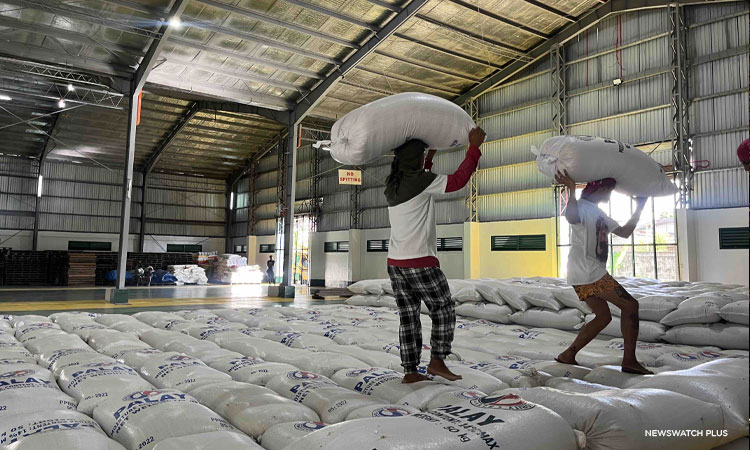


Metro Manila, Philippines – The Department of Agriculture (DA) has ordered the mandatory registration of warehouses, cold storage facilities, and other agricultural logistics hubs to tighten its oversight on the food supply chain.
In a news release on Saturday, Feb. 14, the DA said it released the “Guidelines for Registry System for Agri Storage” to give teeth to Section 6 of the “Anti-Agricultural Sabotage Act.”
“We cannot stop smuggling, protect public health or safeguard our farmers if we do not know where the stocks are,” Agriculture Secretary Francisco Tiu Laurel Jr. said.
“Registration gives [the] government clear visibility over the supply chain so we can move quickly against hoarding, illegal imports and abusive practices that undermine Filipino producers and harm consumers,” he said.
Under Memorandum Circular 3 dated Feb. 2, the DA said all facilities storing agricultural and fishery products, whether owned, leased or operated by third parties, are required to register through the agency’s Online Registration System.
“The unified digital registry is designed to strengthen traceability, improve food safety oversight and generate reliable data to detect unusual stock accumulation that often precedes price manipulation and artificial shortages,” it said.
The DA said among those businesses include rice warehouses, onion cold storage, meat freezers, grain silos, refrigerated container vans, and agricultural storage tanks handling both locally-sourced and imported products.
They have to maintain complete, accurate and auditable records for at least five years.
The DA said facility operators must disclose storage capacity, commodities handled and inventory levels, maintain monthly operational records, and submit quarterly electronic reports through the relevant trade regulatory agencies.
“Failure or refusal to produce required documents or records upon lawful demand is considered a violation of the [Anti-Agricultural Sabotage Act],” the agency warned. “Inability to present updated operational reports already submitted to regulators constitutes prima facie evidence of noncompliance, lowering the evidentiary threshold for enforcement actions.”
Digital concealment or manipulation of records and similar crimes will fall under the “Cybercrime Prevention Act.”
“Subject to due process, licenses, registrations and accreditations may be suspended, revoked or cancelled by the appropriate trade regulatory agencies, with preventive suspension allowed in cases involving imminent public danger,” the DA said.
Micro scale operators, including sari sari stores, wet market vendors, home-based family enterprises, itinerant peddlers, and certified barangay micro businesses with assets below P3 million, are exempted, according to the agency.
Enacted in 2019, the Rice Tariffication Law stripped the National Food Authority of its regulatory functions, from import licensing to warehouse inspection, and limited it to purchasing stocks as a buffer during calamities.
Last year, Tiu Laurel said the RTL, in its present form, stands to “kill” the rice sector, as he continuously pushed for the law’s amendments.