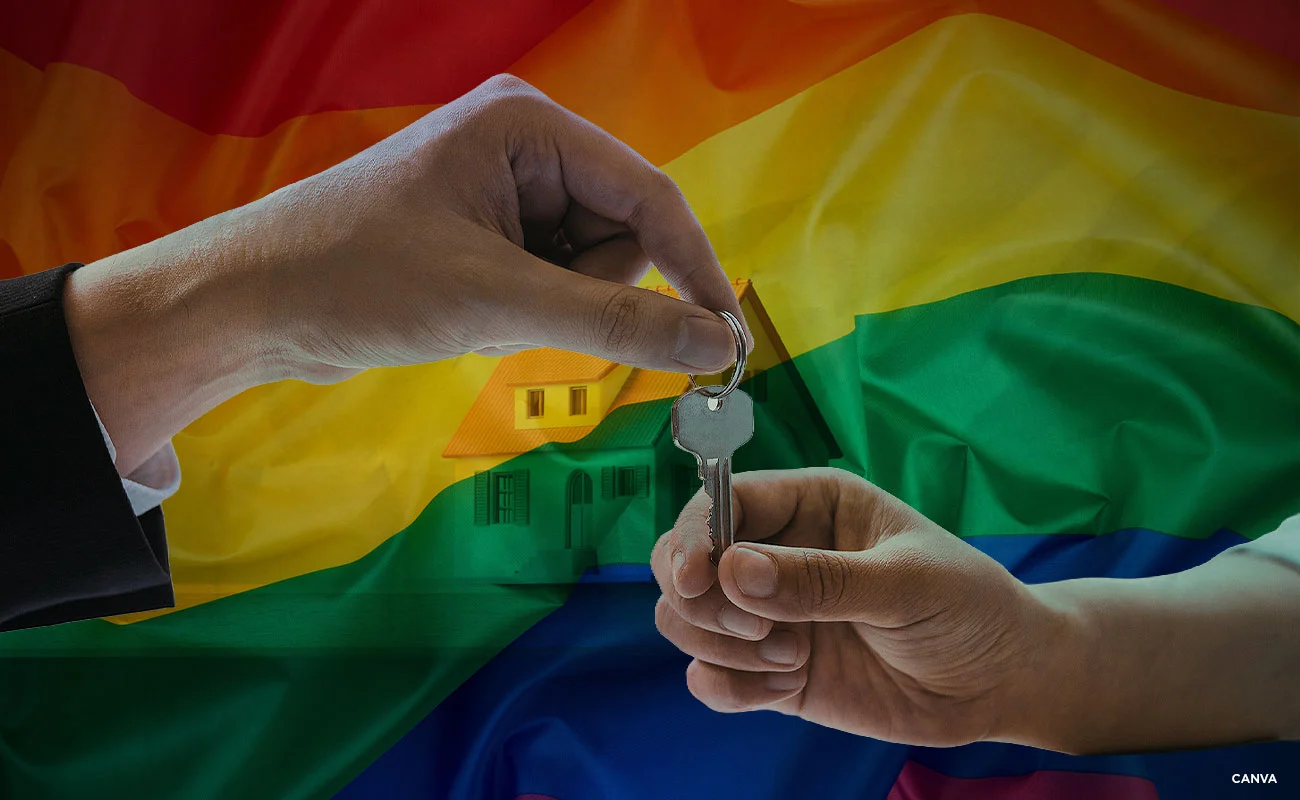


Metro Manila, Philippines – The Supreme Court has ruled that property co-ownership of living-in same-sex couples may be recognized under the Family Code.
The SC noted that the partners must provide proof of actual contribution in the acquired property in line with Article 148 of the code, which governs the property relations of couples living together but cannot legally marry, granting co-ownership based on actual contributions.
Its preceding article applies to property relations of unmarried couples who may legally marry.
The Philippines, a predominant Roman Catholic nation, outlaws same-sex unions as the Family Code defines marriage as a union between a man and a woman.
“Considering that petitioner and respondent have the same sex when
they cohabited, they are not capacitated to marry each other, and thus, Article
148 governs their property relations,” read the ruling penned by Associate Justice Jhosep Lopez.
The court decision was publicized on Tuesday, Feb. 10. The high court’s second division promulgated it more than a year had passed, or on Feb. 5, 2025.
The case
The ruling stemmed from the case of a former partner’s complaint for partition of property, seeking to be recognized as a co-owner of the house and lot she shared with her same-sex partner.
Upon separation, the former partner refused to sell the property in Quezon City and denied that the petitioner was a co-owner, after initially deciding to sell it and divide the proceeds equally. The former partner signed an acknowledgment which stated that the petitioner paid about half of the purchase and renovation costs.
The court granted the petition, supported the signed acknowledgement as proof of contribution, and reversed earlier decisions of lower courts that dismissed the case for lack of proof of contribution.
“With Article 148 of the Family Code and the Acknowledgement executed by respondent, petitioner is a co-owner to the extent of 50% share of the subject property,” the SC ruled.
“Having rightful interest over the subject property, petitioner has the right to demand the division of the subject property,” the court said.
Same-sex cohabitation
In his concurring opinion, Senior Associate Justice Marvic M. V. F. Leonen, who chairs the second division, said Article 147 mentions gender-specific parties but Article 148 does not.
“From the plain text of the law, it is clear that Article 148 refers to any
kind of cohabitation other than those falling under Article 147,” Leonen said.
“A same-sex relationship is a normal relationship and therefore should be covered by Article 148 of the Family Code,” he said. “Otherwise, we render legally invisible some forms of legitimate intimate relationships.”
Justice Amy Lazaro-Javier shared the view that Article 148 must be applied to same-sex couples.
“Given the prevailing values in modern society as well as the glaring yet unjustified difference in the treatment of heterosexual couples vis-à-vis their homosexual counterparts, I do not see any reason why the protection of Article 148 of the Family Code should not be extended to members of the LGBTQI+ community,” Lazaro-Javier said in her concurrence.
Congressional action
The magistrates said without a law recognizing same-sex marriage, Congress and the government must address the rights of same-sex couples.
In 2019, the Supreme Court dismissed a petition seeking to declare unconstitutional the Family Code articles requiring marriage to be between a man and a woman, but admitted that same-sex couples “certainly deserve legal recognition in some way.”
In the recent ruling, Lopez said the court “does not have the monopoly to assure the freedom and rights of homosexual couples.”
“With the political, moral, and cultural questions that surround the issue concerning the rights of same-sex couples, political departments especially the Congress must be involved to quest for solutions, which balance interests while maintaining fealty to fundamental freedoms,” he wrote.
“The process of legislation exposes the experiences of homosexuals who have been oppressed, ensuring that they are understood by those who stand with the majority,” he said, adding that public reason must be first shaped through campaigns and advocacies in political forums before sharpened for judicial fiat.
Akbayan party-list Rep. Perci Cendaña, who is gay, welcomed the court ruling and pushed for the passage of his “Right to Care” bill that allows queer couples to make medical decisions for their partners.
Reyna Valmores, leader of LGBTQ+ group Bahaghari, challenged Congress and the Marcos administration to take “concrete steps in adopting the LGBTQ+ community’s long-standing call for marriage equality.”
Opposition among lawmakers and religious groups remains strong, in particular against a bill seeking to criminalize discrimination based on sexual orientation, gender identity, or expression (SOGIE).