

Metro Manila, Philippines – The Department of Foreign Affairs (DFA) reinforced its role as the “authoritative voice” on maritime issues, amid heightened tensions in the West Philippine Sea and recent public scrutiny of statements between Philippine and Chinese officials.
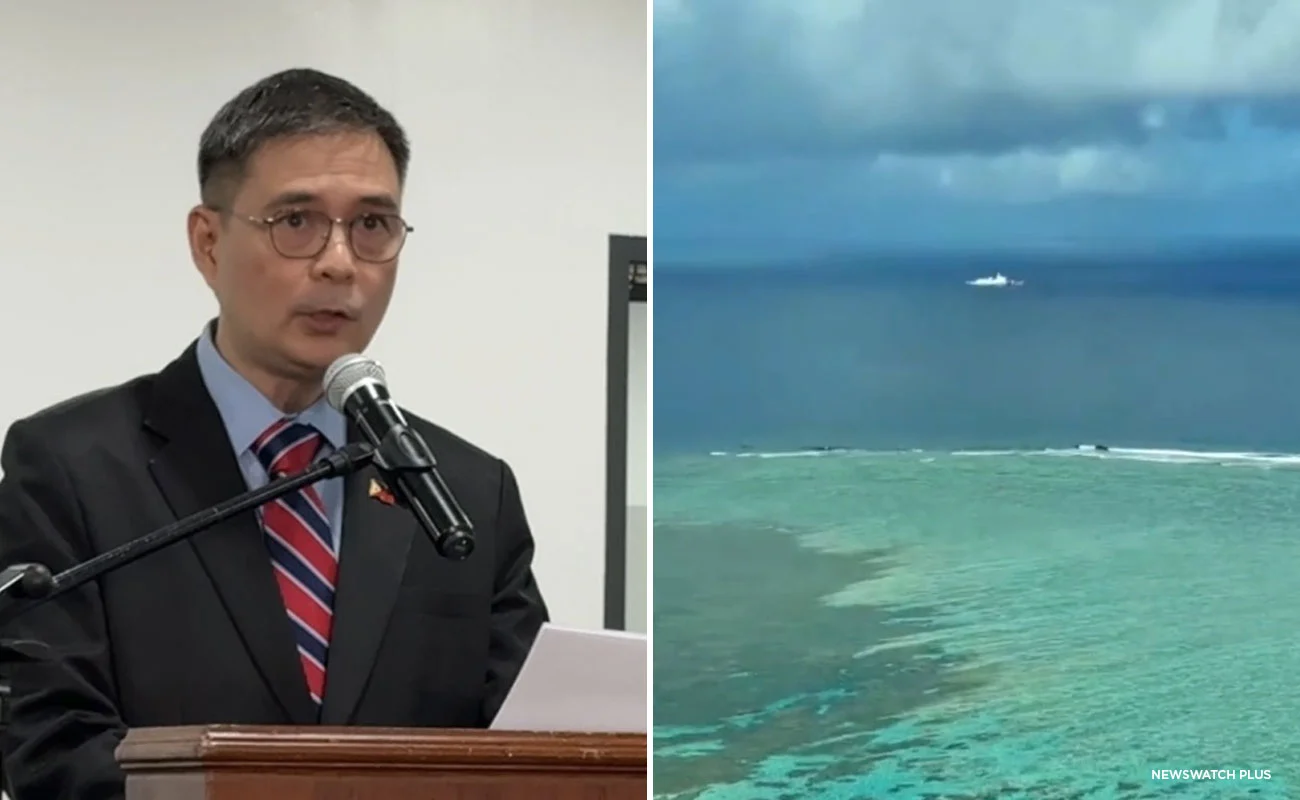
Rogelio Villanueva, the DFA spokesperson on maritime affairs and acting deputy assistant secretary of the Maritime and Ocean Affairs Office, said the agency leads diplomatic efforts at sea and coordinating with other government entities, while managing relations with neighboring states, including China.
“The DFA remains the Philippines’ authoritative voice on regional and international issues,” Villanueva said in a briefing. “Our work is guided by careful assessment of facts, respect for other institutions, and the highest professional standards. Diplomacy is indispensable for advancing national interests, even as we maintain strong defense capabilities and transparency.”
Villanueva said the agency handles state-to-state engagements.
“The president has made it clear that diplomacy takes center stage, the DFA’s role is to lead state-to-state engagement, manage differences peacefully, and pursue common ground wherever possible, while asserting the country’s rights under international law,” he said.
Villanueva highlighted the department’s initiatives to safeguard sovereignty in the West Philippine Sea.
These include 12 incident-free rotation and resupply missions to the grounded BRP Sierra Madre, multiple bilateral and trilateral maritime dialogues, ongoing engagements in Code of Conduct negotiations aligned with the 2016 South China Sea arbitral ruling, and submissions to the United Nations Commission on the Limits of the Continental Shelf for the West Palawan region.
“These efforts demonstrate how sustained diplomacy manages on-the-ground risks while enabling routine operations and fostering cooperation,” Villanueva said.
“While other agencies handle operational matters, the DFA ensures our positions are consistently conveyed at the highest international levels,” he said.
The DFA official said diplomacy is indispensable in strategic interests.
“Defensive capabilities and transparency serve vital ends, but diplomacy remains indispensable for securing the country’s strategic priorities,” he added.
Villanueva’s background reflects the dual nature of the role. He served in the navy and coast guard before joining the foreign service in 2008.
He held diplomatic postings in Lisbon, Portugal; Vancouver, Canada; and Frankfurt, Germany. He holds a master’s degree in Maritime Administration from the World Maritime University.
The DFA said its maritime strategy combines four core dynamics: adherence to international law, proactive engagement with bilateral and regional partners, leveraging alliances and multilateral frameworks, and support for domestic capacity-building through targeted foreign engagements.
Angelica Escalona, DFA spokesperson, said the creation of a dedicated maritime affairs spokesperson underscores the importance of unified messaging.
“Other agencies have their own spokespeople, but it is critical that the DFA communicates clearly the actions being undertaken and the principles guiding our engagement with other states,” she said.