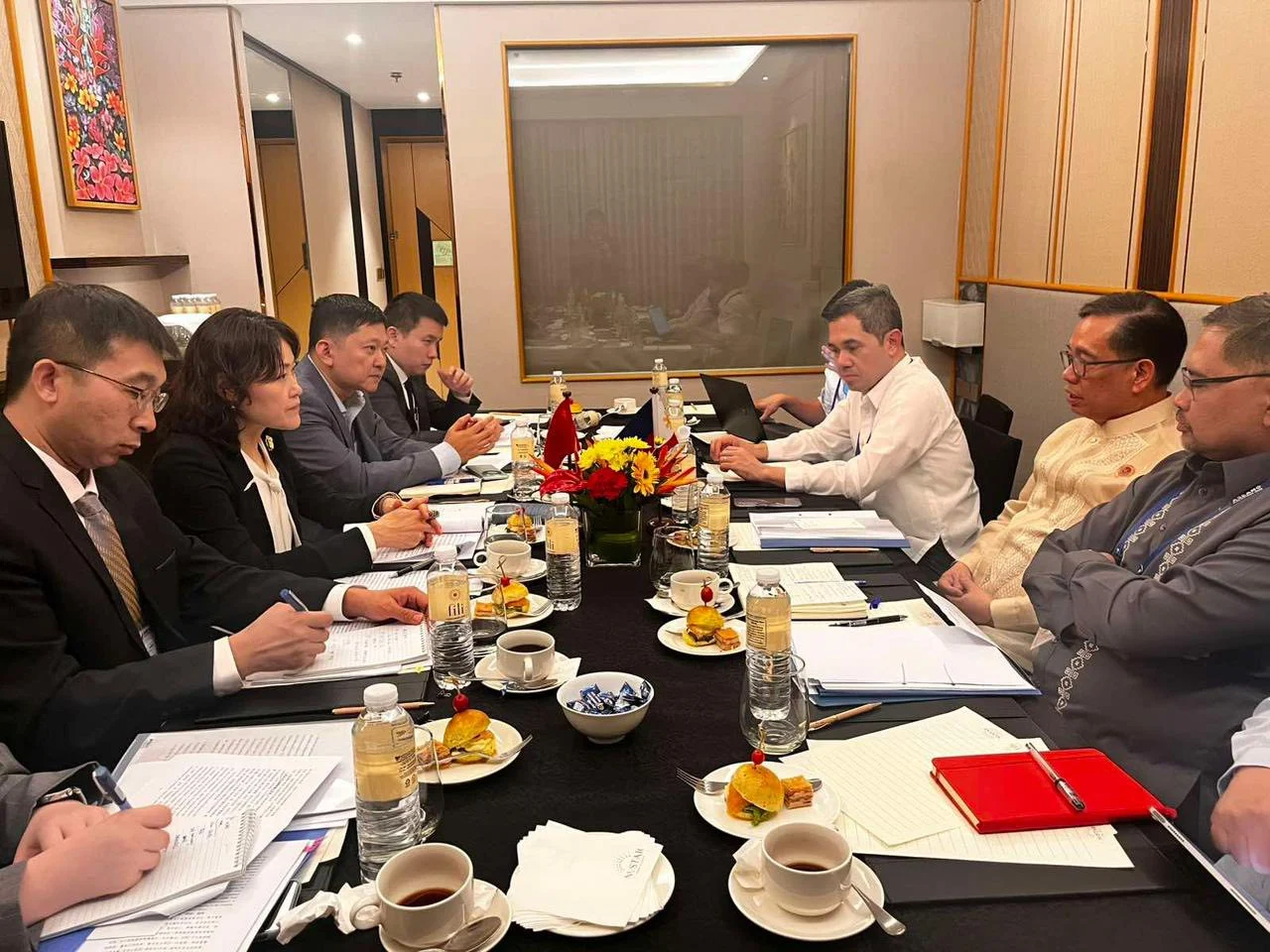


Cebu, Philippines – The Philippines and China resumed their political dialogue on Thursday, Jan. 29, after more than a year, holding talks in Cebu amid heightened tensions over maritime disputes and growing calls in Manila to downgrade ties with Beijing.
The Department of Foreign Affairs said Philippine Undersecretary for Policy Leo Herrera-Lim met with Hou Yanqi, director-general of the Department of Boundary and Ocean Affairs of China’s Ministry of Foreign Affairs, on Jan. 29 on the sidelines of the Senior Officials’ Meeting on the implementation of the Declaration on the Code of Conduct in the South China Sea.
In a statement, the DFA said both sides had a candid exchange of views on bilateral relations, maritime-related matters, and regional and international issues of mutual interest.
The two sides underscored the importance of sustained diplomatic dialogue and continued cooperation across sectors.
China’s Embassy in Manila separately confirmed the meeting, describing it as the resumption of political dialogue between the two countries after a hiatus of more than a year.
According to the Chinese Embassy, Hou also met with Philippine Assistant Secretary for Asian and Pacific Affairs Marshall Louis Alferez during the Cebu talks.
The embassy said both sides held “a candid and in-depth exchange of views” on maritime affairs and other issues of mutual interest and agreed to continue communication through diplomatic channels.
The resumption of talks comes at a time of strained relations between Manila and Beijing, fueled by sharp public exchanges and calls from some Philippine lawmakers and groups to declare a Chinese envoy persona non grata over controversial remarks.
The DFA warned that declaring a foreign diplomat persona non grata is an “option of last resort,” as China’s ambassador to the Philippines said he would leave the country “immediately” if President Ferdinand Marcos Jr. were to take such action amid rising political tensions.
In a statement read by Palace press officer Claire Castro, the DFA said a persona non grata declaration is “one of the most severe forms of diplomatic action” and carries serious consequences, including possible reciprocal measures and the downgrading of relations.
“It also carries tremendous implications moving forward, such as reciprocal action or other countermeasures in other areas,” the DFA said, stressing that diplomacy, dialogue and careful consideration remain the preferred approach even as lawmakers debate tougher action against Chinese diplomats.