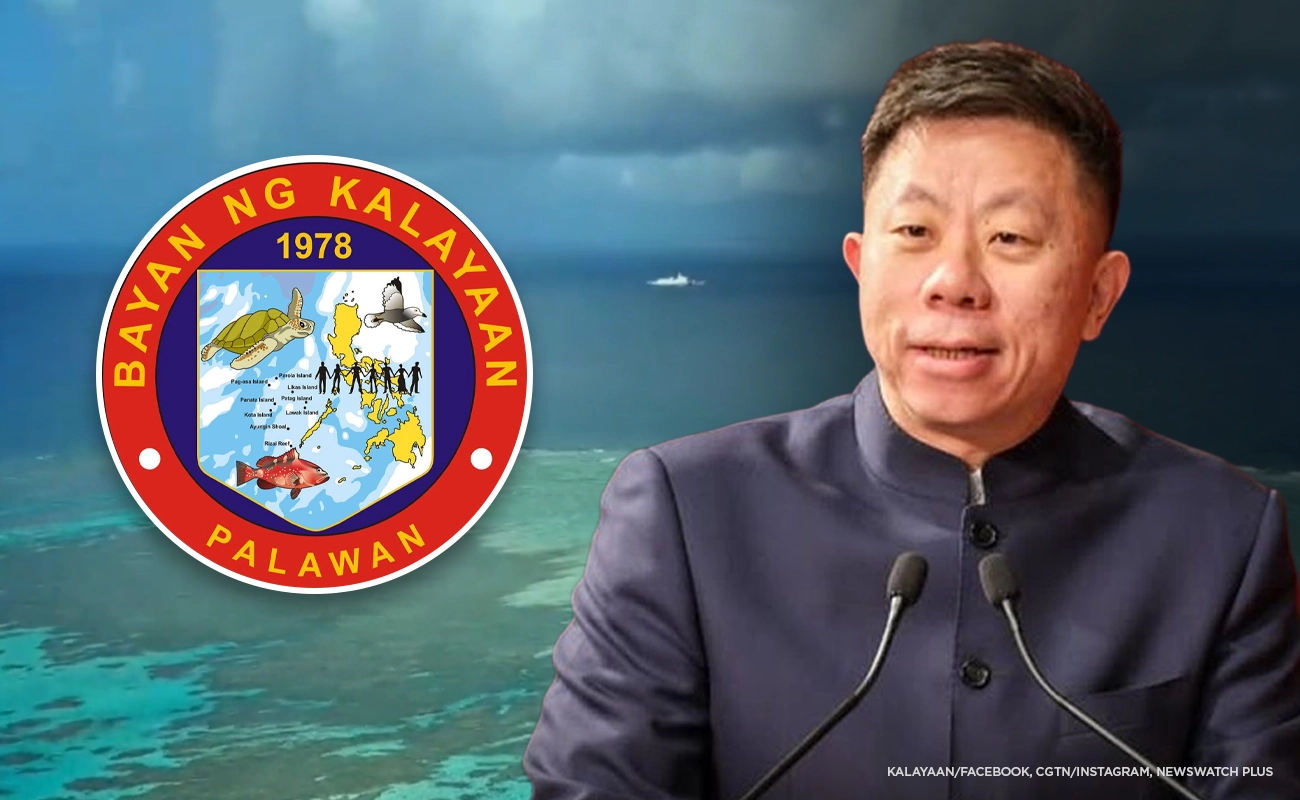


Cebu, Philippines – A municipality in the Philippines’ western province of Palawan has declared the Chinese ambassador persona non grata, accusing him of violating diplomatic protocol and interfering in internal affairs amid rising tensions over the South China Sea.
The Sangguniang Bayan of Kalayaan, a remote island town in the disputed West Philippine Sea, adopted Resolution 092-016 on Jan. 27, “strongly condemning the recent actions of Jing Quan, Ambassador of the People’s Republic of China, and declaring him persona non grata within the municipal jurisdiction of Kalayaan, Palawan, for violations of diplomatic protocol and affronts to Philippine officials.”
A persona non grata declaration means the local government formally considers a foreign official unwelcome in its jurisdiction. While largely symbolic and carrying no direct legal effect, such declarations express strong political disapproval. Authority to expel or recall a diplomat rests solely with the national government.
Kalayaan is the Philippines’ only municipality within the West Philippine Sea and serves as the seat of local government at the forefront of the country’s assertion of maritime rights in the area.
In the resolution, the council said “the people of Kalayaan cannot remain silent as the representative of a foreign power attempts to dictate how our government should discipline its own citizens or interpret its own sovereign rights.”
The measure criticized what it described as increasingly confrontational Chinese diplomacy, stating that “such ‘wolf warrior’ diplomacy and the direct targeting of Filipino leaders and uniformed personnel are incompatible with the role of a ‘stabilizing force’ the Ambassador claimed to represent.”country’s Philippines’ claim to its 200-nautical-mile exclusive economic zone and dismissing the 2016 international arbitration ruling that invalidated China’s expansive maritime claims.
It also said the embassy issued statements that “insult the legislative independence of a high-ranking Philippine official,” referring to criticism directed at Senator Kiko Pangilinan for defending maritime rights.
The declaration follows weeks of public exchanges between the Chinese Embassy in Manila and Philippine Coast Guard spokesperson Commodore Jay Tarriela, who has regularly briefed the public on Chinese activities in waters claimed by the Philippines.
On Wednesday, Chinese embassy spokesperson Ji Lingpeng issued a lengthy statement accusing Tarriela of spreading “false narratives” and attacking China and its leadership.
Ji said China “firmly opposes and strongly condemns such kind of words and actions,” accusing the Philippine official of repeatedly making “defamatory remarks,” “openly lying,” and “seriously undermining China–Philippines relations.”
The spokesperson rejected accusations of interference, saying non-interference is a fundamental principle of Chinese foreign policy. However, he argued that repeated public criticism of China and its leaders falls under foreign affairs and warrants a response.
“When individuals like Jay Tarriela repeatedly attack China and even China’s leadership day after day, year after year, this clearly falls outside the scope of internal affairs,” Ji said, adding that China’s responses were “factual, reasoned, and justified.”
The Kalayaan resolution cited Article 41 of the Vienna Convention on Diplomatic Relations, which states that foreign diplomats have a duty not to interfere in the internal affairs of the host state.
The Department of Foreign Affairs has not yet commented on the Kalayaan declaration. China’s embassy has also not issued a statement directly responding to the persona non grata resolution.