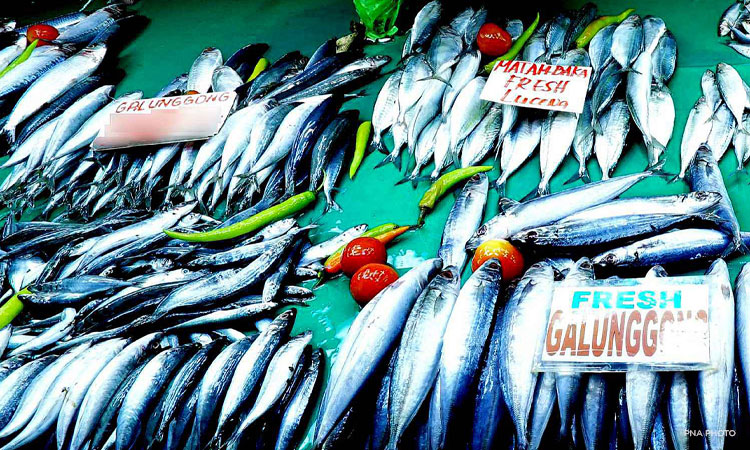


Manila, Philippines – If there’s a solid indicator that could point to the habagat (southwest monsoon) and a cycle of storms already hurting food prices, the poor man’s fish “galunggong” (round scad) would be it.
But the poor man’s fish may no longer be for the needy because its per-kilo price tag has spiked by almost P100 in four weeks in August, driving fish inflation – which groups galunggong and other pelagic fish – to the no. 1 spot among the top five contributors to price pressures last month.
Fish inflation rose by double digit to 12.8 percent in August, from just 7.1 percent the month before, accounting for nearly a quarter of overall inflation, data released on Friday (Sept. 5) by the Philippine Statistics Authority (PSA) showed.
Rounding out the top five inflation culprits are meat, rentals, restaurants, and poultry.
Summing that with higher vegetable prices pushed August inflation to a five-month high of 1.5 percent, reversing earlier gains made in July that saw inflation falling below 1 percent. Vegetable inflation was 21.1 percent in August, the fastest pace since January.
“Nagdala talaga nito presyo ng pagkain,” National Statistician Dennis Claire Mapa told a press briefing on Friday, Sept. 5.
“Nakikita natin na ‘pag may bagyo at baha sa lands na nagpo-produce ng vegetables, yun talaga ang unang tinatamaan. Dito na-attribute na ang impact ng nakaraang bagyo,” he pointed out.
[TRANSLATION: Food prices, a heavyweight, really drove inflation. Whenever there are storms and lands that produce vegetables get flooded, they are the first to take a hit. We can attribute this [inflation] to the recent storms.]
August saw the southwest monsoon, or habagat, at its worst so far this year, enhanced by tropical cyclones Fabian and Gorio, as well as tropical depressions Huaning and Isang.
Heavy rain and flooding forced class suspensions and disrupted food production, including fishing.
GALUNGGONG SUPPLY
Separate data from the Department of Agriculture showed galunggong fetching as much as P303.83 per kilo in wet markets during the week ending Aug. 23, from just P240 a kilo in July.
Galunggong mainly comes from the waters of Mimaropa, Palawan, Calabarzon, Western Visayas, Zamboanga peninsula and Soccsksargen, according to research done by NewsWatch Plus culling PSA and Department of Agriculture historical data.
Data on supply of galunggong during the month is yet to be released, but the discouraging fish inflation reading points to shrinking supply amid unfavorable weather conditions. The PSA’s fisheries situationer report covering the January to June period shows galunggong catch at 52,459 metric tons (52.459 million kilograms) in the second quarter, nearly double the first quarter’s 30,994 metric tons (30.9 million kilograms). Historically, the monsoon season takes a toll on galunggong output – down by 17.2 percent during the quarter ending September last year, according to the PSA data.
BOTTOMING OUT
The bright side about August’s inflation numbers: rice deflation persisted but could be plateauing.
The price of the grain had been falling for successive months, taking the cue from President Ferdinand Marcos, Jr.’s promise of cheaper rice. Rice inflation contracted by 17 percent, steeper than the negative 15.9 percent logged in July.
“Pababa na talaga ang presyo ng bigas, lalo na regular-milled… Continuously magiging negative. Baka ito na ang pinaka-bottom na negative. May negative pa din pero di na ganun kalaki kumpara sa negative 17,” PSA’s Mapa told reporters.
[TRANSLATION: Rice prices are really on a downtrend, especially the regular-milled… We expect rice deflation to persist, but this month could signal bottoming out. Still negative inflation, but not as steep as negative 17.]