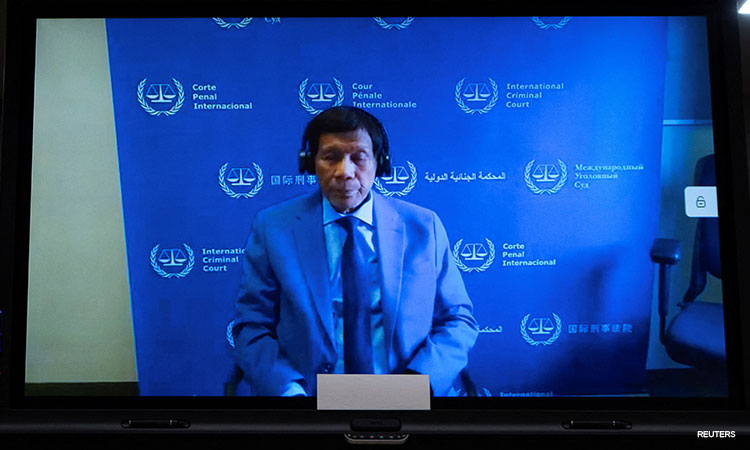


Metro Manila, Philippines – Former President Rodrigo Duterte’s legal team will consider his age and health condition as key factors when applying for interim release from the International Criminal Court (ICC), his lead counsel Nicholas Kaufman said.
In an interview with The Newsmaker on NewsWatch Plus, Kaufman confirmed that seeking interim release remains an option for the 80-year-old Duterte.“Interim release is a right. An application for interim release is par for the course at the International Criminal Court. Interim release is also based on the willingness of a State Party to receive a suspect. In our case, the former President will make an application for interim release at the appropriate time and when the pre-conditions and guarantees for such have materialised,” Kaufman said.When asked whether Duterte’s age could be grounds for release, Kaufman agreed.“Age, frailty, and ill-health are always factors considered in an application for interim release. I am not revealing anything particularly novel,” he added.Jurisdiction remains a strong defense argumentKaufman also pointed to the ICC’s jurisdiction as one of the strongest arguments for the defense.“When two judges of the ICC Appeals Chamber have already ruled that the Court cannot exercise its jurisdiction in light of the Philippines’ notification of withdrawal from the Rome Statute and the failure to seek the authorization of an investigation within the one-year period set out in Article 127 of the Rome Statute, it stands to reason that this will be a strong argument,” Kaufman said.He was referring to a July 2023 ruling in which two judges of the ICC Appeals Chamber dissented on the decision to reopen the investigation in the Philippines, arguing that the court had lost jurisdiction.