


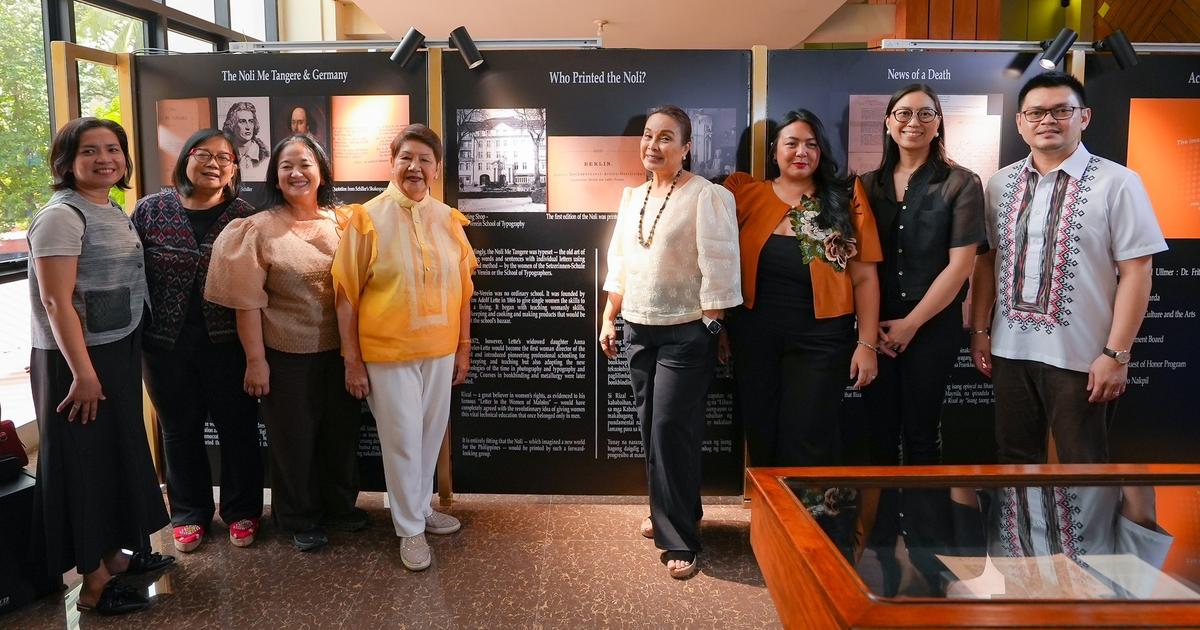
The world’s biggest book fair is about to be filled with Filipino imagination. From October 15 to 19, 2025, the Philippines takes the spotlight as Guest of Honour at the Frankfurt Book Fair—the first Southeast Asian country in nearly two decades to do so. With over 400 delegates and a cultural program that stretches across Germany, this milestone event brings not just books but the very spirit of Filipino creativity to an international stage. Here are five reasons why this year’s fair will be one for the history books.
1. A Pavilion That Breathes Imagination
The Philippine Guest of Honour Pavilion is not a static booth but a living, immersive stage. Curated by Patrick Flores and designed by Stanley Ruiz, it spans 2,000 square meters and uses bamboo, rattan, and modular seating to create an open communal space. Translucent walls become canvases for contemporary works by Gary-Ross Pastrana, Mervin Malonzo, and David Medalla. At its heart, over 500 Philippine book titles invite visitors to explore the breadth of local storytelling.
2. Urgent Conversations Paired with Performances
More than one hundred talks, readings, and performances will unfold inside the pavilion, each one tackling urgent issues such as climate change, democracy, children’s literature, race, and queer narratives. What makes the Philippine program distinct is that many discussions end not in silence but in art. A talk on climate writing with poet Marjorie Evasco, Maria Paz Luna, and Red Constantino, for example, culminates with the Philippine Madrigal Singers performing Ryan Cayabyab’s “Paraiso,” blurring the line between dialogue and performance.
3. Voices of Courage and Solidarity
Global voices of courage converge in Frankfurt. Nobel Peace Prize laureate Maria Ressa and trauma journalist Patricia Evangelista bring hard-hitting reflections on freedom of the press. National Artist Virgilio Almario joins PEN International president Burhan Sönmez and Indonesian novelist Ayu Utami in a session titled A Solidarity for Hope. Meanwhile, the recurring program Poetry for Freedom, Justice, and Peace presents readings dedicated to struggles in Gaza, Ukraine, and beyond—proof that literature remains a frontline for empathy and justice.
4. Beyond Books: A Festival Across Germany
The Philippine story stretches well beyond the fairgrounds. Across Germany and Europe, readers will encounter Rizal, komiks, and Filipino artistry in unexpected spaces. In Frankfurt, historian Ambeth Ocampo leads Jose on the Go: A Rizal Stroll. In Hanau, Liwaliw at Kulturforum celebrates Filipino games, food, and music. At Romanfabrik, Komiks Live! transforms graphic novels into stage performance. Exhibitions on folklore, photography, and architecture open windows into the nation’s creativity, while concerts and film screenings enrich the cultural calendar.
5. A Creative Economy on the Rise
At the heart of this showcase is a creative economy that continues to grow. Valued at ₱1.94 trillion in 2024, the Philippine creative industries already account for 7.3 percent of GDP. Publishing may be small in scale, but it plays a vital role as a gateway industry that drives film, music, and tourism into new markets. Central to this momentum is the NBDB’s Translation Subsidy Program, which has supported 173 translated titles since 2024, allowing Filipino stories to travel farther than ever before.The Philippines’ journey to Guest of Honour status was not built overnight. It began with a modest 60-square-meter stand in 2015 and grew into a vision realized through the persistence of Senator Loren Legarda, alongside the NBDB, NCCA, and countless cultural workers. Today, the Philippines steps onto Frankfurt’s global stage with a message clear as its theme: the imagination peoples the air.
This Guest of Honour role is more than visibility, it is proof that imagination knows no borders, and Filipino voices belong on the world stage.