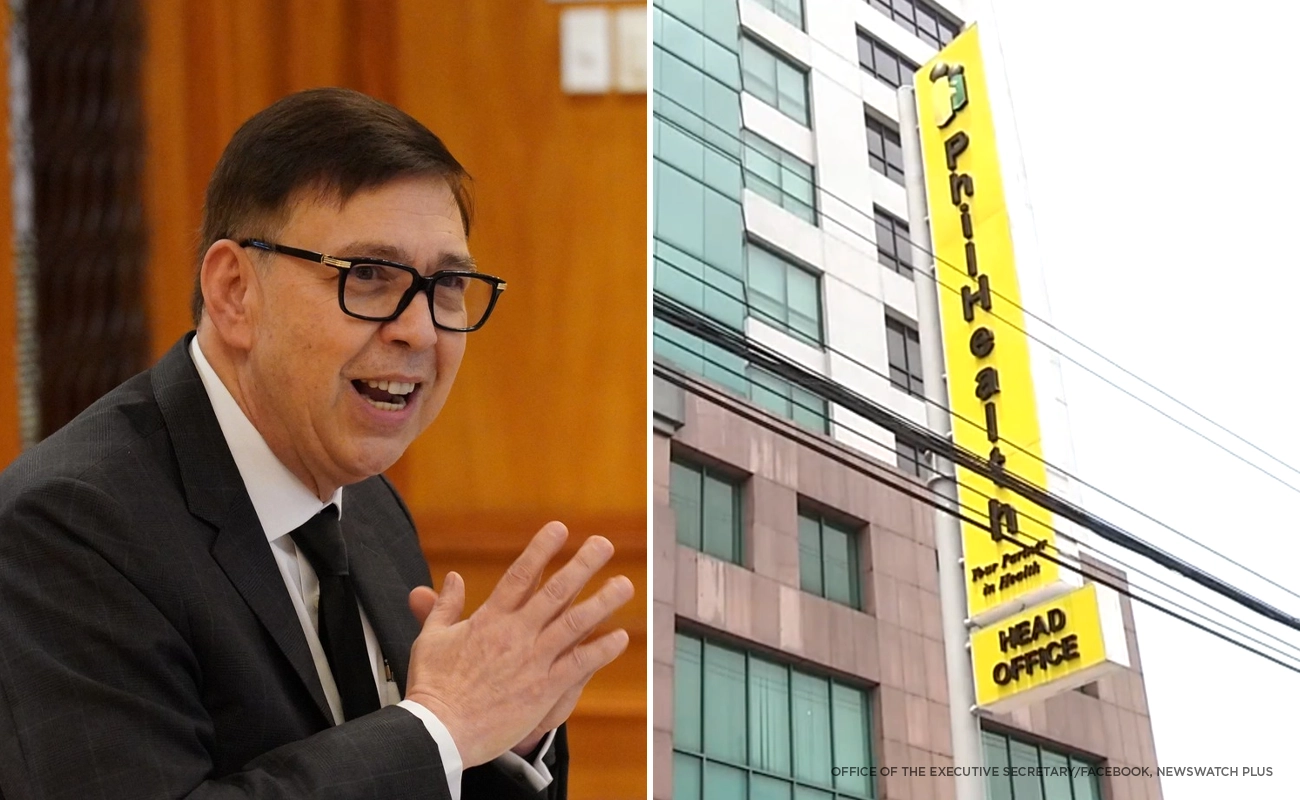


Metro Manila, Philippines – Executive Secretary Ralph Recto is facing new complaints, including plunder, for the transfer of P60 billion in reserve funds of the Philippine Health Insurance Corporation (PhilHealth) to the national treasury when he was finance chief in 2024, a decision that was deemed unconstitutional by the Supreme Court.
A group of doctors and lawyers filed with the ombudsman the complaint of graft, technical malversation, and grave misconduct on Thursday, Jan. 15.
The other respondent was former PhilHealth president and chief executive officer Emmanuel Ledesma.
“There is no doubt that the respondents willfully, intentionally and illegally transfer PhilHealth’s reserve funds to the National Treasury to fund unprogrammed appropriations, thus, a clear diversion of the funds from the very purpose for which they have been originally appropriated,” the complaint read.
“There is an immense injury to the Filipino people as the P60 billion could have instead been used for the betterment of health services or increase the scope of the Program’s benefits and to decrease the amount of members’ contributions as stipulated in RA 11223,” it added, referring to the universal health care law.
In December, the Supreme Court ordered the return of P60 billion from the National Treasury to the state insurer. The court also directed the funds to be channeled to the 2026 General Appropriations Act and halted the further transfer of the ₱29.9 billion balance to the treasury.
“Ang sinasabi natin na ang mga naka-reserve para sa PhilHealth ay para sa PhilHealth,
and hindi para sa ibang proyekto na some of them are even, since it is unprogrammed, it may be for insertions, it may be for other projects that are for the benefit of some officials,” Rodel Tanton, one of the complainants said in an interview.
[Translation: What we are saying is that the funds reserved for PhilHealth should be for PhilHealth, and not for other projects, some of which, since they are unprogrammed, may be for insertions or for other projects that benefit certain officials.]
Tanton noted that while the Supreme Court ruled that Recto may have just acted in good faith, “there can be gross inexcusable negligence” on his part for ordering the illegal transfer of PhilHealth funds.
In its decision, the high court denied the petitioners’ request to determine Recto’s liability for technical malversation and plunder, saying such resolution is improper to the case.
Tanton said they pushed through with the criminal action, as the Supreme Court is not a “trier of facts.”
A separate group filed multiple complaints, including plunder, against Recto and Ledesma in December, weeks after the SC released its ruling last month.
Maintaining innocence
In a statement, Recto said the SC ruling stated that he could not be faulted for criminal liability arising from the fund transfer.
“We remain confident that the facts and the law are clear, and that the appropriate institutions will evaluate any allegations fairly and objectively,” he said.
Recto said he respects the right of anyone to seek legal remedies and avail of the processes under the law.
He added that he will not get distracted by political noise.