

Metro Manila, Philippines – In a town defined by mountains and rivers, where distance often determines access, education persists inside steel walls.
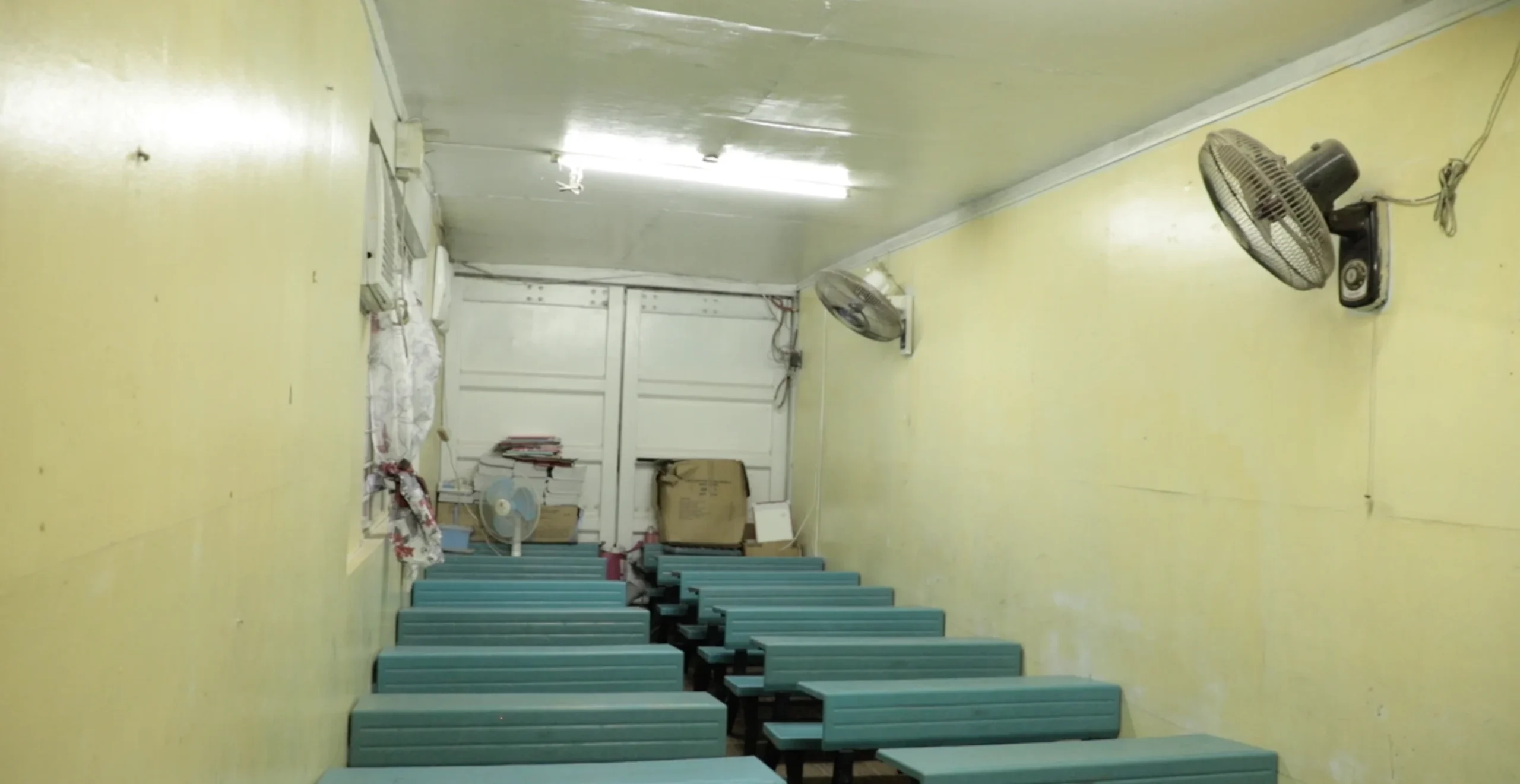
At Wawa Elementary School, a converted container van functions as a classroom—an improvised yet vital response to a long-standing shortage of learning spaces.
Known among teachers and parents as “Van-Silid Aralan,” the structure represents both necessity and determination in a community where options are limited but the need to learn is not.
Wawa Elementary School was once housed in its own campus, not far from its present location. Years ago, however, a massive rockfall struck the area, deeming the area unsafe, which forced the school to vacate.
What was expected to be a temporary move became a prolonged displacement.
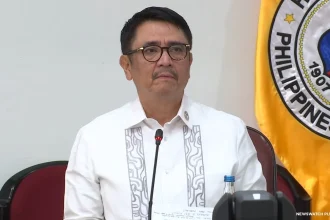
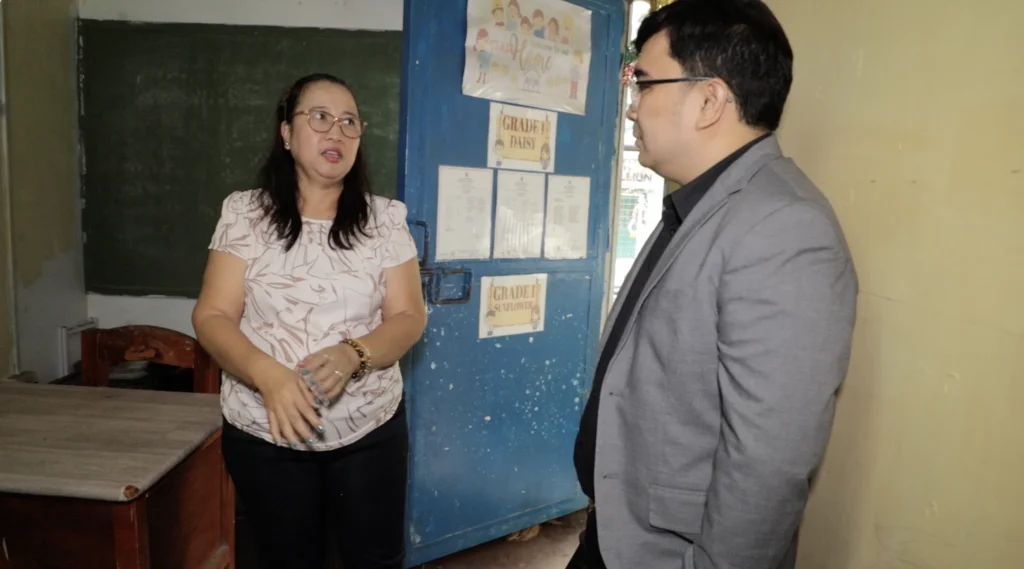
In an interview with NewsWatch Plus, school principal Maria Victoria Teleb said the school has been sharing space with a nearby high school for nearly 14 years.
Today, the school serves around 1,250 elementary pupils—from kindergarten to Grade 6—despite not having its own campus.
Making the most out of loaned rooms
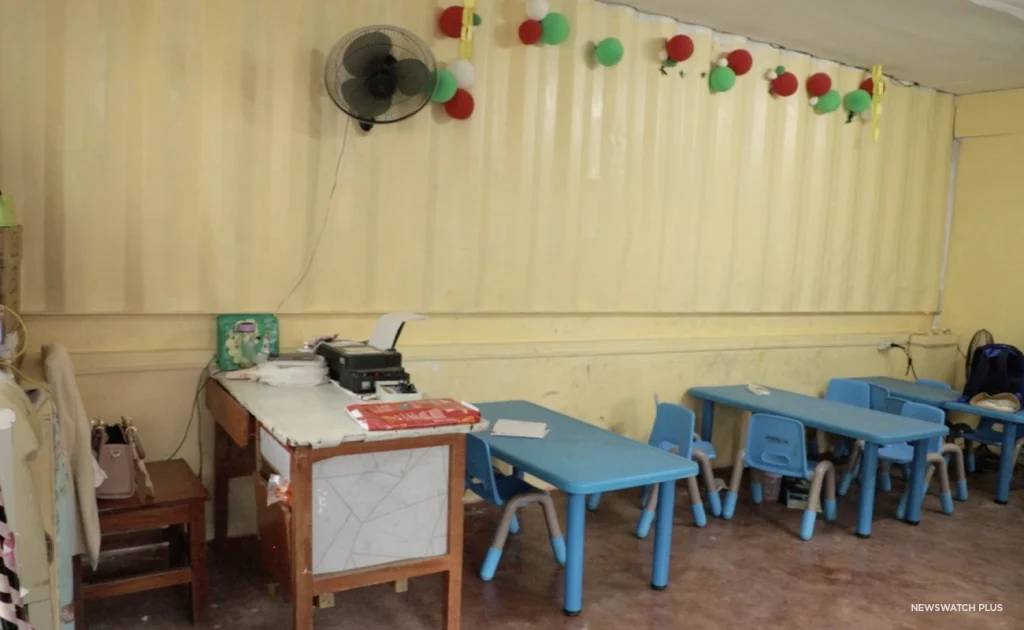
Only seven classrooms were loaned by the host high school: four on the ground floor and three upstairs. To accommodate the growing student population, Wawa Elementary added two more learning spaces outside the main building—a former daycare center and a container van retrofitted as a classroom.
In total, just 14 classrooms are used to serve more than a thousand students.
“Mahirap po talaga [It’s really challenging],” Teleb said, explaining that young learners cannot be crowded without affecting safety and learning quality.
To manage, the school operates under double emergency classes, splitting students into morning and afternoon shifts. Class hours are shortened, with dismissal as early as 4:30 p.m., ensuring students can make it home before nightfall.
The challenges extend beyond classroom walls. Rodriguez is a mountainous municipality, and many students come from remote sitios. Some must cross rivers near Wawa Dam to reach school.
During continuous rainfall or when river levels rise, in-person classes are automatically suspended for affected students. Teachers then shift to modular distance learning, coordinating with parents through mobile phones and online messaging to ensure lessons continue.
Despite the disruptions, school officials said students remain engaged.
Modules are sent home. Instructions are followed up. Learning, while difficult, does not stop.
“Hindi sila siksikan. Conducive pa rin sa kanilang learning. At saka meron sila doong mga electric fan din. So hindi naman sila naiinitan. Ang nagiging challenge lang talaga po dyan, at syempre po, lalo na sa hapon,yung mga bata uuwi pa sa mga bundok,” the principal said.
[Translation: They are not crowded. The environment is still conducive to their learning. They also have electric fans there, so they do not feel hot. The real challenge, of course, especially in the afternoon, is that the children still have to go home to the mountains]
A long-awaited breakthrough
After more than a decade of waiting, a turning point came in January 2024. Through the local government, Wawa Elementary School received a 1,700-square-meter lot in Sitio Sapa, still within Rodriguez, designated as the school’s permanent relocation site.
Later that year, education officials inspected the area and approved the construction of a two-story building with 16 classrooms under a public-private partnership (PPP) scheme. Construction is expected to begin within the year.
For the school community, the approval marked long-overdue progress.
Still, the need remains far greater. To transition to a single-shift system, the school estimates it requires around 36 classrooms. Transportation is also a concern, as some students may need to travel 30 to 35 minutes uphill to reach the new site.
“So yung 16 classroom na yun ay malaking blessing po sa amin yun. Kung madadagdagan, mas lalong maganda po yun para ang mga bata ay single shift na lang po sila. And then ang magiging isa pa po namin wish list, sana po magkaroon ng service yung mga bata, paakyat,” Teleb added.
[Translation: So those 16 classrooms are a big blessing for us. If more are added, that would be even better so the children can be on a single shift. Another item on our wish list is that the children would have transportation going uphill]
The situation at Wawa Elementary reflects a broader national challenge acknowledged by Education Secretary Sonny Angara. While thousands of classrooms are funded under the current education budget—the largest in the country’s history—construction often takes years due to funding release schedules, procurement delays, and logistical constraints.
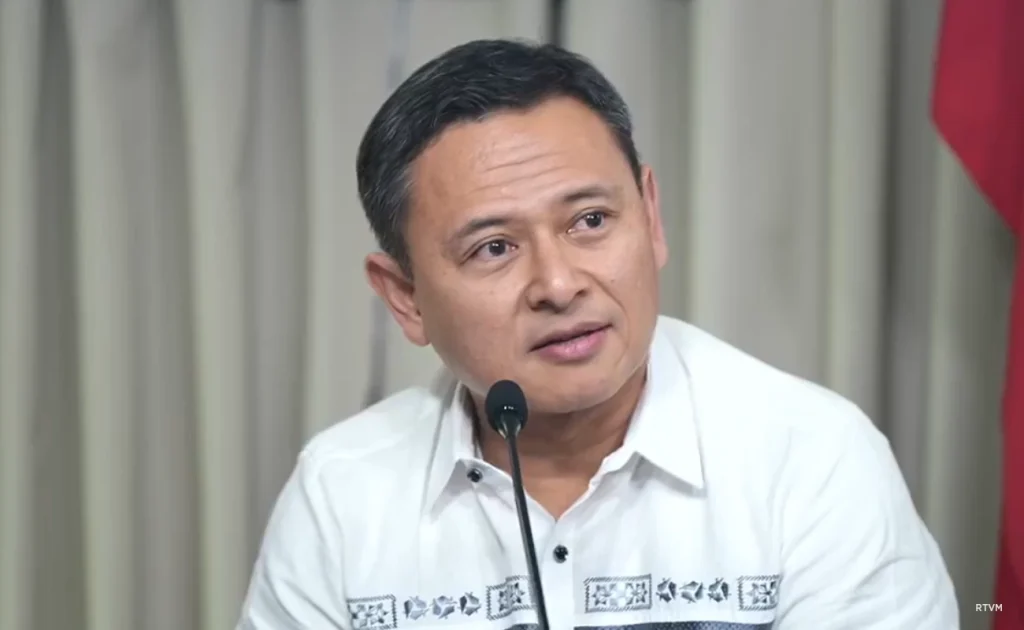
The Department of Education has allocated over ₱1 billion for last-mile schools, aiming to prioritize geographically isolated and disadvantaged communities like Rodriguez.
Following the airing of the NewsWatch Plus report, the education chief took notice. In a post on X, he tagged concerned officials and directed them to look into the plight of Wawa Elementary School and similar last-mile institutions.
For now, students continue to learn inside borrowed rooms and steel containers—studying lessons shaped as much by perseverance as by textbooks.
Until permanent classrooms rise on higher ground, Wawa Elementary School stands as proof that even without rooms, education finds a way.