

Manila, Philippines – The military alliance between the Philippines and the US remains “ironclad” despite concerns over Washington’s military actions in Venezuela and their implications on regional security, the Armed Forces of the Philippines (AFP) said on Tuesday, Jan. 6.
Washington drew flak for a “crime of aggression” in Venezuela at an emergency meeting of the United Nations security council on Monday, with China among UN-member countries that denounced Donald Trump’s decision to launch deadly strikes and snatch Venezuelan leader Nicolas Maduro and his wife, Cilia Flores, to stand trial in the US.
But the AFP warned against Beijing’s efforts to use the situation to hurt public confidence in the strength of the two nations’ alliance.
“Statements from the United States embassy here in Manila have reiterated many times that the treaty between the Philippines and the US is ironclad,” Rear Admiral Roy Vincent Trinidad, AFP spokesperson for the West Philippine Sea, told a press briefing at Camp Aguinaldo, Quezon City.
“Efforts by the United Front Works of the Chinese Communist Party are to sow doubt in the minds of the Filipinos that the US is not a reliable treaty partner,” the navy official said.
The Philippines has a 75-year-old mutual defense treaty with the US that provides the legal basis for each signatory to consider “an armed attack in the Pacific area on either each of the Parties would be dangerous to its own peace and safety and declares that it would act to meet the common dangers in accordance with its constitutional processes.”
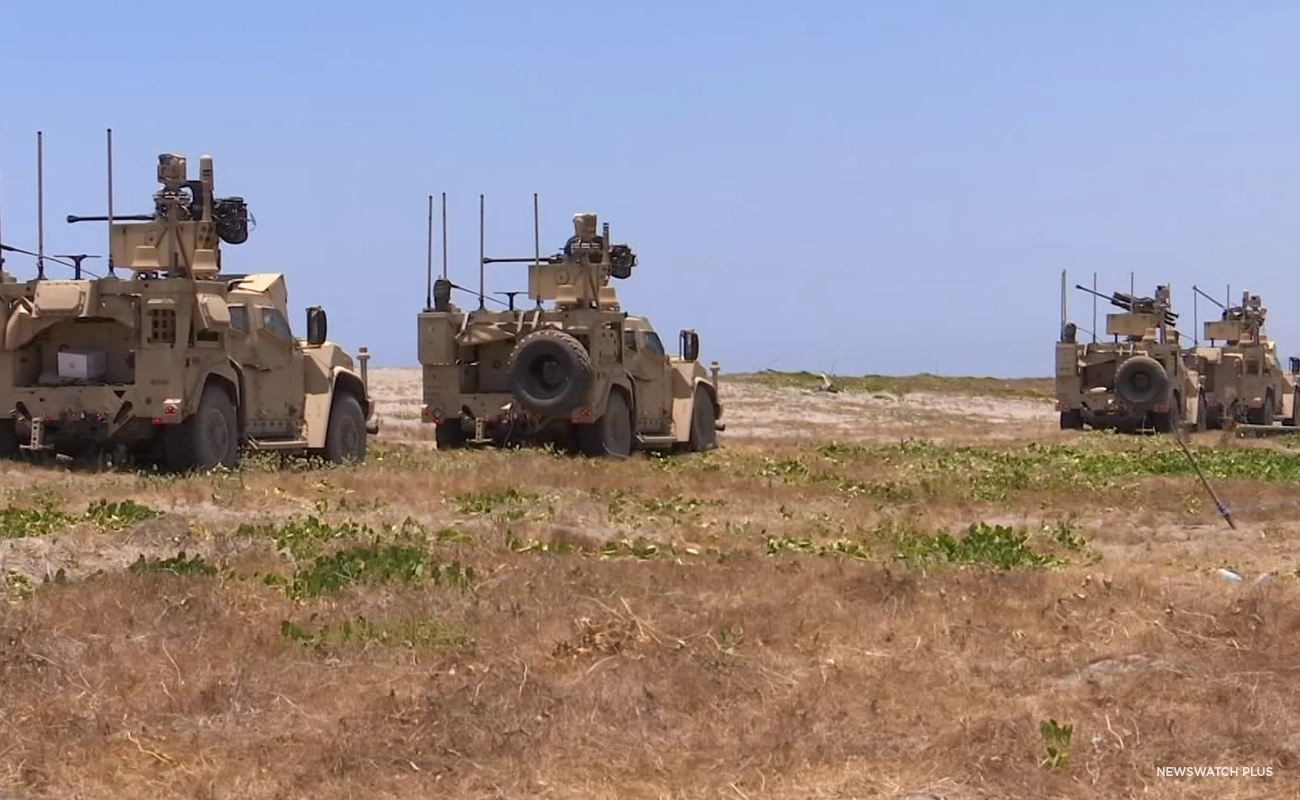
The two nations also have an Enhanced Defense Cooperation Agreement (EDCA) which allowed Washington to set up nine so-called EDCA military sites that are viewed as a deterrent to China’s aggressions in the West Philippine Sea.
Asked if the US military action in Venezuela would affect Manila’s confidence in Washington as a treaty ally, the navy admiral dismissed any links.
“I would like to focus on the actions of our treaty ally and other like-minded nations here in the West Philippine Sea. On matters beyond the region, I’d like to defer to the appropriate government agency,” Trinidad said.
The half-a-century old joint military drills or Balikatan between Manila and Washington – with this year’s iteration expected to draw a record-number American troops – are proof of the strength of the two nations’ military partnership, he said.
“Actions in the West Philippine Sea, actions in our different multilateral exercises in which the US participates, strongly reinforce that this treaty is definitely ironclad,” Trinidad said.
For 2026, the military has calendared more wargames with the US and foreign allies, given wider defense pacts with Japan, Australia, New Zealand and Canada.
The military drills in the West Philippine Sea would not just be “mere training activities but part of our operational maneuver already,” Trinidad said.
“This allows us to cover more areas of our maritime domain,” the admiral said.
That’s against a backdrop of China’s integrating its forces from the PLA Navy to the Chinese Coast Guard and the Chinese militia.
“We expect this trend [China’s integration of military forces] to continue not only on sea but even air. There have been reports of joint patrols to include air force bombers – PLA Air Force. This will continue in 2026,” Trinidad said.
“We are ready for any eventuality given our current capabilities, not only ourselves but in conjunction with likeminded nations,” the admiral added.