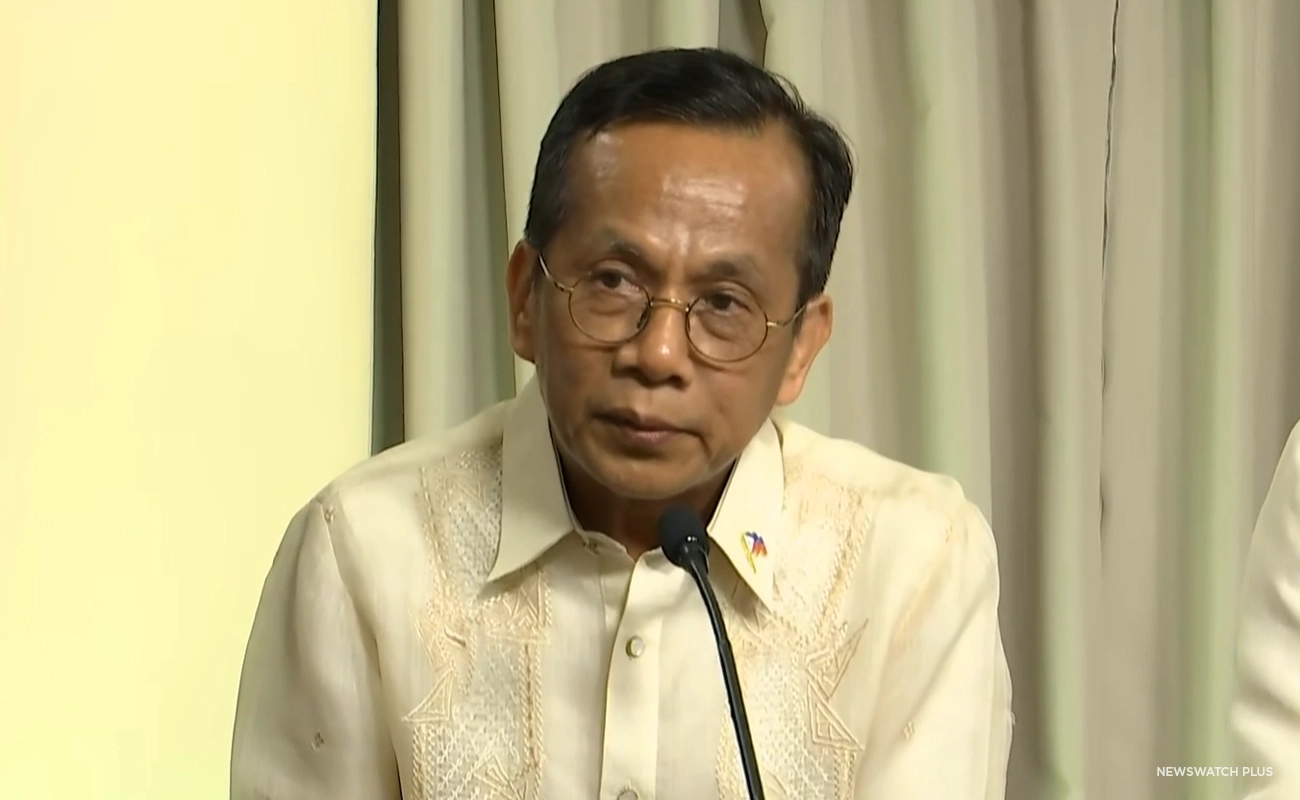


Manila, Philippines – Economic managers of the Marcos administration expect the economy to expand at a pace slower than originally programmed this year and until the end of his term in 2028, economic minister Arsenio Balisacan said on Monday, Jan. 5, amid a more prudent national budget that reined in possible leaks in the wake of a corruption scandal.
In a press briefing in Malacanang, Balisacan said the P6.79-trillion national budget for 2026 that President Ferdinand “Bongbong” Marcos, Jr. signed on Monday could deliver growth within the 5 percent to 6 percent range this year, a scaled-down target from 6-7 percent previously.
The economic team – who composes the interagency Development Budget Coordination Committee (DBCC) – also recast growth assumptions for 2027 to a range of 5.5 percent to 6.5 percent, and for 2028, to 6 percent to 7 percent. The DBCC earlier set a growth goal of 6 percent to 8 percent for both years.
“For the budget of 2026, that is expected to support a growth of five to six percent; and next year, that will be from 5.5 to 6.5, and then six to seven in 2028,” Balisacan told a press briefing.
The revisions were announced after Marcos vetoed P92.5 billion in unprogrammed items that could be used for pork barrel or avenues for corruption. Instead, the spending plan favored heavily financing education, health care, and social welfare.
“We probably still see some residual effects of the events last year in the first half of the year [2026],” Balisacan said, referring to the weaker consumer and business confidence dampened by the bombshell disclosures about widespread corruption involving billions of pesos in taxpayers’ money siphoned into flood control projects that never existed or were not completed.
Softer inflation and cheaper borrowing costs, however, could encourage consumers to spend, he said. Domestic demand accounted for about 75 percent of gross domestic product in the past years, Balisacan said, although consumer confidence waned in the third quarter amid the infrastructure controversy.
“And, globally, the pessimism in the trade and investment regime of many countries was not as bad… with the surprise sharp increases in tariffs initially by the US,” Balisacan said.
“So, I think that there are favorable forces moving that we are seeing moving forward so we do expect that the broad economy will grow as sufficiently strong especially toward the second half, I think, of the year,” he added.
NewsWatch Plus business news anchor Lois Calderon contributed to this story.