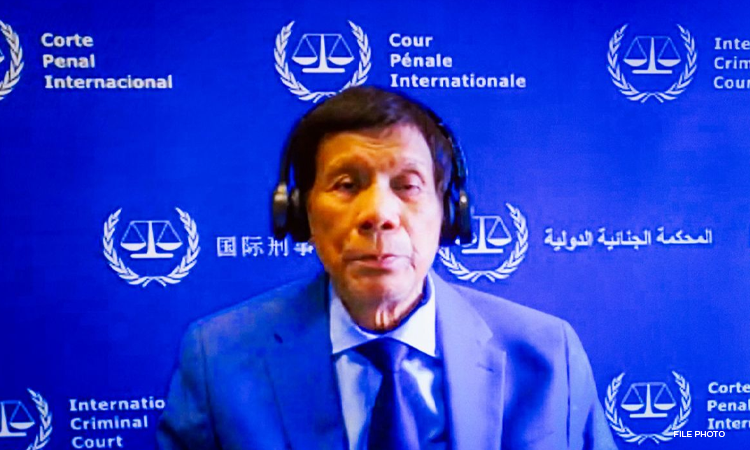

Metro Manila, Philippines – The International Criminal Court prosecutor has accused Rodrigo Duterte of feigning memory loss and exaggerating cognitive problems in an apparent effort to delay or avoid trial, citing unanimous findings by a panel of court-appointed medical experts that the former president is mentally fit to stand trial and capable of participating meaningfully in proceedings.
In a public redacted filing dated Dec. 18, the Office of the Prosecutor said three independent experts concluded that Duterte, while elderly and physically frail, retains sufficient cognitive capacity to understand the charges, the evidence, and the nature and consequences of the proceedings, and to instruct his lawyers at the pre-trial stage.
Pprosecutors said the experts also found Duterte to be an “unreliable historian” with respect to his own health and mental functioning, after applying specific tests designed to detect underperformance or malingering during medical examinations.
“The unanimous findings of the Panel demonstrate that Mr Duterte’s subjective complaints regarding his health and mental functions are unreliable,” prosecutors said, adding that it “strongly appears that Mr Duterte is feigning cognitive impairments in an attempt to avoid a trial on the merits.”
Underperformance in memory tests
According to the filing, each expert conducted in-person examinations of Duterte between October and November 2025 and used performance-validity tests to assess whether he was intentionally underperforming during cognitive assessments.
One expert employed a test presented as a short-term memory exam but described as a “floor test” — a task so simple that even people with moderate to severe memory impairment are expected to pass it.
Duterte’s results on that test, prosecutors said, were inconsistent with genuine cognitive decline and suggested intentional underperformance. Similar findings were reached through other assessment tools, leading all three experts to independently conclude that Duterte’s self-reported memory problems could not be relied upon.
Despite these findings, the panel agreed that Duterte understands the charges against him, can follow courtroom proceedings, and is able to give instructions to his legal counsel, the key legal threshold for fitness to stand trial under ICC rules.
Duterte’s defense team had earlier sought an indefinite adjournment of proceedings, arguing that he suffered from cognitive impairment across multiple domains and was therefore unfit to stand trial.
However, prosecutors said the defense expert did not conduct formal testing to assess performance validity and appeared to misstate the ICC’s legal test for determining fitness. By contrast, the court-appointed panel was formed following extensive judicial vetting and conducted multiple assessments over several weeks.
The prosecution urged judges to give greater weight to the panel’s findings, describing them as independent, impartial, and methodologically robust, and consistent with the court’s prior jurisprudence.
The Office of the Prosecutor asked Pre-Trial Chamber I to formally find Duterte fit to participate in proceedings and to resume the confirmation of charges hearing, a crucial stage that will determine whether the case proceeds to full trial.
Duterte faces crimes against humanity charges over killings linked to his administration’s anti-drug campaign. The confirmation of charges hearing has been on hold pending the court’s determination of his fitness.