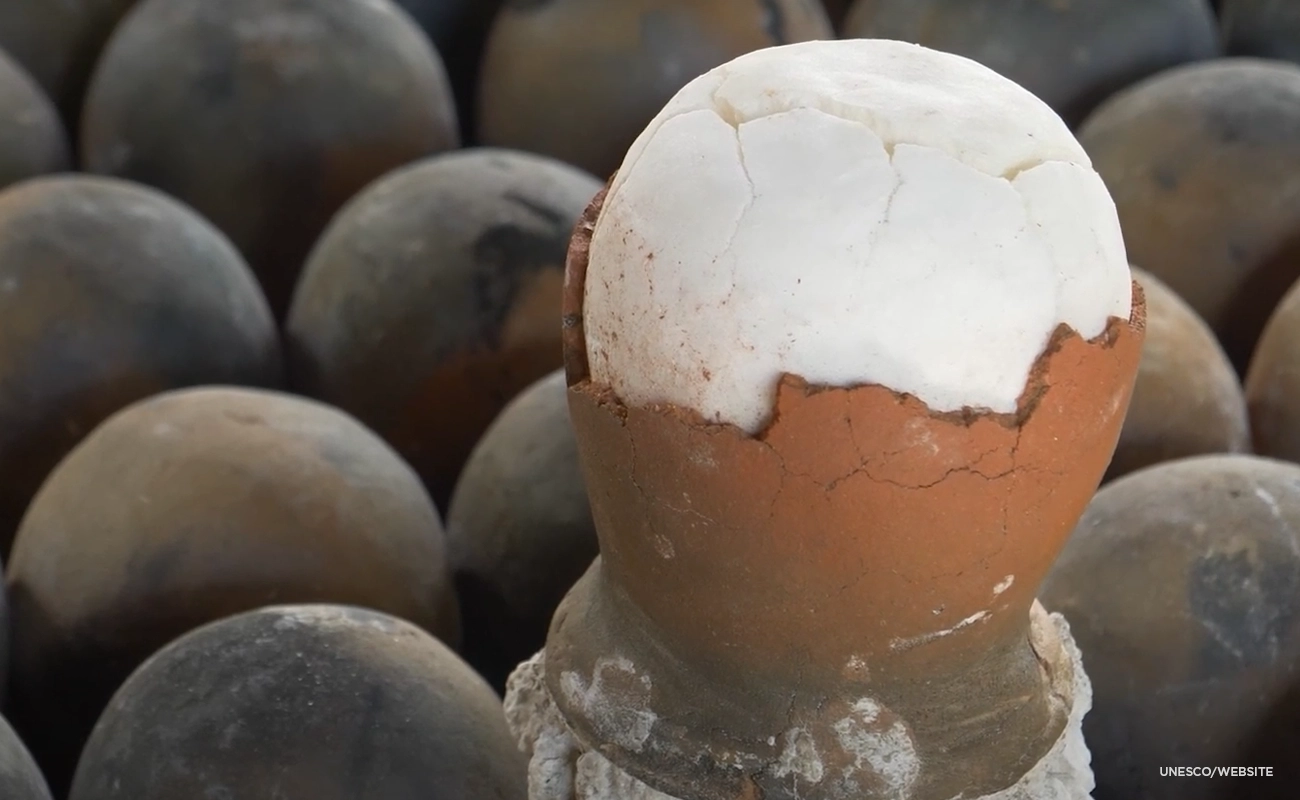


Metro Manila, Philippines – The United Nations Educational, Scientific and Cultural Organization (UNESCO) inscribed the making of Asin Tibuok, the artisanal sea salt of Bohol, into the List of Intangible Cultural Heritage in Need of Urgent Safeguarding on Tuesday, Dec. 10.
The practice of filtering seawater through the ashes of charred coconut husks is the first Philippine traditional food process to ever be included in an UNESCO intangible cultural heritage (ICN) list.
The list includes practices that are at serious risk of disappearing completely due to social or environmental change.
Safeguarding refers to any measure made to strengthen and reinforce “the diverse and varied circumstances” needed for continuous evolution and interpretation of intangible cultural heritage, especially its transmission to future generations.
The traditional salt-making process is a labor-intensive procedure passed down to generations. The process to make Asin Tibuok – described to have a sharp taste with smoky and fruity undertones – can only be carried out from December to May due to the fluctuations in seawater salinity during the rainy season.
The National Museum of the Philippines celebrated the inscription, calling it “a well-deserved and long-overdue recognition for Alburquerque’s mang-asinay, whose dedication has kept this important heritage alive across generations.”
It added that the recognition calls on the government to work closely with the community to support the industry, uphold their role as economic and cultural drivers, and ensure its survival as a living testament to resilience and identity.
The inscription is the sixth overall for the country after the hudhud chants of the Ifugao (inscribed in 2008), Darangen epic of the Meranaw people of Lake Lanao (2008), Punnuk tugging game of the Ifugao (2015) and Aklan piña handloom weaving (2023) in the Representative List of the Intangible Cultural Heritage of Humanity; the Subanen ritual buklog (2019) in the Urgent Safeguarding list; and the School of Living Traditions (2021) in the Register of Good Safeguarding Practices.
NewsWatch Plus intern Kirstien Santos contributed to this report.