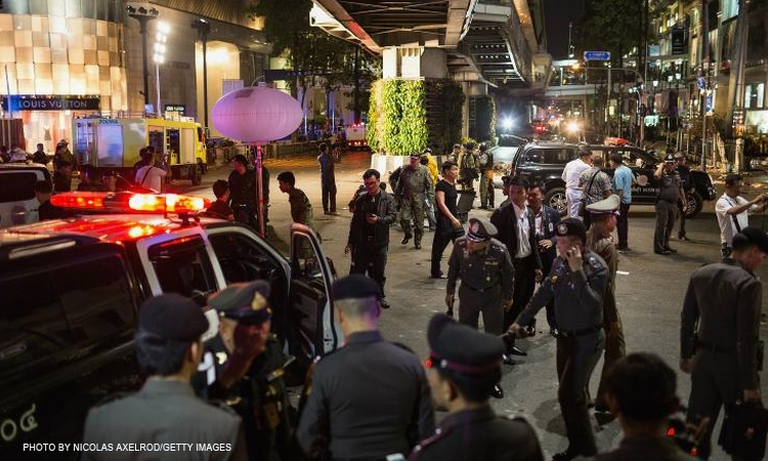

(CNN) — Thai police have said one of the suspects in custody over last month’s deadly shrine bombing in Bangkok has a Chinese passport and that he’s from the country’s Xinjiang region.
Yusufu Meerailee was arrested last week trying to flee across the Thai border into Cambodia – he has since confessed to carrying a rucksack that contained the bomb that killed 20 people at the Erawan Shrine. He said he exchanged the rucksack with a man caught on CCTV wearing a yellow t-shirt shortly before the attack.
Authorities revealed that he spoke Turkish, English, and Arabic, with the interrogation conducted through a translator.
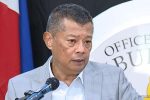
National Police spokesman Prawut Thavonsiri said Thursday (September 10) that they’ve sent copies of the passport to both Turkey and China, as they check the document’s authenticity.
Chinese Foreign Ministry spokesman Hong Lei told reporters at a daily press briefing Thursday that “China is following the investigation of this case and has been in close contact with Thai authorities. I want to emphasize that anyone who has committed such a heinous crime is bound to face severe punishment. China will continue to strengthen cooperation with relevant sides on law enforcement and security matters.”
Fingerprints matched
Prawut said Yusufu was linked to an apartment where another man was apprehended during raids on two addresses in Bangkok, a few days before Yusufu was caught. Yusufu’s fingerprints were found on possible bomb-making equipment found at the apartment in a suburb of the capital, police said.
The other man was named as Adem Karadak.
Prawut said Thursday that Karadak may not have had a direct role on the day of the August 17 bombing, but that he may have been involved in some other way. Police believe the atrocity was carried out by a group of people.
Re-enactment
Earlier this week, Yusufu was taken to a location near the shrine to take part in a re-enactment. He told police he’d transported the bomb, which was later transferred to the bomber at Hua Lumphong Rail Station nearby.
“This is the point where he met with the yellow shirt to swap the rucksack … the rucksack he was carrying was heavy and (inside) it was explosive material,” Prawut said during a press conference Wednesday.
A number of arrest warrants have been issued for people police believe are connected to the attack – including a husband and wife, who they suspect have fled to Turkey. They were named last week as Emrah Davutoglu and Wanna Suansan. Wanna is the only Thai suspect named in the bomb investigation so far, while police believe her husband is Turkish.
Police said last week that they were looking for Wanna after authorities found bomb-making materials in a Bangkok-area apartment – the second they raided – allegedly connected to her. Wanna and Davutoglu are suspected of organizing and providing accommodation to other suspects.
Uyghur speculation
While no-one has claimed responsibility for the bombing, speculation has been mounting about possible links with China’s Uyghur minority – though there is no proof of this.
The Uyghurs are a predominantly Muslim ethnic group who live in Xinjiang, a province in Western China the size of Iran that is rich in natural resources, including oil. Over recent decades, waves of Han Chinese migrants – China’s dominant ethnic group – have arrived in the region, displacing Uyghurs from their traditional land and fueling tensions.
In July, Thailand was criticized for deporting more than 100 Uyghur refugees to China, with human rights activists warning that they would face persecution.
The decision to deport the Uyghurs from Thailand sparked protests in Turkey, with which the Uyghurs share linguistic and cultural similarities. The Thai Embassy in Ankara and its consulate in Istanbul had to be closed temporarily after pro-Uyghur protesters stormed the latter.
CNN’s Elizabeth Joseph in Hong Kong and Steven Jiang in Beijing contributed to this report.
This story was first published on CNN.com, “Thai police: Chinese passport linked to Bangkok bomb suspect.”