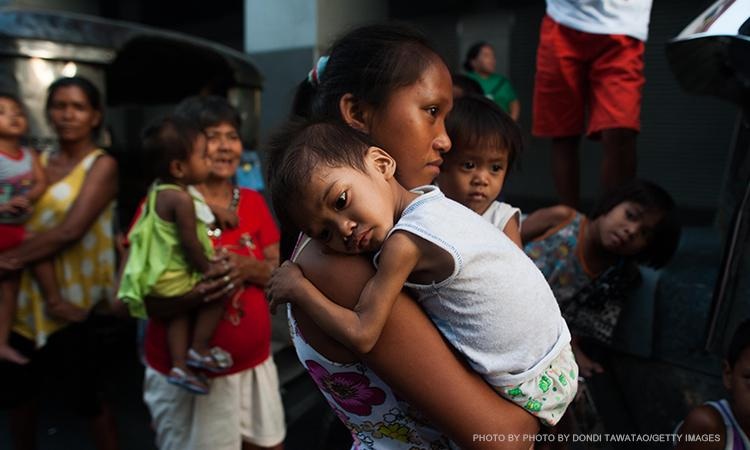

Ang mga ina ang ilaw ng tahanan.
Mothers are the light of the community.
This has been a popular phrase in the Philippines since I was a young child, but I’ve never truly figured out what it meant.
I suppose the closest analogy I could think of is the Bible’s Story of Creation.
In the beginning there was darkness, and then there was light. After the day that God created light, life began to flourish until Man was created on the seventh day.
The most distinguishing characteristic of women from men is the ability to bear a child and deliver a human being to this world. That’s why Mother’s Day and mothers will always be relevant — every person was carried in a womb and born into this world by a mother.
Philippine laws recognize the significance of motherhood by giving benefits and protections to mothers.
Maternity benefits
Under the Philippine Labor Code, employers are required to grant pregnant employees maternity leaves during which they are entitled to receive full pay even if their delivery is unsuccessful or results in a medical abortion.
Pursuant to Republic Act No. 7322, pregnant women may take a leave of 60 days with pay equivalent to 100% of their basic salary, allowances and other benefits. For women who undergo caesarian deliveries, they are entitled to take a leave of 78 days with pay.
The maternity leave may be extended if a woman is unfit for work due to illness caused by the pregnancy, delivery, abortion or miscarriage. However, the period of extended leave is without pay.
Maternity benefits are not unlimited for mothers who want several children. Maternity leaves with pay only apply to the first four deliveries, which includes failed deliveries (such as those resulting in abortion or miscarriages).
If the maternity benefits of employees under their employment contracts or collective bargaining agreements are greater (e.g., benefits allow longer leaves beyond 60 days, or grant larger financial compensation), such benefits will prevail over the minimum required by Philippine labor laws.
Longer maternity leave proposed
The maternity benefits may further increase if Senate Bill 2656 (SB 2656) is passed into law. SB 2656, recently filed by Sen. Antonio Trillanes IV, proposes to increase the maternity leave benefits from 60 days to 120 days with pay.
Employers who are worried about the cost of hiring child-bearing employees cannot discriminate against such women.
It’s unlawful for an employer to dismiss a female employee on account of her pregnancy, or while she is on leave or in confinement due to her pregnancy.
It’s also unlawful for an employer to discharge or refuse the admission of a woman who returns to work post-pregnancy, for fear that she may again be pregnant.
The Labor Code also requires employers to establish a nursery in their premises for the benefit of their women employees.
Custody issues
Other laws which highlight the importance of motherhood include the Family Code.
Article 213 of the Family Code prohibits the separation of a child under seven years old from the mother, unless the Court finds compelling reasons to order otherwise.
If a couple separates or has their marriage annulled, the mother has a better chance to remain in the conjugal home with their young children. The court will grant the right to stay in the conjugal home to the spouse with whom majority of the children choose to remain.
Children below seven years old are automatically deemed to have chosen the mother, unless the court decides otherwise.
If a child is illegitimate, parental authority (which includes the right to the custody of the child) belongs exclusively to the mother.
Nonetheless, there are some areas of the Family Code which still give the impression of a patriarchal society.
Parents are given the right to exercise joint parental authority over their legitimate minor children (i.e., children below 18 years old). But in case of disagreement, the father’s decision shall prevail except when there’s a judicial order to the contrary.
It’s difficult to gauge with certainty whether the benefits or protections provided by Philippine laws for mothers are sufficient. With no less than the Philippine Constitution recognizing “[t]he Filipino family as the foundation of the nation,” it’s essential to continuously evaluate and provide laws ensuring that those who give birth to the family’s children — mothers — are properly assisted and cared for.
Atty. Karen Jimeno is CNN Philippines’ legal analyst. She is a practicing attorney licensed in the Philippines and in New York. She is also a professor of law.