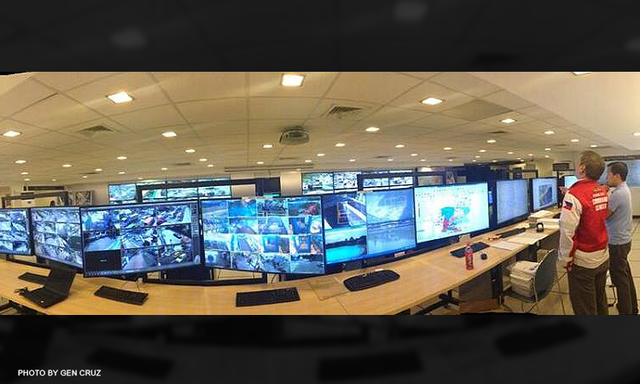

(CNN Philippines) — Pasig City is about to acquire an emergency cellular network to improve disaster communication and response.
Ritche Van Angeles, Pasig City Disaster Risk Reduction and Management (DRRM) chief, on Friday (May 29) said that the emergency cellular network will allow citizens of the city to communicate with disaster response units using their cellphones.
Related: Red Cross to lead school preps on quake readiness
In the event of an earthquake, cellular sites will surely be damaged, he said.
“Definitely communications will be down,” said Van Angeles, who also pointed out that the technology is used in other parts of the world, but is the first of its kind here in the Philippines.
The emergency cellular network has a 7km radius, and allows calls of less than three minutes, enough time to state the details of their emergency.
In the time of an earthquake, phone users will only need to manually choose their cellular network. Once the machine is on, they will be able to find the city’s cellular network.
“We need a way for people to communicate with us,” explained Van Angeles.
Related: Preppers: Call them paranoid, but they’re geared up for disaster
Radio and satellite phones allow for government units to communicate with each other, but not civilians.
The emergency cellular network will allow citizens to give the details of their location and condition using their own cellphones.
The project has just been approved and is now entering the bidding process.
Pasig City’s DRRM intends to demonstrate the technology on July 18 — in time for its city-wide drill for earthquakes.
National Response
There is yet to be instructions from the national level on how to handle a total communication blackout during an earthquake. The forecast earthquake on the West Valley Fault also cuts through Muntinlupa, Makati, and Quezon City, among others.
At present, the Philippine Institute of Volcanology and Seismology (Phivolcs) along with local government units have made attempts to mark public structures built directly on top of the fault line, urging local residents to move away as soon as possible.
“No matter how strong your house will be, you’re still in danger if you’re on the fault line,” said Van Angeles.
The Metropolitan Manila Development Authority also recently conducted “Walk the Fault”, a similar project that attempts to make the boundaries of the West Valley Fault more visible.
[Editor’s note: CNN Philippines will have a special coverage of the Metro Manila shake drill on July 30, 2015 starting at 10:30 a.m. CNN Philippines is available on free tv: Manila RPN – TV 9; Destiny Ch.14; Cablelink Ch.14; Cignal Ch.10; Sky Cable (Manila) Ch.14; and via livestream on cnnphilippines.com/videos.]