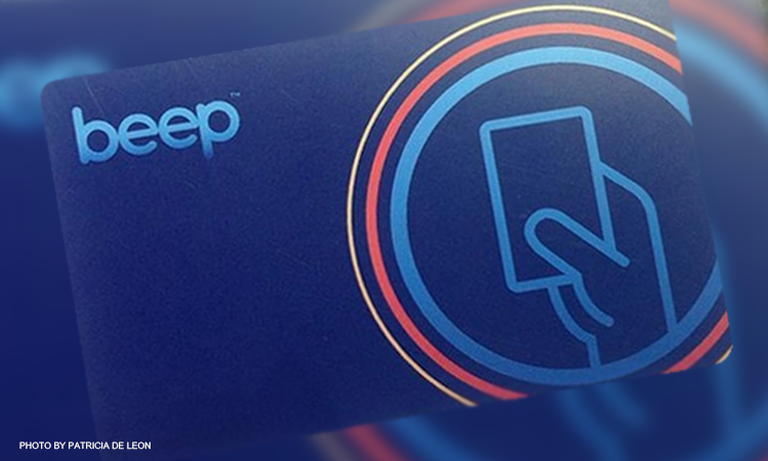


Metro Manila (CNN Philippines) — Commuters will soon be able to use their beep cards — not just for trains but for buses as well.
AF Payments, Inc., the company behind the contactless payment cards, signed an agreement with three bus lines on Friday (April 29): Froehlich Tours, HM Transport, and Citylink Coach Services.
Froehlich Tours will accept beep cards on its Trinoma-Makati and SM North EDSA-SM Megamall routes.
HM Transport will run the beep system for commuters in the Airport Loop in Pasay.
Citylink, meanwhile, will accept beep cards for its routes passing Eastwood City, Uptown Bonifacio, San Lorenzo Place, McKinley Hill and Newport City.
The new bus system is currently being tested, but AF Payments expects it to be fully operational as early as July.
Beep cards were launched in July 2015, replacing the old magnetic-strip tickets of Metro Manila’s train lines.
It allowed commuters to load as much as P10,000 on their smart cards and simply tap on and off at the turnstiles. It also integrated the ticket systems of the Light Rail Transit (LRT) and Metro Rail Transit Transit (MRT) lines, so commuters can switch seamlessly from one to another.
This is the first time beep cards will be expanded into the bus business.
“As soon as we go live, the 1.75 million beep cards in circulation will be accepted on those buses displaying the beep acceptance mark,” President and CEO Peter Maher said in a statement.
He added, “This is an important milestone for AF Payments and a welcome development for commuters who have long wished for a truly convenient travel card for journeys within the Metro area.”
AF Payments is a consortium between Pangilinan-led Metro Pacific Investments Corp. and Ayala Corp.
It bagged the contract P1.72-billion contract for the Automatic Fare Collection System — one of the earliest projects under the government’s public-private partnership program.