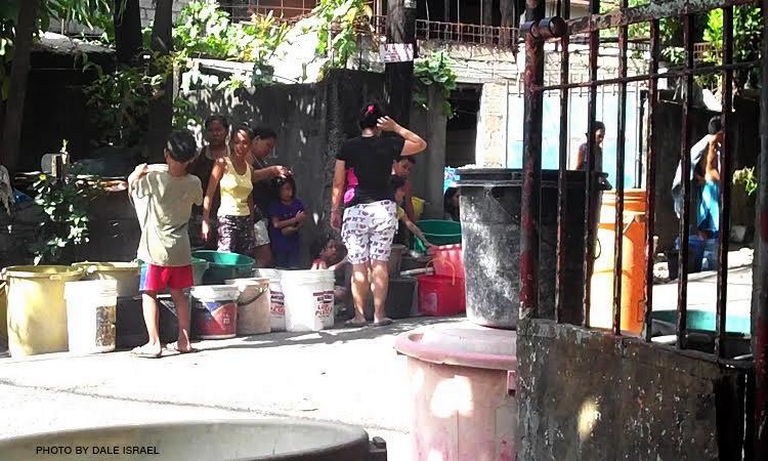


Cebu City (CNN Philippines) — As the water crisis continues, the Cebu City Council has declared a state of calamity days after Cebu province also declared a state of calamity due to the dry spell.
In its regular session on Wednesday morning (April 13), the Council approved a resolution authored by Councilor Dave Tumulak, adopting the recommendations of the City Disaster Risk Reduction and Management Council meeting the week before.
The disaster office estimated 98 percent of water supplies in the barangays were affected by the dry spell, which the state weather bureau expected to last until June.
As an urban center, only the water supplies were severely affected in Cebu City, although a few farmers in upland barangays have also sought help from the city hall.
Last Friday, Mayor Mike Rama has also declared the City in a state of emergency after a meeting with water stakeholders.
Water utilty firm Metro Cebu Water District had also purchased desalinated water, or those sourced from the sea from private water sources, as additional supply for residents.
This is part of the 17,000 cubic meters expected to be added into their system by end of the month.
MCWD’s daily production is now down to 195,000 cu. m. per day from the average of 214,000 cu. m. per day. Metro Cebu consumes about 200,000 cubic meters of water
But the water utility had already made announcements for the day until Saturday that there would be little to no water in various parts of the cities of Cebu, Mandaue, Talisay, and Lapu-Lapu from 8 a.m. to 5 p.m.
The MCWD has at least 19,000 cubic meters of water deficit since April 6 after its ground water sources dried up.
The two dams in Buhisan and Jaclupan facility are no longer producing water. The MCWD is only relying on water deep well pumping stations to supply consumers.
Some areas in Cebu City, especially those in upland barangays, have already been sent fire trucks to supply water.
Consumers had been advised to store water from 10 p.m. to 5 a.m. when there would be enough water supply.
Mayor Rama said that the declaration would also call for the people to conserve water, aside from accessing calamity funds, for the purchase of equipment such as hoses and pumps.
The province of Cebu, on the other hand, had also sent rapid assessment teams to the towns to check on the extent of the damage to crops.
The capitol is also urging the farmers to avail of the crop insurance to ease the effects of the dry spell. It is also The Capitol is paying for the premium for the Philippine Crop Insurance Corporation.
At least P33 million is available at the provincial government as calamity funds.