Metro Manila (CNN Philippines) — Banks that fail to install their debit and credit cards with more secure technology by January 1 will be held responsible for any fraud losses incurred, the Bangko Sentral ng Pilipinas (BSP) has announced.
This announcement comes as banks are likely to miss the yearend deadline to shift all their cards from the old magnetic strip at the back to the new EMV chips at the front, which promise better protection against skimming and counterfeiting.
EMV stands for Europay-Mastercard-Visa, the three companies that developed the latest global standard in ensuring more secure transactions through the use of a microprocessor chip.
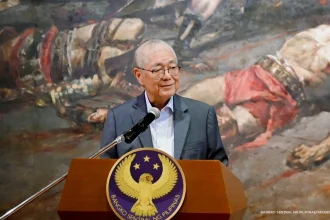
Banks are already at “90 percent compliance” when it comes to updating their software, card terminals and automated teller machines (ATM) for the EMV chips, BSP Deputy Governor Nestor Espenilla, Jr. said in a news conference on Tuesday.
“It’s the actual replacement of the cards that’s lagging behind. Less than half of the cards in circulation have been replaced,” he added.
Espenilla said the BSP would give banks leeway because of the “sheer scale” of the task: there are about 76 million debit and prepaid cards, as well as 8.5 million credit cards in circulation as of today.
However, to protect consumers, the regulator is also making banks liable for their old cards.
Starting January 1, banks still using the magnetic strip will be responsible for any losses from counterfeit-card fraud.
“In a way, it is a market sanction,” Espenilla said. “If you are not yet chip-enabled, any kind of fraud and counterfeiting, then you will take that loss.”
Customers with old cards should raise any fraud complaints with the BSP. The dispute resolution process has been cut down to 10 days from the original 45 days.
The BSP ordered banks to migrate to EMV chips as early as 2014, following the lead of other countries who were moving on to the new technology.
Unlike the magnetic strip, which contains static data that can easily be copied with a skimming device, an EMV chip generates a unique code for every transaction.
Banks begin release of new cards
In a statement, the Bank of the Philippine Islands (BPI) said all its cards were EMV-ready since 2014. Any old cards will be replaced upon expiry. Cardholders can also request for new cards from their branch of account.
The United Coconut Planters Bank (UCPB), meanwhile, has released new cards to about half of their cardholders. It expects to complete distribution by the first quarter of 2017.
The Philippine Savings Bank (PSBank) will start issuing their EMV chip-enabled cards on January 2, right at the start of the new year.
For its part, the China Banking Corp. posted that it would be EMV-ready by February 1.
The BSP said all cardholders will receive letters from their banks detailing when they can collect their new cards.
However, they should be wary of any letters or e-mails asking for personal information, like account details, usernames, and passwords. Cardholders are urged to call their banks first in case they receive such requests.