


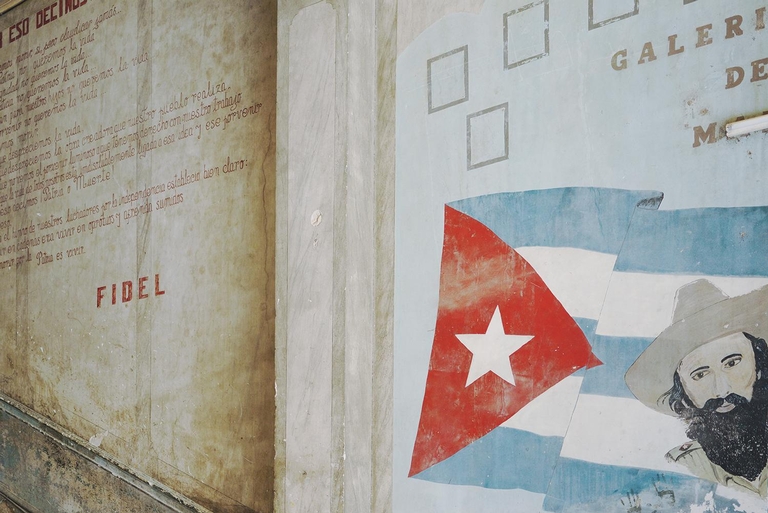


Manila (CNN Philippines Life) — It’s the 26th of November, the day after former Cuban president Fidel Castro’s death, and almost no one is in sight. In Havana, the country’s largest city, the streets are quiet. Most people are silently mourning in their homes, save for a few passersby, and some who could not leave their businesses. The previous day, the clubs were alive and nightlife was vibrant. But today, the city grieves the loss of its leader.
While they lament, others celebrate. Castro has left a divided legacy among his people and his critics — on one hand, his free provisions of healthcare and education, and on the other, the repressive laws of his autocratic socialist control that placed more families under the poverty threshold. Many Cubans nevertheless appraise his leadership of the 1959 Cuban Revolution, where he overthrew the dictatorship of U.S.-backed former president Fulgencio Batista. Yet the country’s current economic landscape still bears the effects of the U.S. embargo imposed during the armed conflict.
Cuba’s rich history has left it in a time capsule in many ways. The cars that roam its roads are re-worked and restored vintage American vehicles from the ‘40s and ‘50s. The beginning of Castro’s regime, along with the embargo, caused American automotive companies in Cuba to close down, so nobody could purchase a foreign-made vehicle, let alone own one. With the former leader’s death — as well as his brother Raul Castro’s current rule giving way to an easing of the embargo, plus the election of a new American president — the future is nearly unforeseeable.
Will the cars in Cuba remain old or will new vehicles come in, as new policies rise anew? A photographer who recently visited the country captures the uncertainty in the air in the solemn aftermath of Castro’s death, and the vintage cars that dotted the road on that day.


