

Editor’s note: Sharmila Parmanand is a Gates Scholar and a Ph.D. student in multi-disciplinary gender studies at the University of Cambridge. The opinions expressed in this commentary are hers.
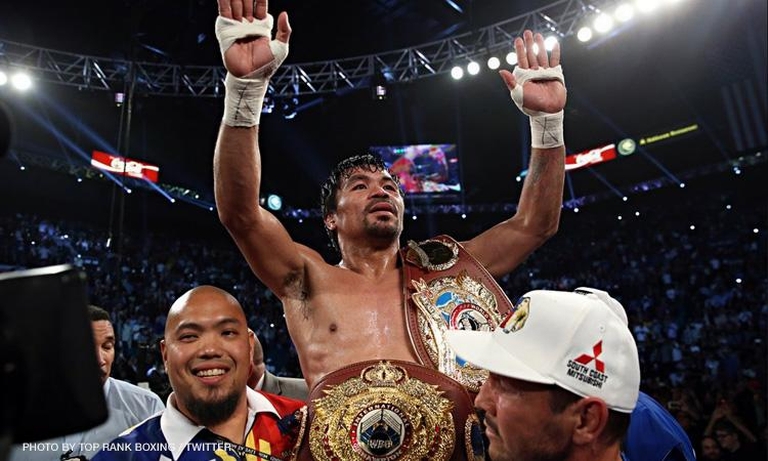
(CNN Philippines Life) — Not many athletes can claim that crime plummets in their home countries during their matches. According to the Philippine National Police, however, Manny Pacquiao has managed to make even criminals take a break to watch his fights.
Pacquiao may be the most famous Filipino ever. Apart from being a world boxing champion, singer, actor, basketball coach, and popular product endorser, he is an elected senator of the Republic of the Philippines. He was also twice elected to the House of Representatives. There is some chatter about a future presidential bid. Some say he is a one-man charity institution, but he also faces tax evasion allegations.
His cross-cutting popularity is fascinating because of what it reveals about Filipino nationalism and political culture. Some of his fans draw a line between the boxer and the politician, but this distinction is sometimes lost in the polygamous marriage of sports, showbiz, and politics in the Philippines.
While he is primarily known for his boxing prowess, other aspects of Pacquiao’s identity do not conform to dominant representations of masculine violence and aggression. He avoids trash talking, smiles when he enters the boxing ring, prays before and after fights, unabashedly belts out ballads, and dotes on his mother. Arguably, he simultaneously upholds and subverts narratives of hegemonic masculinity.
His rags to riches story tugs at heartstrings. Young Manny went to bed hungry because his single mother could not afford to feed her six children. They slept on cardboard boxes. He was drawn to boxing because he made 100 pesos if he won a fight and 50 pesos if he lost, half of which he would give to his mother for food, while half went to buying little presents for his classmates. He dropped out of school and stowed away on a ship to Manila to pursue boxing.
In many ways, Manny is the perfect underdog: through sheer discipline and determination, he rose from crushing poverty. Pacquiao is living proof of the happy ending we all want for ourselves. There is comfort in knowing that hard work will be rewarded. He represents our collective hopes and dreams.
He slept in the gym where he trained because he could not afford housing. On the side, he welded steel in a factory and sold flowers in the streets so he could send money back home. In many ways, Manny is the perfect underdog: through sheer discipline and determination, he rose from crushing poverty. Pacquiao is living proof of the happy ending we all want for ourselves. There is comfort in knowing that hard work will be rewarded. He represents our collective hopes and dreams.
And yet Manny appears humble. As a Born Again Christian, he attributes his success to God’s kindness. When Manny fought boxing legend Oscar De La Hoya, he had to move up two weight classes and was expected to lose. Instead, Manny decisively won the match. But his actions immediately after set him apart from the usual boxing champion: he threw his arms around De La Hoya, repeatedly declaring, “You’re still my idol!” No wonder he is thought of as having iron fists but a heart of gold.
Arguably, the appeal of violence in Pacquiao’s case might be partially incidental. It likely derives from the same nationalist logic that explains our obsession with Filipinos who get any form of global recognition, such as athletes in more “benign” sports, like Efren Bata Reyes in pool and the Azkals in football, or even “part Filipinos” Jasmine Trias and Jessica Sanchez on “American Idol.”
Nonetheless, the extent to which we have glorified Pacquiao does involve some romanticization of violence. Not every rags to riches story in sports or pop culture is equally celebrated. And we proudly proclaim that unlike other clinical “boring” boxers, Manny is an exciting fighter because he is a big and brutal puncher.
This violence may be cathartic. Through his body, Manny allows the Philippine nation to vicariously dominate foreign bodies and perhaps extract some payback for the poverty and discrimination experienced by many Filipinos. Pacquiao also elevates the status of Filipino masculinity, which has traditionally been constructed as inferior through historical disempowerment and on account of Filipino men being perceived as physically shorter or weaker than their foreign counterparts. Pacquiao’s fight with Ricky Hatton, for example, was dubbed “The Battle of East and West,” a symbolic marking of “white” versus “brown” masculinity. Through Pacquiao, the Filipino male is no longer invisible — he is wealthy, powerful, and dominant.

While Manny’s story resonates in a society with deep social inequalities and racial insecurities, there are also reasons to be wary.
The construction of Pacquiao as an “honorable” warrior enduring extremes for a sport he loves in the name of the Filipino people has given rise to a personality cult that catapulted him into high-level public office.
However, while in Congress, Pacquiao was the top absentee. He has also regularly condemned homosexuals, calling them “worse than animals.” He voted against making contraception accessible to women because of his newfound belief in the sanctity of life after he thought he would die in his Las Vegas bout against Juan Miguel Marquez, but he advocated for the death penalty in the Senate because he is convinced that God would support it.
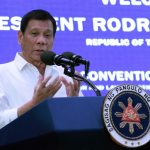
Despite admitting to having used drugs in the past, he recently backed the violent war on drugs being waged by the current Philippine president, Rodrigo Duterte, which has resulted in unsolved extrajudicial killings of many citizens.
Without discounting his hard work and rise from poverty, the macho aggression and Christian fundamentalism embodied by Pacquiao currently contributes to violence against sexual minorities, the poor, and women.
He responded to criticism from progressives by half-heartedly apologizing for comparing homosexuals to animals, but reiterated that his rejection of homosexuality was a form of obedience to God’s word. This seemed good enough for over 16 million Filipinos who voted for him as senator, landing him the seventh spot out of 12 seats.
Pacquiao’s critics are often dismissed as “unpatriotic” for refusing to wish him boxing success and for conflating sports and politics. However, in this case, sports and entertainment are not as neutral as we would like them to be. To pretend that we can have a conversation about Pacquiao purely as a boxer without regard for how this drives his political career is dishonest. In the first place, our support for Pacquiao as a boxer is already underscored by national pride and a shared Filipino identity. It’s “our guy” up against the “other guys.”
Through Pacquiao’s violence in the boxing ring, we avenged historical injury and emasculation. But we also upheld aggressive physical dominance as an ideal. We fell in love with his story of overcoming adversity, but we also turned him into a messiah whose constant physical suffering and boxing victories were a service to the nation.
The very things that make him an inspiration to many have allowed him to mobilize hate and an acceptance of violence against the marginalized. When Nike dropped Pacquiao as their endorser over his homophobic remarks, some of his fans took to burning Nike shoes in protest. Many were also quick to defend his views in comments sections of online articles critical of him.
Perhaps we need to reevaluate our sources of pride as a nation, especially in light of the newly elected president’s tendency to devalue life, promote violent approaches to policing, and bully critics, including using “gay” as a pejorative.
Perhaps Manny’s statements were just a product of a homophobic and patriarchal culture for which he must not be the sole whipping boy. However, as a public official, he wields significant influence over public discourse, he has voted down rights-based legislation, and he has played a role in attempting to suppress investigations on extra-judicial drug-related deaths. Without discounting his hard work and rise from poverty, the macho aggression and Christian fundamentalism embodied by Pacquiao currently contributes to violence against sexual minorities, the poor, and women.
And for as long as we buy into the image of Manny as the “People’s Champ,” he will keep evading accountability. Perhaps we need to retire this hero and find new ones.