
Metro Manila (CNN Philippines) — Federalism will require a massive overhaul of the government system — a risky undertaking, especially in the hands of lawmakers who may have vested interests, an academic warned.
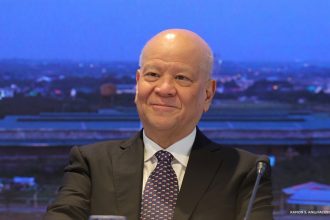
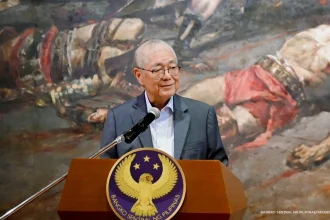
“The recommendation of top scholars for democratic countries with already functioning systems or forms of government is to reform, rather than to overhaul, their governments,” University of the Philippines Professor Gene Pilapil said in a forum on Tuesday.
He explained that countries often make the big decision to adopt a unitary or federal system when they are transitioning, not when they already have a functioning government.
This is because overhauling the system of government will require extensive changes to the Constitution, the branches of government, from the local to national levels.
This is akin to “rebuilding the ship while out at sea,” Pilapil said.
Federalism proponents have set a 10-year timeline for the transition, meaning the country could likely be in political limbo for an entire decade, he added.
Pilapil, who was speaking at the Jaime V. Ongpin Annual Memorial Lecture, also warned the administration against its plans to shift to a parliamentary system as well.
“No country in the world has ever shifted both from a unitary to a federal, as well as from a presidential to a parliamentary system at the same time. We are on our own,” he said.
It would be less risky to try and reform the current system instead, according to the academic. If piecemeal reforms don’t work, they can be easily reversed. A constitutional rewrite will not be as easy.
Read: Will the Philippines be better off under a federal government?
Sought for comment, former Senator Nene Pimentel defended the Duterte administration’s federalism platform.
“I think that federalism is the only solution that can give peace in this country and therefore development in a more speedy manner than ever before,” Pimentel said in a phone interview.
When he was senator, Pimentel filed a bill that sought to partition the country into so-called federal regions.
Meanwhile, Pilapil said if the country must move towards federalism, a constitutional assembly may not be the best way to oversee the shift.
A constitutional assembly will convene Congress as a body to lead in introducing changes to the Constitution. But the professor said this was the “worst mode” as Congress does not have the political maturity yet. Parties are weak, and dynasties are deeply entrenched.
The risk is that legislators will seek to draw up the rules of the game in a way that will protect vested interests, Pilapil explained. It would be better to hold a constitutional convention (con-con), where delegates are elected into a body that will review the Charter.
Related: Solons: Yes to charter change, mixed reactions to federalism
Despite stiff opposition, the House committee on constitutional amendments approved last week the resolution calling for a constituent assembly.
President Rodrigo Duterte previously backed a con-con, but his administration dropped the plan after it was estimated to cost about P8 billion.
As for Pimentel, he assured there were ways to guard against vested interests.
“It is very important that both houses should conduct extensive consultations by holding committee hearings in various places of the nation, so that the thinking of the people can permeate their own vision of how to shape the federal system when it is adopted by the country,” he said.
He added that the President would provide “firm leadership” to keep lawmakers in check, ensuring the con-ass would not stray from the primary objective of developing an appropriate federal system.