

[Editor’s Note: The views expressed in this piece are those of the author’s.]
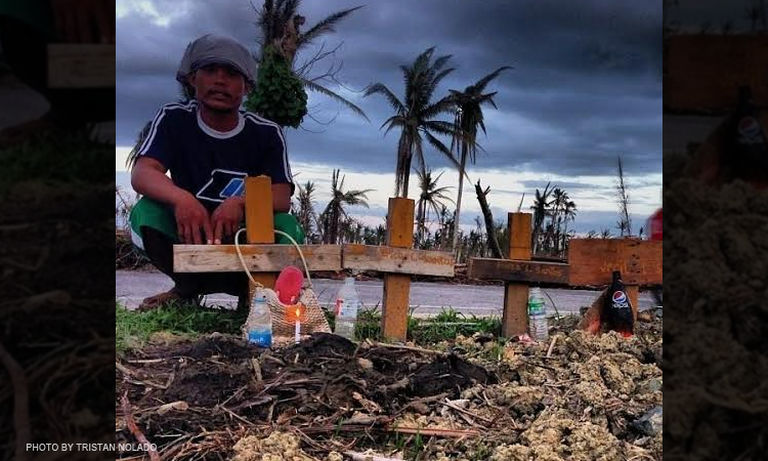
Metro Manila (CNN Philippines) — A year after Super Typhoon Yolanda devastated Eastern Visayas, I met Melvin Sakay, a 22-year-old man who lost 23 of his relatives — including his parents and siblings – during the typhoon.
At the time of our meeting, he’s almost finished building his new house — a house built from the lump sum he obtained from his parents’ death benefits. It’s a new house that Melvin couldn’t call even home.
I can still remember what he told me during the interview. He fears that everytime he will go to his new house, the deafening silence would only make him wish that he had died with his family. Yes, he survived, but his life has become nothing but an empty shell, he told me.
Eventually, Melvin found work as a volunteer in downtown Tacloban. His current job allowed him to do things for long hours, go to places outside of the city and spend days outside of his town. He thought of this as one of his ways to cope with his loss. For more than a year, he didn’t know where to start or where to go.
But for Melvin and other survivors, the unfathomable pain, grief and loss made them question something bigger than themselves — their faith.

Why would God allow so many people to suffer, die and be washed away by the raging waves of the sea?
Why would God allow his people to become desperate for food, become hopeless, and make them feel abandoned?
These questions about God made Melvin walk away from his faith. He thought that God allowed him to survive only to suffer in the end.
Devotion to the Black Nazarene

Just like the millions of people who flock their way to the Feast of the Black Nazarene, Melvin is also a devotee. Every year, he goes to Manila just to participate in the event. He said it was his way of thanking God for all the blessings that his family received for the entire year.
But after Typhoon Yolanda hit Tacloban, Melvin could not find his reasons to go to the procession. He could not thank the Black Nazarene for all the blessings his family received that year, because he didn’t have a family anymore to begin with.
How difficult is it for a man to hold on to his faith when everyone he loved was taken away from him? He said all that’s left was pain, anger and grief. He was a broken man.
For two consecutive years, he chose to forget his promise to the Black Nazarene.
He thought he could live his life even with his faith lost. It had forsaken him. This was his way of protest, his way of turning his back away from God.
New hope, new life
This year, I received a text message from Melvin. He told me that he’s in Manila and will be joining the Black Nazarene procession. I was surprised that he told me about it, so I called him and asked him what changed his mind.
Melvin has a wife and a baby now. He found a source of hope, a new source of life. He told me that he was on the verge of giving up after my interview with him. He came to the point of wanting to end his own life because he felt that he had no one to live for.
And then he met a woman, who happens to be a Yolanda survivor too. The pain and the feeling of loss is still there for Melvin, but he said that meeting this woman — who became his wife – gave him a renewed sense of hope.
It was the kind of hope that he thought he would never feel again.
Now, with a baby in his arms that he named “Hope,” Melvin has found redemption.
All he wanted was to thank God by joining this year’s procession. Like a prodigal son, he has returned to Him. For God never left Melvin… and He never will.
Restoration of faith
The incredible sight of Filipinos from all walks of life pouring their hearts out in devotion to the Black Nazarene is both overwhelming and heartwarming.
Each pilgrim represents a story of desperation, desire, gratefulness and of never-ending hope.
Melvin’s story will always remind us that sometimes, we are led to the dark in order to see light. And no matter how many times we turn our back to God, He has His own way of inviting us to His arms again.