

Metro Manila (CNN Philippines, September 22) — Filipino favorite 3-in-1 coffee, along with milk, and natural juices are spared from taxes in the Senate’s latest version of the tax reform program.
These are among the changes the Senate Committee on Ways and Means want on the Tax Reform for Acceleration and Inclusion (TRAIN) bill being pushed for by the Duterte administration.
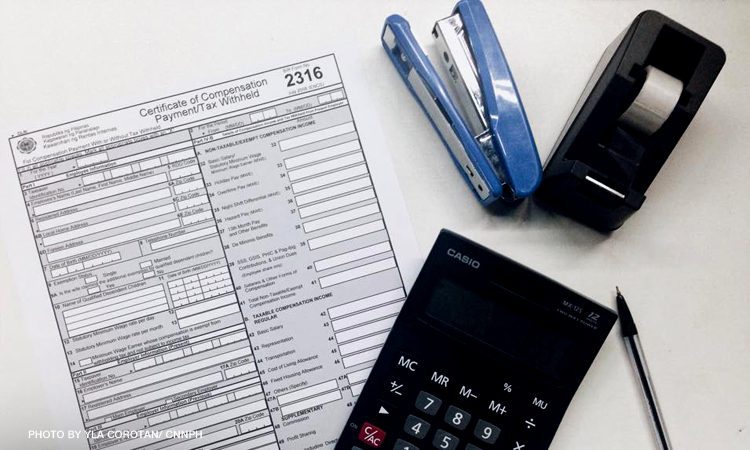
Senate Bill no. 1592, which was passed by the committee on Wednesday, also exempts from personal income taxes those earning a yearly income of P150,000. This is lower than the P250,000 threshold in the counterpart measure passed by the House of Representatives last May 31.
If passed, this will be transmitted to the Lower House and both houses will convene to resolve the differences. The final version approved by both houses will be sent to President Rodrigo Duterte for veto or verification.
Millions to benefit from lower income tax
Millions of Filipinos will benefit from lower income taxes, Senator Sonny Angara, chairman of the Senate ways and means committee, said.
Almost all or 99 percent of the 7.5 million registered taxpayers can save more as they pay less taxes, he said.
Although the Senate bill exempts from personal income taxes only those earning P150,000 yearly, it gives additional P100,000 exemption for those who earn more but have four dependent children.
“Ibig sabihin, ang sinuman na may apat na dependent at kumikita ng hanggang P25,000 kada buwan ay exempted na mula sa income tax (That means anyone who has four dependents and earning P25,000 monthly is exempted from income tax),” Angara said in his sponsorship speech on Wednesday.
For instance, a teacher who has two children and earns a monthly income of P17,254 currently pays P20 percent tax. But under the proposed measure, the teacher will no longer pay taxes.
The exemptions will be applied across the board, including self-employed workers and entrepreneurs.
The self-employed will also enjoy easier payment schemes. They can choose to pay the flat 8-percent tax on their annual gross income instead of filing tax returns every quarter.
The P82,000 tax exemption for 13th month pay for the employed and other bonuses are retained, consistent with the House version.
Small businesses with total annual sales of P3 million and below will also be exempted from paying value-added tax (VAT).
Cutting sugar taxes
Angara said changes were made to the proposed taxes on sweetened beverages to benefit the poor.
“Nakinig naman tayo sa hinaing ng marami. Kaya pinili namin gawing exempt ang kape at 3- in-1 at kape, dahil 90 percent ng mga bumibili nito ay mula sa class D at E (We heard the grievances of many. That’s why we chose to exempt coffee because 90 percent of its consumers come from classes D and E),” Angara said.
Milk is exempted from taxes for its nutritional value for infants and children, Angara added.
There will also be no taxes for healthier options such as natural fruit and vegetable juices, unsweetened tea, beverages meant for meal replacement or medical purposes, and those containing coco sugar and stevia.
The Senate bill proposes a two-phase approach on the House bill’s imposition of P10 per liter tax for local sugar and P20 per liter for others.
During the first two years of implementation, taxes for beverages with caloric sweeteners will just be P5, P3 for those with non-caloric sweeteners, and P10 for those with High Fructose Corn Syrup (HFCS). A tax of P0.5 per gram of sugar will be imposed thereafter.
Staggered petroleum taxes
The Senate bill agrees to raising excise taxes on petroleum, and wants this implemented in three tranches for three years or an increase of P1.75, P2.00, and P2.25. That’s from 2018-2020, should it be passed into law this year as targeted by the administration.
“Tingin namin, mas makakasabay ang tao kapag ganitong paraan ang gagamitin ng TRAIN- dahan-dahan, imbis na biglaan (We think people can adapt to the measure if implemented gradually, not hastily),” Angara said.
The Senate bill, however, wants kerosene to remain untaxed since it is used by most Filipinos. The TRAIN as earlier proposed by the Department of Finance sought an excise tax of P3 in 2018, P5 in 2019 and P6 in 2020 for kerosene, diesel, and LPG.
Taxes for expensive cars will be higher than lower-end models, consistent with the House bill. Purchase of hybrid and electric cars will be exempted to encourage green transportation.
Where will our taxes go?
Critics have slammed the government’s tax reform proposal as anti-poor, arguing that working Filipinos benefit from lower personal income tax, but the poor pay for it through heightened tax on fares, diesel, and sugar.
Angara said the Senate bill included an earmarking provision to directly benefit the poor.
Revenues will go to the implementation of the Free College Law, among other programs.
Commission on Higher Education Chairperson Patricia Licuanan on Thursday told senators the commission needs at least P51.4 billion to fund the students’ free tuition, loan program, and technical-vocational needs.
Tax revenues shall also be used to give free medicines to poor families in government hospitals, expand the PhilHealth package to include outpatient care for indigents and senior citizens, and subsidize housing projects for fishermen, among others.
Incremental revenues from excise taxes will be used specifically for a P300 per month unconditional cash transfer for the bottom half of the country’s poorest households for a period of three years, and to help in the implementation of the PUV modernization project.
Meanwhile, government income from sugar taxes will go to health programs for poor households to address obesity, diabetes, and other non-communicable diseases, feeding programs in areas with high incidence of hunger, and employment and training programs in the sweetened beverage industry.
The government hopes to generate P134 billion from the new tax package to fund the administration’s infrastructure projects.
CNN Philippines’ Cecille Lardizabal contributed to this report.