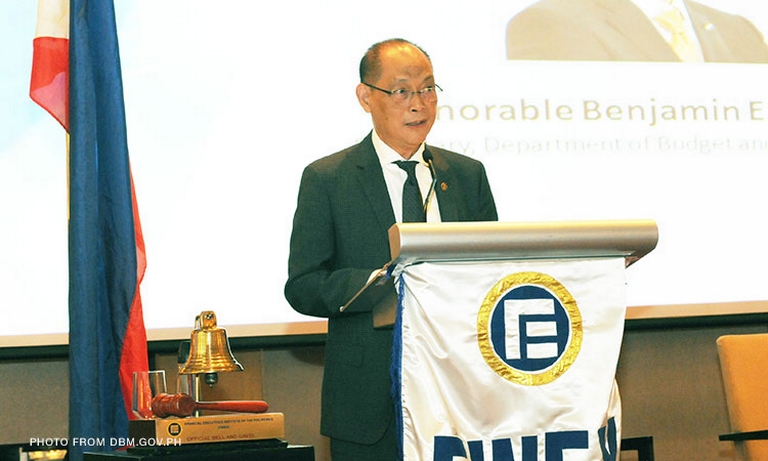

Metro Manila (CNN Philippines, August 8) — Government underspending has been a “major flaw” for the Philippines since 2014, according to Budget Secretary Benjamin Diokno.
“A major flaw of the present budget system is underspending. Although it is already declining, it is still too large,” Diokno told the Senate Committee on Finance Monday.
In Diokno’s report, ₱302 billion or 13.3 percent of the ₱2.265-trillion national budget in 2014 was not spent.
The problem continued in the following years: an underspending of ₱328 billion or 12.5 percent of the ₱2.606-trillion national budget in 2015, and ₱96.3 billion or three percent of the ₱3.002-trillion national budget of 2016.
Diokno said this only proves that the government is not utilizing its budget fast enough in the allotted time frame.
The Budget Secretary then proposed to the committee the “Budget Reform Act towards an Improved National Government Spending” (BRAINS), to address the gaps in the current system of the government’s budget and financial management.
Under the act, there will be a transition from multi-year to annual budgeting and from obligation to cash-based appropriations to ensure fast spending of government.
“If a government cannot implement a one year plan then it cannot implement a multi-year plan. Government has an ambitious six-year plan for infrastructure and social sector spending and to achieve this six-year plan, we must implement a one-year plan first,” Diokno added.
Under the act, lump-sum or special purpose funds will be limited as well as unprogrammed funds that should not exceed two percent of the total budget. A separate clause will require the review of the allotment of the government’s revenue or earmarkings.
President Rodrigo Duterte submitted the proposed 2018 national budget to Congress on July 24, amounting to ₱3.767-trillion (US$75 billion).
A huge part of the budget will go to education and infrastructure.
Diokno previously said the allocations are “consistent with President Duterte’s Build, Build, Build program to usher in the Golden Age of Infrastructure in the Philippines and his desire to develop the Filipino youth into an agile, competent workforce for the future.”