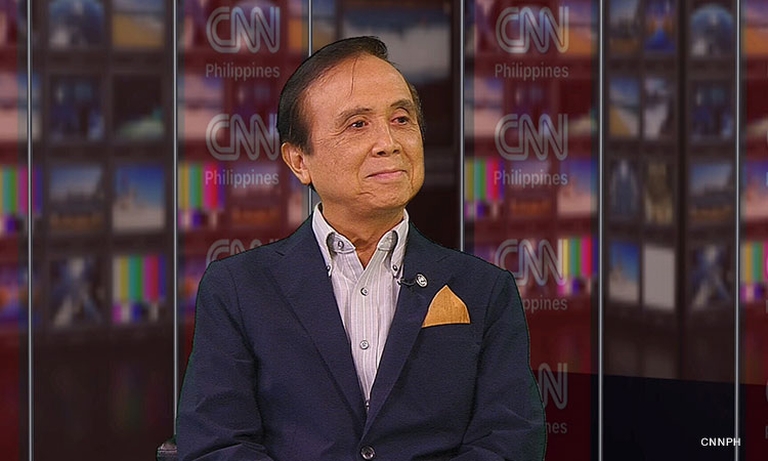


Metro Manila (CNN Philippines, July 20) — Economic Planning Secretary Ernesto Pernia said the country’s development should reach regions with low economic performance before the country shifts to a federal form of government.
“I think what we should work on now is regional and rural development, so that the regions that will form the federal states will be better-prepared to assume federalism and self-governance,” he said on CNN Philippines’ The Source on July 20.
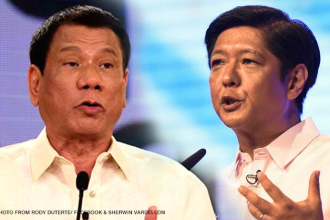
President Rodrigo Duterte has been pushing federalism even before running for presidents, always emphasizing that the system would usher in peace in conflict-stricken Mindanao.
A federal government aims to set up autonomous states that have greater power over administration and resources. Under the current unitary system, authority is centralized on the national government based in Manila.
Pernia said the establishment of autonomous entities would improve peace and order among different ethnic groups.
On July 17, Duterte received the draft of the Bangsamoro Basic Law (BBL), which paves the way for the creation of the Bangsamoro, the successor to the Autonomous Region of Muslim Mindanao established in 1989 through Republic Act No. 6734.
The BBL, which Duterte certified as urgent on July 17, will be submitted to Congress for deliberation. Its creation is seen as a template of what a federal state could look like.
On the same day, Duterte met with Cordillera officials, led by Baguio City Mayor Mauricio Domogan, who are pushing for the creation of an Autonomous Region of the Cordillera.
Pernia said the Duterte administration hopes to raise average living standards, as measured by gross domestic product (GDP) per capita, by the time it leaves office in 2022.
GDP per capita is computed by dividing the country’s GDP, which is the value of all goods and services produced within the country in a year, by the total population.
“We foresee the Philippines as high-middle-income country,” he said. “Now, we are a low-middle-income country with a GDP per capita of $3,550 (around ₱180,663) and we would be reaching perhaps $5,000 (₱254,455) by 2022.”