

(CNN Philippines) — Dozens are injured after a magnitude 5.9 quake jolted Surigao del Norte on Sunday, a month after a major earthquake hit the province in February.
Read: At least 8 dead; 202 injured in magnitude 6.7 Surigao quake
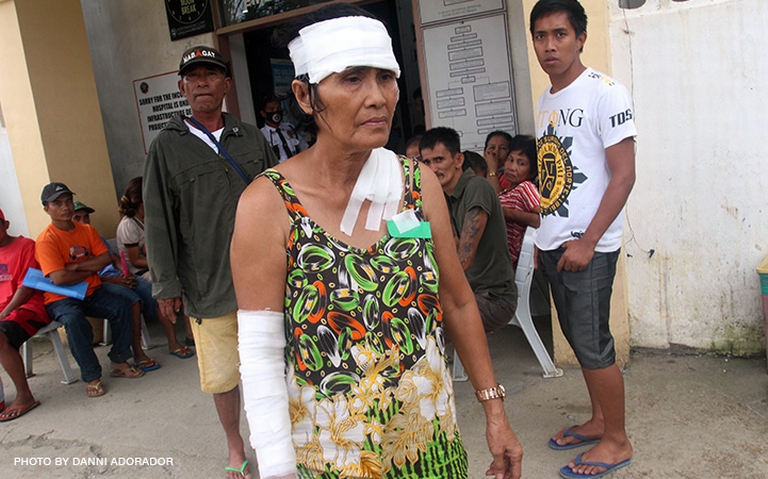
Surigao hospitals reported at least 29 people were hurt after the quake struck the province at 8:08 a.m. Sunday.
The Philippine Institute of Volcanology and Seismology (PHIVOLCS) said the tremor was an aftershock of the magnitude-6.7 quake that hit Surigao on February 10. An earlier alert from PHIVOLCS pegged the quake at magnitude 5.4.
It added, there was no threat of tsunamis as the quake’s power and movement were not strong enough to trigger one.
Hospitals report 29 injured
Hospitals report some 29 people were injured due to the quake.
Staff at the government-owned Caraga Regional Hospital reported 25 injured by the quake as of 1:00 p.m., while privately-run Surigao Medical Center reported 4 as of 10 a.m.
Anna Dagcuta, public information officer of the Caraga Regional Hospital, said most of the patients suffered only minor wounds such as lacerations and abrasions.
“Out of 25, 24 patients were discharged. They are considered outpatients because they only suffered minor injuries,” she said.
She added one patient was admitted after sustaining bruises and an eye contusion or a black eye.
An elderly woman also reportedly died of a heart attack from the earthquake, but local officials have yet to verify such accounts.
Nards Go of the City Disaster Risk Reduction and Management Council (CDRRMC), said “Reports are still coming in, and our rescue units are still responding so we can’t confirm any fatality or give any numbers right now.”
No power, buildings damaged
Go said that based on initial field reports, the tremor destroyed several residential buildings, knocked off a subdivision fence and wounded a store clerk at a local warehouse.
The city is also without power, as electricity was cut following the quake.
Surigao City Vice Mayor Alfonso Casurra said the city is conducting rapid assessment of the damage dealt by the aftershock.
In an interview with CNN Philippines, Casurra said the local government is assessing bridges and other structures possibly affected by the quake.
Casurra said Sunday’s aftershock further damaged buildings weakened by the initial February 10 earthquake.
“Ang reported samin ngayon ay yung mga nasira nun ay talagang nasira na ngayon. Yung mga slightly damaged before it has been reported now that merong damage na talagang na [naguho],” he said.
[Translation: Reports say the structures damaged before were further devastated by this quake. Those slightly damaged before have reportedly caved in.]
He added, residents remain in shock following the tremors.
“Yung mga tao kasi ngayon nasa state of shock pa kasi malakas at mahaba yung quake,” Casurra said, adding “It’s almost about 5-7 seconds. Mahaba atsaka swaying ito, unlike yung previous Feb. 10 parang jolts yung nararamdaman namin,” he said.
[The people are still in a state of shock because the quake was strong and took long. It’s almost 5-7 seconds. It lasted for a while and it was swaying, unlike the previous Feb. 10 quake where we felt jolts.]
But the Vice Mayor added residents were better prepared for the aftershock following the major quake that shook Surigao in February.
He said although PHIVOLCS informed authorities there was no tsunami threat from Sunday’s tremors, residents were ready for preemptive evacuations due to the aftershock.
“Yes in fact makita mo talaga ngayon immediately after it happened lahat ng mga tao ay nasa along the streets lang and ready to evacuate to higher ground” he said.
[Yes, in fact you can see immediately after it happened, everyone was along the streets and ready to evacuate to higher ground.]
In an interview with CNN Philippines, PHIVOLCS Director Dr. Renato Solidum reiterated there was no tsunami threat following the 5.9-magnitude aftershock.
“Definitely the magnitude is not so much to generate even a tsunami. The movement of the fault is not vertical… with those two parameters definitely there will be no tsunami,” he said.
Solidum said aftershocks were normal following a strong quake.
“Ïn some other areas like the Bohol earthquake of 2013, aftershocks have been felt even a year or two after that major earthquake,” he said.
Solidum said PHIVOLCS is expecting more aftershocks following the magnitude-5.9 quake.
He added, residents should avoid buildings damaged by the February 10 quake and its subsequent aftershocks.
“We also mentioned before that buildings that have suffered damages in the Feb. 10 earthquake should not be used because aftershocks might cause additional damages or even total collapse of structure that have been affected before whenever there’s a strong aftershock that should happen,” he said.