

Metro Manila (CNN Philippines) — Officials signed Tuesday the implementing rules and regulations of what is considered as the first and only law in the world that aims to protect children and mothers during emergencies and disaster situations.
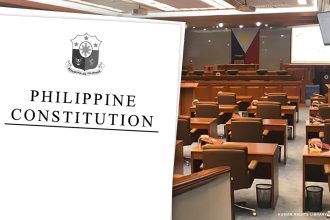
Republic Act 10821 or the “Children’s Emergency Relief and Protection Act,” which was signed into law by former President Benigno Aquino III in May 2016, mandates the creation of a Comprehensive Emergency Program for Children (CEPC).
“This is a very important law as it will contribute to our efforts to further protect those who are most vulnerable during disasters,” said Department of Social Work and Development Secretary Judy Taguiwalo in a speech during the signing ceremony.
The CEPC is designed to protect and support the immediate recovery of children and pregnant and lactating mothers during and after emergencies and disaster situations through:
Establishment of evacuation centers
Establishment of transitional shelters for orphaned, separated and unaccompanied children, which must include gender-specific emergency latrines, bathing cubicles and hand-washing facilities specifically designed for children
Assurance for immediate delivery of basic necessities and services, with priority given to the specific health and nutrition needs of pregnant women, lactating mothers, newborn babies, children under five years old and children with disabilities
Enforcement of stronger measures to ensure the safety and security of affected children to prevent child trafficking, child labor and other forms of exploitation. Children will also be given priority during an evacuation because of a disaster or other emergency situation
Delivery of health, medical and nutrition services
Creation a plan of action to bring affected children back to school
Establishment of child-friendly spaces, defined by the law as “spaces where communities create nurturing environments for children to engage in free and structured play, recreation, leisure and learning activities”
Promotion of children’s rights by teaching both children and emergency responders what to remember during disaster situations
The law likewise stipulates rules for evacuation centers and the restoration of destroyed or missing civil registry documents like birth certificates by the Philippine Statistics Authority (PSA).
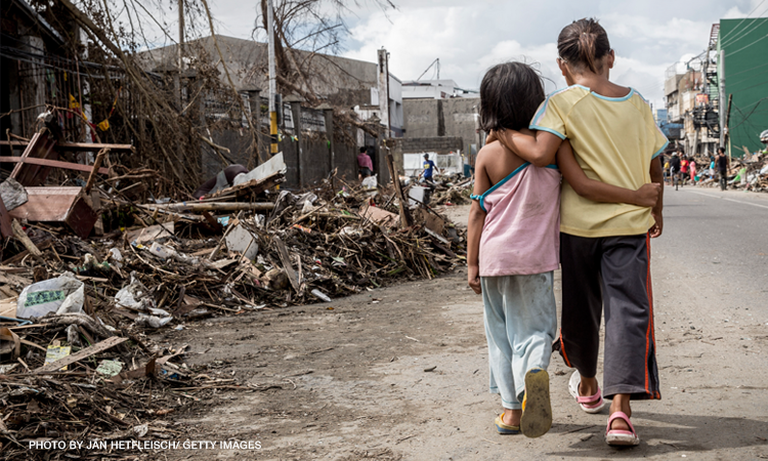
In 2014, the PSA found that among 10,701 barangays affected by Typhoon Yolanda (international name: Haiyan), eight out of 10 barangays reported behavior change among affected children following the storm.
Fear of wind and rain, and uncontrollable crying and screaming, were the two most reported behavorial changes among children in these barangays.
In addition, the PSA found that four in 10 barangays reported children under 14 as targets of sexual violence after the storm.
Multi-sectoral implementation
“As we push for the implementation of the law at all levels, we hope to make the public recognize the truth that disaster risk reduction, response and management processes involve the collective action between the public and the government,” Taguiwalo said.
She said the key to properly enforcing the new law is to involve communities in crafting polices and programs.
Joining Taguiwalo at the signing were Defense Secretary Delfin Lorenzana and officials from the Office of Civil Defense, the Department of Education, the Department of Health and the Armed Forces of the Philippines.
From non-government organizations, Ned Olney, Country Director of the Save the Children Foundation, and UNICEF Philippines Representative Lotta Sylwander also attended the event.