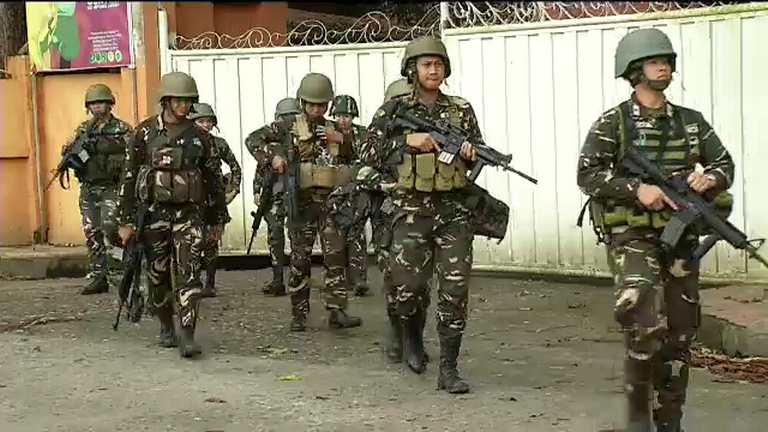


Metro Manila (CNN Philippines, November 17) — The military eyes the lifting of martial law in Mindanao before the year is up, an official said Friday.
“We’re working towards that,” said Major General Restituto Padilla, spokesperson of the Armed Forces of the Philippines. “We’re hoping to be able to address and normalize everything by the end of the year because that was the deadline given to us,” he said at a news briefing in Malacanang Palace on the situation in Marawi City.
But even as the ISIS-inspired Maute group has been obliterated with the death or capture of its leaders, Padilla warned there was a possibility of extending martial law if they were unable to stop several local terrorist groups.
“So if we are able to address that by the whole of month, the remaining days of November as well as the whole month of December, then we will report that to you and give justification for the lifting of martial law,” Padilla said.
“If not, we will have to request an extension to be able to address the remaining threats in area,” he added.
Padilla’s remarks come as the Philippine National Police on Friday presented three suspects allegedly belonging to the Abu Sayyaf group. The three men who were arrested on November 10 are said to be part of the group’s urban terrorist unit that was planning attacks in Metro Manila during the Summit of the Association of Southeast Asian Nations.
Also read: Police capture 3 Abu Sayyaf members with plans to attack Metro Manila
The military is also stepping up its pursuit of remaining Abu Sayyaf and another rebel group, the Bangsamoro Islamic Freedom Fighters in the southern islands of Basilan, Sulu, and Tawi-Tawi, where they have been known to be hiding.
Also read: Gov’t forces bomb BIFF hideout in Maguindanao
“The network of the local terrorist groups still continue and this is the subject of our efforts,” he said .
Padilla said the abduction of six locals in Sulu on Tuesday by 15 members of the Abu Sayyaf Group (ASG) was a tactic to divert the military’s attention and that they were desperate to sow terror.
“The recent abduction of six locals indicate that the ASG in the area is already facing dark needs and hence are targeting so many local individuals that have not been in their list previously,” he said in the news briefing.
Also read: 6 locals abducted by suspected Abu Sayyaf members in Sulu
“We assume that these are perhaps part of their ploy to perhaps take out some of our focused military operations in certain parts of Sulu,” he said. But Padilla assures they will not lose focus.
The Abu Sayyaf group, which in its early years was connected to Al Qaeda, has since morphed into a group of bandits who engage in kidnap-for-ransom of foreigners and tourists. The leader of its Basilan group, Isnilon Hapilon, had joined the Maute group in Marawi and was one of the leaders of the five-month long siege. He was killed by government forces on October 16.
Also read: FBI confirms death of Isnilon Hapilon via DNA sample – Lorenzana
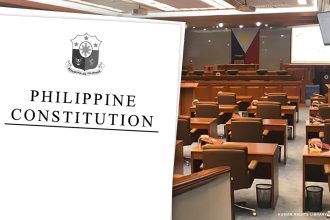
Martial law in Mindanao was first declared by President Rodrigo Duterte on May 23 hours after the attack on Marawi City by the Maute group began. The Constitution allows for the implementation of martial law for 60 days.
On July 22, the 60-day period lapsed and Congress approved a request from the President to extend martial law until the end of the year.
Also read: Congress grants Duterte’s request to extend martial law in Mindanao until end of year
The Philippines is the top country in the Asia-Pacific region that is most affected by terrorism, and is 12th among 163 countries worldwide, according to a study by the Institute for Economics and Peace.
The institute’s Global Terrorism Index shows the Philippines has suffered the one of the highest numbers of fatalities from terrorism since 2002. It is also one of the countries that has seen the largest increase in terrorist activity since that year.