

Metro Manila (CNN Philippines, November 16) — The Health Department (DOH) said Thursday it is now distributing family planning supplies to regional health offices.
This comes four days after the Food and Drug Administration (FDA) announced 51 contraceptives are non-abortifacients, thereby lifting a temporary restraining order on these that was issued in 2015 by the Supreme Court.
“There has been a resumption of the essential reproductive health services to Philippine women and their families,” Health Secretary Francisco Duque said.
Duque said they are prioritizing the distribution of around 261,000 implants stocked in DOH warehouses, which are set to expire in September 2018.
Population Commission Executive Director Dr. Juan Antonio Perez clarified the expiration is only for the insertion of the implants, and not the product itself.
“Thereafter, anytime after insertion, the implant will be good for three years,” Perez said.
This means roughly 1,000 implants should be inserted every day to avoid wastage, Perez said.
The DOH said they are cascading the supplies to civil society organizations, local government units, and rural health stations and clinics, for free distribution to the public.
The Population Commission is also confident that the supplies will be used up due the number of people who are interested in getting contraceptives.
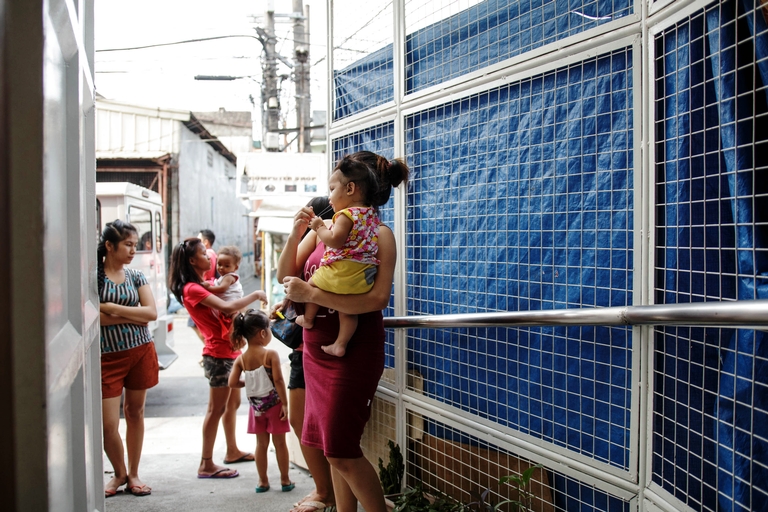
“Regularly, 1 million people take on a family planning service as a new acceptor every year. And every year, we also have 6 million already of what we call current users,” Perez said. “I think we have a good number of people who may be asking for these implants.”
Health officials also said they will conduct information campaigns alongside the distribution of contraceptives.
“The RPRH Law requires that everything should be done in full information and voluntary basis. So we will be discussing these methods to everyone, the choice of the woman or the man on what method they want to choose,” Perez added.
RPRH refers to the Responsible Parenthood and Reproductive Health law, which was enacted in December 2012 after contentious debates in this largely Catholic country.
But a petition filed with the Supreme Court by groups affiliated with the pro-life movement and the Catholic church led to the imposition of a temporary restraining order in 2015, which prohibited the Food and Drug Administration from renewing the certification of contraceptives such as implants Implanon and Implanon NXT, which comprise most of the DOH stock.
READ:FDA declares 51 contraceptives as non-abortifacients
The Philippines ranks as the 13th most populated country all over the world, with an estimated 104.3 million population as of July 1.
CNN Philippines’ Joyce Ilas contributed to this report.