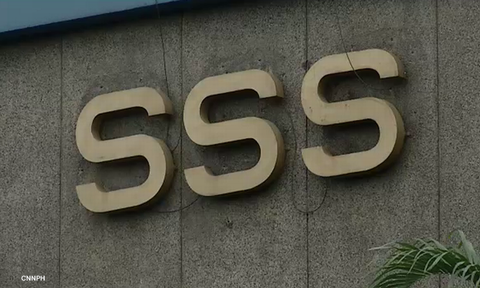


Metro Manila (CNN Philippines) — The Social Security System (SSS) is eyeing an even higher rate for contributions in the future, even as business and labor groups come out to oppose the 1.5% hike planned for May.
The ideal rate for contributions is 21%, SSS President Emmanuel Dooc told reporters last week.
“That’s what other jurisdictions which provide social security programs require. In fact, that’s been adopted by the GSIS (Government Service Insurance System),” Dooc said, adding that was also his target for the SSS.
The SSS is moving from the current contribution rate of 11% to 17% by 2020, with annual increments of 1.5% starting this May.
It is also raising the salary cap from P16,000 to P20,000.

Dooc admitted the 17% contribution rate still wasn’t enough to fund the additional P2,000 across-the-board increase in pensions by 2022.
But he said the SSS could make do — as long as Congress passes reforms to help the state-run pension fund shore up its finances.
More powers sought
One of the powers SSS wants is to be able to invest more aggressively, so it can grow the pool of members’ contributions.
The law sets hard limits on where the SSS can invest its money, and Dooc has said he wants it raised particularly for bonds, stocks and foreign mutual funds.
The SSS also wants to be able to implement an amnesty program.
“If we have that power, we can encourage delinquent members to come back to the system and pay their contributions because what burdens them most is the penalty portion,” Dooc said.
Officials also want to require SSS membership of more employees, particularly overseas Filipino workers (OFWs). Under the SSS proposal, all OFWs will have to take out an SSS membership before they will be given the clearance to fly out.
Dooc recognized the SSS would likely face severe backlash, but he also stressed that the membership would be good for OFWs.
“We have seen some OFWs despite their big incomes suffering financially during their old age because they have not provided for their own old age protection,” he said.
Membership may entail higher payments compared to voluntary contributions, but it also provides complete coverage upon retirement, he added.
Threat of job cuts
Business and labor groups staunchly opposed the contribution hike, though, pressuring the SSS to instead raise money by making its operations more efficient.
In a statement, IBON accused the SSS of pushing the burden of funding higher pensions on its members.
The leftist think tank said on Monday the SSS should instead focus on plugging leaks in its collections.
It claimed the fund had failed to collect about P198 million in revenues from idle assets and P13.5 billion in back payments from delinquent employers.
The People Management Association of the Philippines (PMAP) — an industry group of HR professionals — also called on the SSS to cut administrative costs and improve governance.
The PMAP joined the Employers Confederation of the Philippines and the Philippine Chamber of Commerce and Industry in warning the government the contribution hike would hurt the economy.
For employees, higher contributions would eat into their disposable income, PMAP President Ramon Segismundo said in an interview on Monday. For employers, they would raise the cost of doing business.
Workers could also end up lobbying for pay increases as a result — another cost for companies, Segismundo said.
“Any increases will of course increase overhead costs, raising the pressure to restructure the organization. This may eventually bring about possible layoffs and workforce reduction,” he pointed out.
While the PMAP supports measures that would improve the welfare of employees and retirees, Segismundo said the government must also consider that the growth of business would help the workforce as well.