

Metro Manila (CNN Philippines, September 4) — The Department of Public Works and Highways (DPWH) failed to recover ₱3 billion in advance payments to contractors for completed, rescinded and terminated projects resulting in “loss of government funds,” state auditors said.
A recent Commission on Audit (COA) report stated that over 200 government projects worth ₱83.4 million had technical defects due to lack of proper monitoring and supervision.
The report also noted that the contract cost for over 80 projects were overpriced by ₱100 million.
Unrecouped advances
State auditors have asked the DPWH to immediately refund a total of ₱3.05 billion in advance payments to contractors.
COA said the contractors “had taken advantage of the interest-free use of advances for purposes other than the contracted works pending resolution of problems or issues.” This would have been avoided if the DPWH required contractors to refund the advance payments pending resolution of issues, the COA report stated.
“Moreover, there will be further delay in the completion of the terminated projects as there is a need for the management to undertake again the procurement procedures to look for other contractors to continue the completion thereof,” according to the the 2018 audit report.
The advance payments include ₱2.17 billion for completed projects and ₱331 million for projects that were later on terminated.
COA specifically cited the following terminated projects with performance bonds which have not been forfeited:
COA also asked DPWH to impose administrative sanctions against employees who fail to recover the money.
Responding to COA, most DPWH offices explained that advance payments were not immediately recovered because contractors have incomplete documents and did not file their billings.
READ: COA scores DPWH for ₱118-B delayed projects
DPWH promised to send contractors demand letters and notices. The agency also agreed to comply with COA’s recommendations.

Technical defects
State auditors have asked the DPWH to have contractors fix a total of 248 government projects with technical defects, and blacklist those who will refuse to comply.
In its audit, COA found that ₱83.417 million worth of projects in the regions of Ilocos, Cagayan, MIMAROPA, Western Visayas, Eastern Visayas, Zamboanga Peninsula and Caraga did not meet contract standards. These include the construction of school buildings, roads, river control systems, bridges and other infrastructure projects.
For example, the contractor for a school building in Pangasinan was paid ₱75.162 million. But COA discovered that upon turnover, doorknobs were defective, the ceiling and wall paints were peeling off; window jambs were infected with termites, and a door expanded. There were also leaks on ceilings and electric outlets on the floor were detached.
Under the Government Procurement Act, the contractor is responsible for the repair of any damage or use of substandard materials. This must be done within 90 days after the notice for repair issuance.
COA pointed out that the “defects or deficiencies will result in wastage of government funds and property, if not corrected by the contractors in due time.”
Overpriced contracts
COA also called out the DPWH for the excessive contract costs of 83 projects amounting to ₱100.309 million due to “excessive costing and overestimated qualities of some items.”
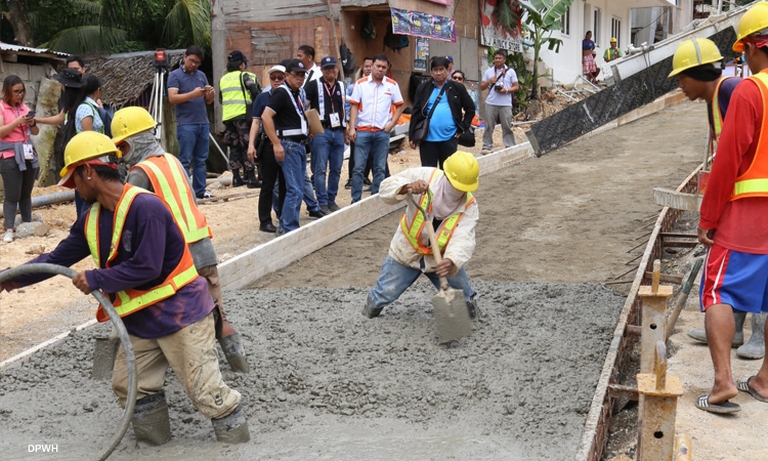
Among the cases cited was the contract for a road pavement project in Zamboanga Sibugay priced at ₱76.976 million. But based on the auditor’s evaluation, it only costs ₱65 million. COA said the project cost was overpriced by nearly ₱12 million due to overestimated quantity of work items.
COA asked the agency to deduct the excessive costs from the remaining dues to contractors or other succeeding claims. State auditors said the DPWH’s planning division must ensure that the ceiling and floor prices are reasonable. In its reply, the DPWH agreed to do the audit recommendations.