

Metro Manila (CNN Philippines, September 23) — The Department of Energy (DOE) would be asking President Rodrigo Duterte to create a task force that will tackle possible oil supply problems, following a recent attack in Saudi Arabia’s production facilities.
Rino Abad, director of DOE’s Oil Industry Management Bureau, said among the duties of the task force would be setting up of strategic fuel reserves as well as possibly raising minimum inventories required for private oil firms.
Abad told the Senate Committee on Energy that a draft executive order has been presented to Malacañang, which will be finalized before it is referred for Duterte’s signature.
READ: DOE drums up need for gov’t oil reserves after Saudi attack
Drone strikes hit Saudi Aramco’s oil processing facilities in Abqaiq and Khurais provinces on September 14, disrupting half the country’s production or 5 percent of the daily global supply. Two days later, the oil-rich country said it resumed partial operations in the two areas.
Energy Secretary Alfonso Cusi earlier said that the Philippines would not have any supply disruptions, but that the effect will likely be felt through fuel prices.
The proposed Oil Contingency Task Force will be headed by DOE, and will include representatives from the Department of Trade and Industry, Department of Agriculture, Department of the Interior and Local Government, Department of Transportation, the Department of Foreign Affairs, and the National Security Council.
The task force would monitor developments in the oil market, as well as prepare and execute interventions during a supply crisis. The DOE said the task force could have the power to impose fuel allocation and even to take over private utilities should a national emergency be declared.
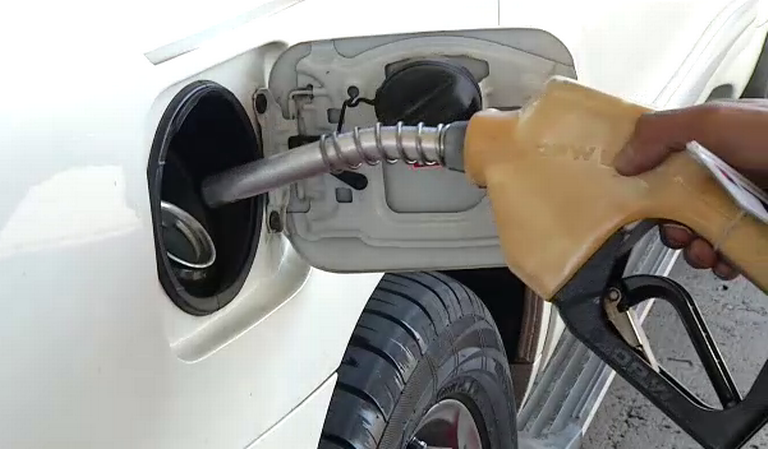
For now, Abad said that the increase in retail pump prices set to take effect Tuesday is lower than expected. The DOE projected an increase of about ₱2.50 per liter for gasoline, but fuel companies have announced a ₱2.35 per liter hike in fuel rates.
LIST: Oil price hikes this week
He added that oil prices are likely to “normalize” in the next two weeks barring any surprises in the global market. This came after Saudi Aramco said it expects to restore full production by end-September.
Both the DOE and private fuel suppliers assured that they have enough supply to meet local demand. The DOE said the country sits on 40 days’ worth of oil stockpiles, well above the 30-day standard set for domestic oil refiners.
Part of the duties of the task force would be to explore how the government can set up and maintain strategic oil reserves, which could be separate from the buffer stocks held by companies.
Cusi has been actively pushing for the state to build up its strategic fuel reserves for emergency cases, which may be tapped for the use of the military, police, government offices, and hospitals as needed.
Abad added that the task force would likewise be exploring the option to raise the inventory requirement for private firms, which local players rejected.
Fernando Martinez, president of the Independent Philippine Petroleum Companies Association, said the government should stick to its plan to stockpile fuel rather than impose a knee-jerk reaction of doubling inventory requirements.
“I think the best way for us to really have a safety net is for the government to at least have 1 to 2 million barrels (of stocks). We consume only around 450,000 barrels a day, and it only takes 10 days before you have a new supply either from Taiwan or Singapore,” Martinez told lawmakers on Monday.
The Philippines is said to have the highest energy costs across Asia. Private players strongly opposed this proposal, saying this would add to storage and operation costs.
Teddy Reyes, executive director of Philippine Institute of Petroleum, which represents the industry producing petroleum products, said that doubling the minimum inventory cover from 30 days to 60 days would just mean higher fuel prices, as companies will eventually pass on the capacity costs to consumers.
The state-run Philippine National Oil Company has been tasked to study how to establish fresh reserves. It is set to bid out the contract for the conduct of a feasiblity study.