

Metro Manila (CNN Philippines, July 23) — The country’s justice chief believes the restoration of the death penalty would make criminals “think twice” before committing a crime, but an international human rights watchdog says it would only worsen the ongoing impunity.
“As Secretary of Justice, I believe that the imposition of the death penalty may somehow deter the commission of serious crimes,” Justice Secretary Menardo Guevarra said in a statement on Tuesday.
“Ordinary human behavior indicates that the fear of being put to death for the commission of a crime will naturally prompt a criminally minded person to think twice,” he explained.
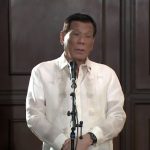
In his fourth State of the Nation Address (SONA) on Monday, President Rodrigo Duterte called on the 18th Congress to reinstate capital punishment for drug-related offenses. This has been his call since 2016, but now, he wants plunderers sentenced to death as well.
The 1987 Constitution abolished the death penalty but allowed Congress to bring it back for heinous crimes. It was revived under the administration of President Fidel Ramos, but scrapped again under President Gloria Macapagal-Arroyo.
Guevarra said it will be up to the 18th Congress to determine what constitutes a “heinous crime” punishable by death. Both houses are dominated by Duterte allies.
Amnesty International, a human rights group that has criticized Duterte’s bloody war on drugs, said reviving the death penalty would just aggravate the country’s human rights situation.
“Extrajudicial killings remain rife in the Philippines. Talk of bringing back the death penalty for drug-related crimes is abhorrent, and risks aggravating the current climate of impunity,” Butch Olano, Section Director of Amnesty International Philippines, said in a statement.
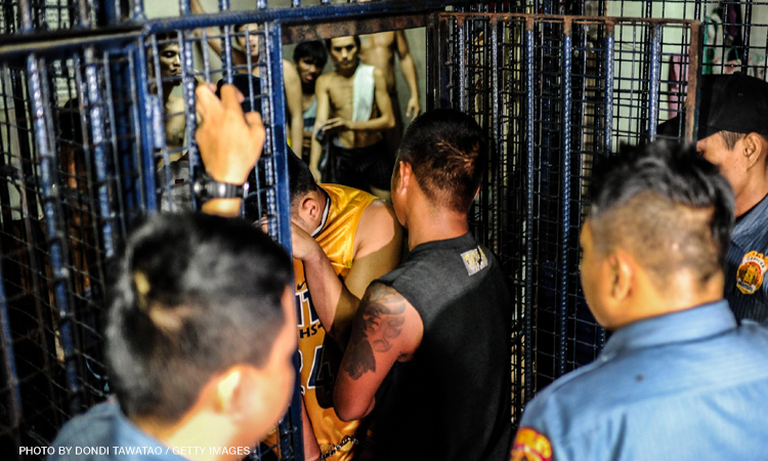
At least 6,600 suspects have been killed in police operations since Duterte launched his anti-drug campaign in 2016, data from the Philippine National Police show. Local and international human rights groups, however, say the drug war has resulted in more than 20,000 extrajudicial killings, a claim the government has denied.
Duterte’s SONA lasted for more than an hour and a half, but the Amnesty International said the President “did not confront the truth” on the drug problem.
“This speech was a missed opportunity to take stock of the tragic killing of three-year-old Myca Ulpina, and thousands of others,” Olano said.
The war on drugs took an even more dramatic turn as Myca became the youngest casualty this year. She was caught in a crossfire between the police and her father during a drug raid in Rodriguez town in the province of Rizal on June 29. Police said she was used by her father, as a “human shield,” a claim her mother belied.
Olano said what the country needs is not more deaths, but justice for the families of the thousands of drug war victims.
He said their only hope for now is the United Nations’ impending investigation into the killings and alleged rights abuses in the Philippines, which Duterte did not address in his SONA. Malacañang has said the government always rejects international interference on the country’s sovereignty, but added that Duterte might change his mind this time and allow the UN Office of the High Commissioner for Human Rights to investigate if he finds the probers “sincere.”
UN human rights chief Michelle Bachelet will present a “comprehensive” report on the state of human rights in the Philippines in June 2020, following the UN Human Rights Council’s approval of Iceland’s resolution. The Duterte government is now considering withdrawing from the UN Human Rights Council and cutting ties with Iceland.
READ: What to expect from UN’s review of Philippine drug war