

Metro Manila (CNN Philippines, May 10) — Foreign investment inflows to the Philippines recovered in February, logging a six-month high.
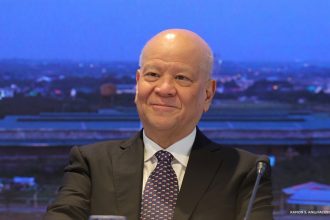
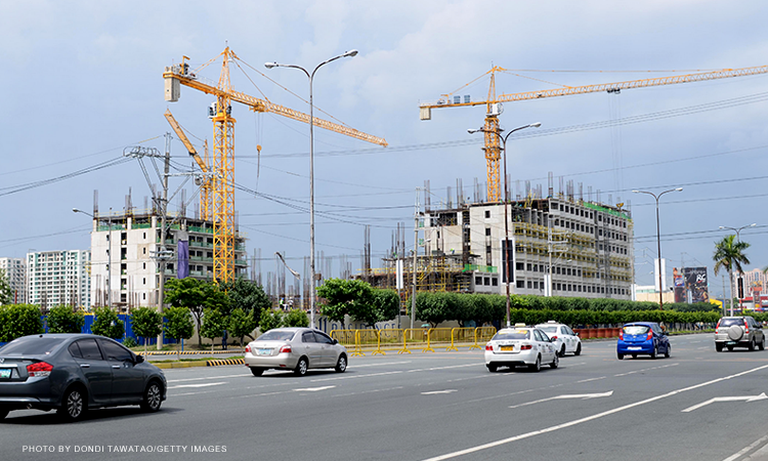
Chairman Chris Nelson of the British Chamber of Commerce said sustaining the 10-point socioeconomic agenda of the Duterte administration, particularly the “Build, Build, Build” infrastructure program, will likely attract more foreign investors to come to the Philippines.
The Bangko Sentral ng Pilipinas (BSP) reported $746.34 million in net foreign direct investments (FDI) for the month, up 20.2 percent from the $621.03 million the country received in February 2018. This is the highest since a $756.36-million haul tallied in August, and ends a six-month downtrend year-on-year.
However, investment inflows for the first two months totaled $1.355 billion, still 15.7 percent below the $1.607 billion logged during the same period last year.
“We’re a supporter of the 10-point plan, particularly on the economic liberalization. And we’d obviously like to see that reflected in more foreign direct investment,” Nelson told CNN Philippines’ Business Roundup.
The government wants to rake in more FDIs to allow new players in the local scene, which are expected to create more jobs as well as products and services for the public.
February saw better equity placements versus January, which reversed to $233 million in net placements, coming from net withdrawals worth $45 million in January. During the month, gross inflows reached $258 million which was partly offset by $25 million of withdrawn funds.
He pointed out that investors are being wooed by the young and skilled workforce who are fluent English speakers. However, Nelson said foreign firms are looking forward to the passage of the Retail Trade Liberalization Act as well as updates to the planned corporate tax reform.
On the other hand, reinvested earnings — or retained income of foreign companies from their Philippine operations — grew by 13.7 percent year-on-year to $79 million.
However, investments on debt instruments slipped to $435 million versus $455 million in February last year.
The BSP attributed the FDI recovery to sustained investor confidence in the country, citing “strong economic growth prospects” and sound economic footing.
February saw the signing of key reform measures, including the rice tariffication law which is seen to bring down the retail cost of the crop. The same month likewise saw progress in bilateral talks between the United States and China amid a truce in tariff wars for imports.
For the month, bulk of the capital flows came from investors based in Japan, China, the United States, Singapore, and Switzerland. The central bank added that the biggest investments went into transportation and storage, followed by financial insurance, manufacturing, real estate, as well as the professional, scientific and technical industries.
The central bank eyes $10.2 billion FDIs this year, coming following 2018’s $9.802-billion haul.