

Metro Manila (CNN Philippines, March 19) — Metro Manila’s water regulator on Tuesday assured senators it will secure the go signal of an indigenous tribe in Tanay, Rizal before constructing the China-funded Kaliwa Dam.
Senator Risa Hontiveros, during the Senate committee hearing on the ongoing crisis in Metro Manila and Rizal province, asked Metropolitan Waterworks and Sewerage System (MWSS) Administrator Reynaldo Velasco if the Dumagat tribe members who live beside the dam have agreed to give up their ancestral land.
MWSS said there is an ongoing consultation with the Dumagat tribe. Velasco vowed they will secure an approval from the tribe before they begin constructing despite the project being a “done deal.”
“We have to go through a process to get their approval, including the agreement on what they’re supposed to be paid and the relocation of 46 families that are affected. These are all taken care of. I assure you that if these are not in place, we will not start the dam. I want to assure you that the dam will only get started if we get all of these requirements,” he told Hontiveros during the hearing.
A 27-kilometer tunnel will connect the water source from General Nakar-Infanta in Quezon to a water treatment plant in Antipolo-Teresa in Rizal to supply water to Metro Manila and nearby areas. But residents, especially the Dumagat tribe members, are strongly against it.
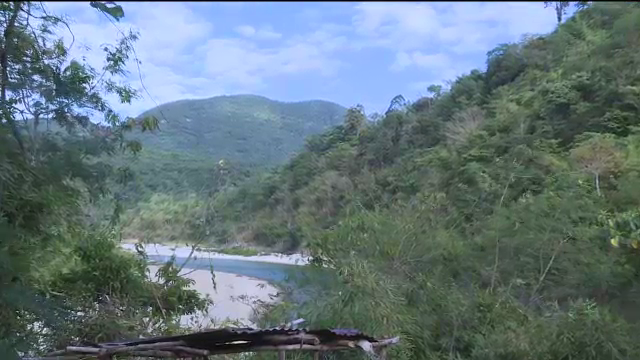
The leader of the Dumagat tribe at the foot of Sierra Madre mountains in Tanay, Rizal said the water that will be released from the dam will obliterate their farmlands, homes, and places of worship. He said 11,000 Dumagat people will become homeless if it pushes through, adding they will reject any offer of relocation. Aside from the Dumagat tribe, around 2,000 residents of Barangay Laiban are also against the China-funded project.
China vs. Japan
The MWSS administrator also addressed a Japanese firm’s alternative to the China-funded Kaliwa Dam. Senator Sherwin Gatchalian highlighted the supposed benefits of the proposal of Osaka-based infrastructure firm Global Utility Development Corporation (GUDC).
GUDC on Monday said compared to the China-funded New Centennial Water Source Project (NCWSP) Kaliwa Dam, their proposed weir or low-level water intake will address safety concerns and will be more economical for the government.
Velasco said that under the Japanese firm’s proposal, the weir can only tap a maximum of 550 million liters per day (MLD), while China’s Kaliwa Dam can provide 600 MLD plus 1,800 MLD in the second phase of the Laiban-Kaliwa Dam. He also said the China-funded dam is the better option because a weir wouldn’t be able to store enough water supply during dry season.
Despite it being a sealed deal, Presidential Spokesperson Salvador Panelo, who is concurrent chief presidential legal counsel, said his office will look into the suggestion of the Japanese firm.
“I will ask this particular Japanese entity or firm to give us a copy of their proposal and my office will look into it and I will make a recommendation to the President,” he said in a media briefing on Tuesday.
Disadvantageous China loans?
Another point raised by the senators is China’s high interest rate. Under the official development assistant (ODA) grant from China signed in November 2018, China pledged to provide ₱12.2 billion or around 64 percent of the ₱18.7 billion project cost of the Kaliwa Dam. Poe expressed concern that the 2 percent interest rate might be disadvantageous to the country.
“Gusto naman talaga natin ng solusyon, gusto natin na mabilis. Pero kung igigisa naman tayo sa sarili nating mantika na 2 percent, it sounds low but compared to ODAs of other countries, mataas ‘yun,” she said.
She added, “At diumano may probisyon pa doon na China will own patrimonial rights in case we default. Is that true? Magiging sa China ba ang tubig natin kapag hindi tayo makapagbayad? Hindi nila madadala ang tubig sa China pero pwede nilang taasan ang singil ng tubig sa atin.”
But Velasco allayed Poe’s fears, saying her claim “does not exist.”
He said construction will begin in July as soon as the engineering design is complete. He said the New Centennial Water Source-Kaliwa dam project phase 1 will take four to five years to complete, but government has asked the Chinese constructors for a shorter period, say, two years.
CNN Philippines correspondents Rex Remitio, Carolyn Bonquin contributed to this report.