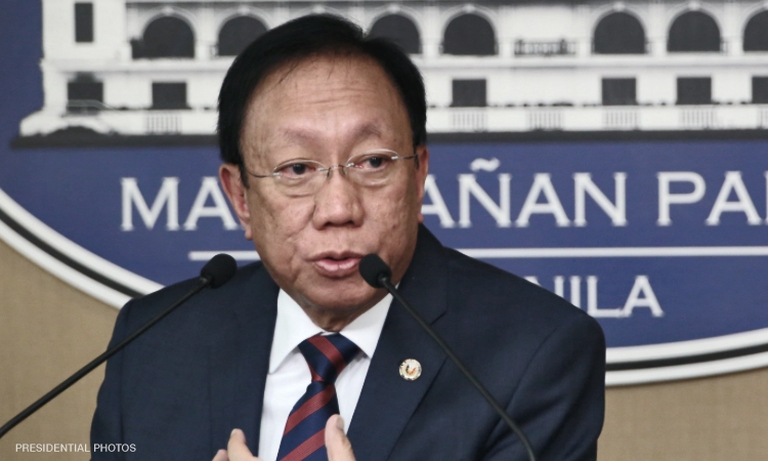

Metro Manila (CNN Philippines, August 24) — The Solicitor General has filed an urgent motion asking that oral arguments on the anti-terrorism law be cancelled.
Solicitor General Jose Calida filed the 51-page motion before the Supreme Court (SC) on Monday citing logistical restrictions and health threats posed by COVID-19 pandemic, “as well as provisions of internal rules of SC and pertinent jurisprudence.”
Calida said the high court’s internal rules state that it was “not a trier of facts,” but instead makes decisions based on “findings of facts before it.”
He also said that as it was illegal to hold public gatherings in the light of the pandemic, in-person oral arguments would violate this restriction.
“The conduct of in-court oral arguments would necessarily entail the presence of the Chief Justice and the Associate Justices, at least 300 petitioners and their respective counsels, an estimate of 16 lawyers from the Office of the Solicitor General and their respective support staff, representatives from the respondents, and the members of the Office of the Clerk of Court,” Calida said.
“This clearly falls under mass gatherings that are prohibited in areas under general community quarantine,” he said in the motion.
He added that even holding the arguments via video conference would still violate quarantine restrictions as people would still need to gather in a confined space.
However, Calida said submitting a memorandum with justices asking clarificatory questions afterwards was a viable alternative to in-person oral arguments.
There are 29 petitions filed against the anti-terrorism law. The high court earlier said it would hold oral arguments on the numerous petitions seeking to junk the controversial Anti-Terrorism Act in September.
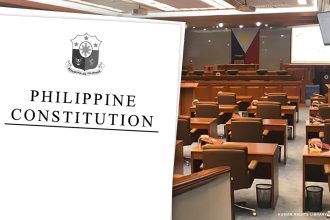
Republic Act 11479 or the Anti-Terrorism Act of 2020 is the most challenged law at the Supreme Court, with law experts, constitutional framers and several groups saying it should be declared unconstitutional.
Among its contentious provisions is the power given to the Anti-Terrorism Council, a body composed of presidential appointees, to authorize law enforcers and military personnel to conduct warrantless arrests and detention of suspected terrorists for up to 24 days.
Petitioners said this violates the three-day period prescribed in the Constitution for pre-trial detention.
They argued that the vague and overly broad provisions of the law can silence government critics for fear of being tagged as terrorists, but lawmakers who authored and sponsored the measure maintained it has enough safeguards against abuse.