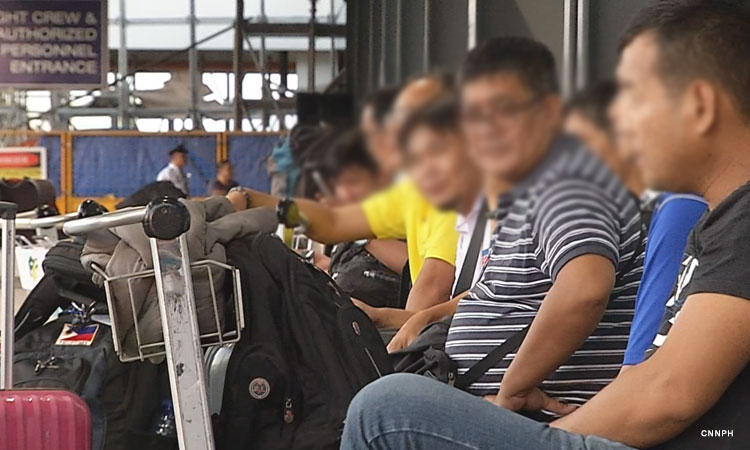

Metro Manila (CNN Philippines, August 18) — A joint panel of the House of Representative has approved a motion to jumpstart deliberations to amend provisions in the Universal Health Care (UHC) Law removing overseas Filipino workers (OFWs) as direct contributors to PhilHealth.
At the joint hearing of the House Committees on Public Accounts and on Good Government and Public Accountability, Anakalusugan Partylist Rep. Mike Defensor presented the proposed amendment.
It noted that PhilHealth, along with the Overseas Workers Welfare Administration, the Department of Foreign Affairs, and relevant stakeholders, “shall issue a separate circular regarding the premium contributions for both land-based and sea-based Filipino migrant workers” that will still be responsive to their work, and at the same time ensure medical coverage.
PhilHealth contributions are being collected from direct and indirect sources, with OFWs falling under the former.
Republic Act no. 11223 defines direct contributors as those with the means to pay premiums, are gainfully employed, and are bound by an employer-employee relationship.
Premium contributions increased from 2.75 percent to 3 percent of annual salary. This will increase by 0.5 percent every year until it reaches 5 percent.
This caused backlash early this year with the emergence of the COVID-19 crisis, which led many OFWs to fly back home after losing their jobs abroad. President Rodrigo Duterte then ordered to suspend the collection of higher premiums from OFWs.
Jay Tolentino, an OFW in United Arab Emirates, told lawmakers during the hearing that many of them think that the 3 percent premium is already redundant and expensive since their employers already provide them with medical insurance.
Moreover, this will be an added burden since many of them still have debts to pay, he said.
Chona Yap, senior manager of PhilHealth Overseas Filipino Program, said that only 320,000 OFWs are actively paying their contributions out of more than 3 million registered members. Total collections from these active members amounted to ₱1.02 billion, she noted.
The proposed amendment will be discussed further by the House Committee on Health.