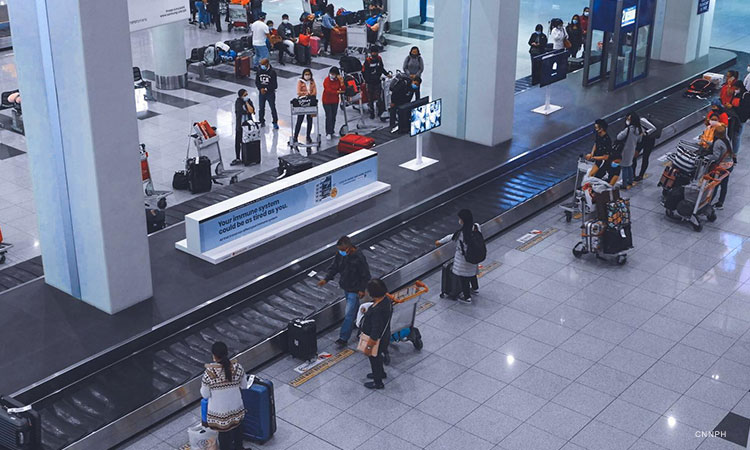


Metro Manila (CNN Philippines, May 9) — Some inbound international flights will be allowed to land at the Ninoy Aquino International Airport (NAIA) starting Monday, the Civil Aviation Authority of the Philippines announced over the weekend.
In a statement on Saturday, the CAAP said it had released a Notice to Airmen saying chartered flights will be allowed to land on Mondays and Thursdays. These flights must have prior clearance from the aviation authority and the Department of Foreign Affairs for slotting purposes.
Meanwhile, scheduled commercial flights may land on NAIA on all other days of the week provided they secure approval from the CAAP 48 hours before their scheduled departure from their airport of origin.
This is for the “necessary slotting and rescheduling of flights in order to subscribe to the 400 passengers per day capacity of NAIA,” said CAAP.
The restrictions imposed at NAIA shall last from May 11 to June 10, it added.
Last Sunday, the CAAP announced a one-week suspension of inbound international flights, which covered NAIA and eight other international airports in the Philippines.
Among the reasons the moratorium on flights was imposed was for the government to ramp up its capacity to properly process the number of overseas Filipino returning to the country that has been increasing by the day.
CAAP clarified that the 400 cap is applicable for inbound international commercial flights only, and is based on an adjusted seating configuration while observing physical distancing procedure inside the aircraft.
Only returning residents, Philippine passport holders, foreign dignitaries and diplomats are allowed to join the inbound commercial flights.
Emergency flights, ferry or cargo flights, government or military flights, weather mitigation flights, maintenance flights, and authorized outbound ferry or cargo flights with passengers, are also not covered in the restrictions.
Tourists are still not allowed to enter the country, CAAP clarified.
Other international airports in the country would have their own separate restrictions.