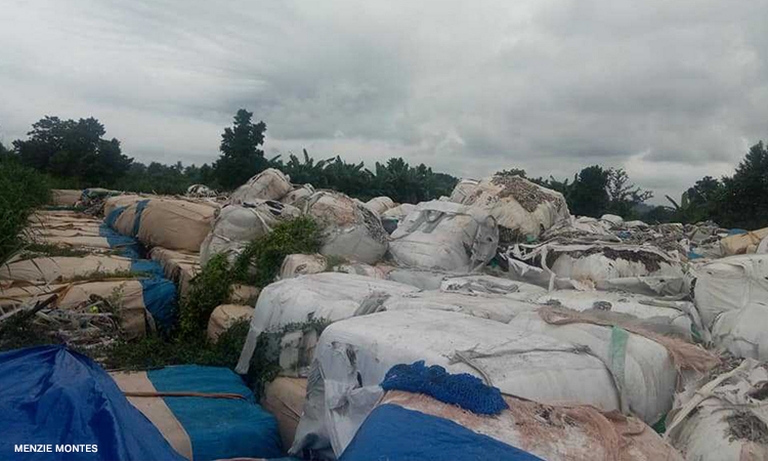


Metro Manila (CNN Philippines, April 22) — More than half of the 5,176 metric tons of waste materials illegally dumped in the country in 2018 has been returned to South Korea.
The Department of Finance in a statement on Wednesday announced that the Bureau of Customs has shipped back some 2,676 metric tons of trash.
A third batch, consisting of 50 containers, was repatriated last March 21, according to Customs Commissioner Rey Guerrero’s report to Finance Secretary Sonny Dominguez.
The first and second batches were sent to South Korea in January 2019 and January this year, for a total of 151 forty-footer containers with 2,676 metric tons of wastes.
“The re-exportation took some time because the wastes have been exposed to natural elements of heat and rain, which made it difficult to re-bag and stuff inside the containers,” Guerrero said in his report.
The remaining 2,500 metric tons of wastes were initially set to be repatriated by March, but the process has been delayed because of the Luzon-wide enhanced community quarantine to contain the spread of COVID-19, Guerrero said. The wastes still need to be re-bagged, Guerrero added.
The Luzon-wide lockdown forced most people to stay home, while most government offices have implemented a skeleton workforce.
“Rest assured that the Bureau will undertake all the necessary means, within the bounds of law, in order to expedite the re-exportation of these wastes,” Guerrero said in his report.
The garbage was part of some 6,500 tons of waste illegally shipped to the Philippines in July and October 2018. The consignee, Cebu-based Verde Soko Industrial Corporation, initially declared the shipment as soft plastics, but authorities said there were illegal and hazardous waste materials such as used intravenous lines, light bulbs, and old batteries.
Around 1,400 tons of the trash were earlier returned to South Korea while the rest remained at the Verde Soko compound within the Phividec Industrial Authority premises in Tagoloan town, Misamis Oriental.
The government of South Korea earlier committed to help pay the shipment cost.