

Metro Manila (CNN Philippines, April 17) — The Inter-Agency Task Force for the Management of Infectious Diseases on Friday detailed the government’s plan to increase its capacity to conduct coronavirus tests.
Cabinet Secretary and Task Force Spokesperson Karlo Nograles said the Department of Health vowed to expand the number of laboratories that can perform COVID-19 testing.
“More laboratories will be operational soon once they are certified,” he said in a televised briefing.
There are currently 16 accredited testing centers for COVID-19 nationwide.
Health officials have repeatedly stressed that tests are significant in getting an accurate sense of how the virus has spread in the country.
The World Health Organization previously pointed out the most effective way to prevent infections is to “test every suspected case” and isolate infected individuals.
The DOH earlier said it wants to process 8,000 to 10,000 tests a day.
DOST, DOH to set up ‘specimen collection booths’
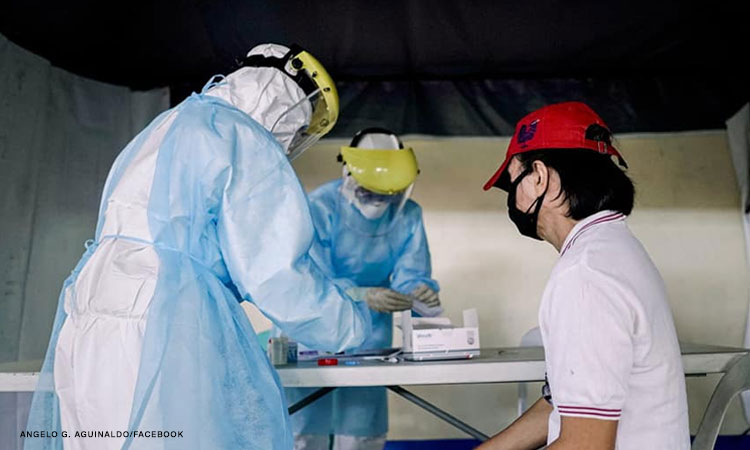
Aside from increasing testing facilities, the Department of Health and Department of Science and Technology will also set up 132 booths nationwide to collect specimen of people who are suspected of having the highly infectious viral disease.
Most of the specimen collection booths will be put up in Metro Manila.
Under the current protocol, trained professionals swab the nose and the throat of suspected cases to extract sputum.
Once the samples arrive in a qualified testing facility, they would be tested using a method called PCR or polymerase chain reaction to look for the presence of the virus or severe acute respiratory syndrome coronavirus 2.
DBM releases test kit fund
The Department of Budget and Management on Friday said it turned over P1,912,500,000 to the Department of Health for the procurement of PCR test kits.
DBM said the released amount “is charged against the pooled savings from discontinued unreleased appropriations consistent with Section 4(v) of Republic Act No. 11469, otherwise known as the “Bayanihan to Heal as One Act.”
Bayanihan Act empowers the President to realign or reallocate savings from the 2019 and 2020 national budget.
The detection tools are expected to be able to conduct 918,000 tests.