
Metro Manila (CNN Philippines, January 27) — The European Union (EU) has delisted the Philippines from its priority watchlist of countries involved in trade of counterfeit goods, yet the country still has not improved when it comes to deterring counterfeit and pirated products.
“The Philippines was removed from the priority list and included in the group of countries, which need to be closely monitored. This is due to the very few complaints received from stakeholders and the increase in the relative importance of other countries for EU right holders,” said the Commission’s report.
This is the first time the Philippines was delisted from any Priority category. Since 2015, the country had been a under the Priority 3, already a downgrade from its enlistment as Priority 2 in the previous years.
China is the lone country under the Priority 1 category, which is considered to pose the biggest threat to intellectual property rights in the world due to “dominant share of counterfeit and pirated goods arriving in the EU.”
However, the Commission also reported that the Philippines still needs to improve its governance in intellectual property rights citing the studies by the European Union Intellectual Property Office- Organisation for Economic Co-operation and Development (EUIPO-OECD).
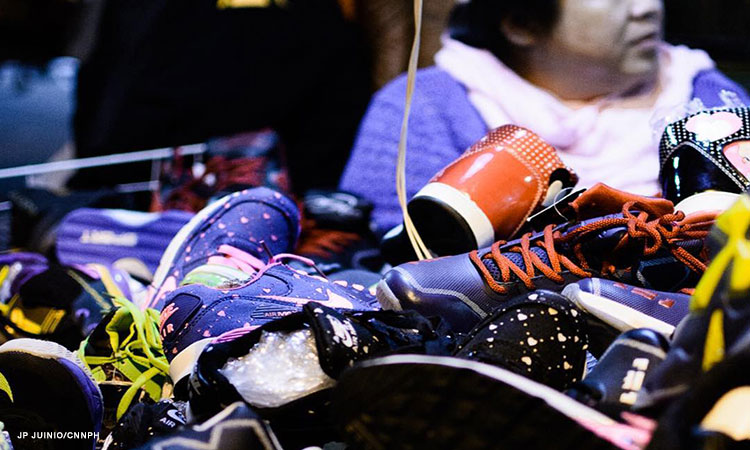
“The Philippines has remained an important country of origin of counterfeit goods destined for the EU in a number of product categories such as leather articles, handbags, pharmaceuticals, footwear, games, toys and sport equipment,” said EC.
Another EUIPO-OECD study also showed that the Philippines is one of the top origins of small parcel trade in fake jewelry.
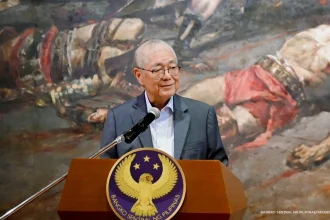
Following the report by the Commission, IPOPHL Officer-in-Charge Director General Teodoro Pascua disputed the claims of no improvement in the country’s intellectual property rights (IPR).
“The data used even dates back to 2011 to 2013. Several actions on improving IPR enforcement have been made since then,” said Pascua in a statement.
Although the 2019 study aimed to recalibrate the findings with more updated data and an enhanced methodology, Pascua said that the findings are incomparable.
“The first study assessed provenance economies on a per-sector basis and ranked them on their likelihood of being either a fake-goods producer or transit point for counterfeit trade while the latter ranked the likelihood of an economy in being a provenance economy overall,” he said.
IPOPHL said that it is pushing for the amendment of Intellectual Property (IP) Code of 1998 and it continues to “champion” several intellectual property initiatives in the Association of Southeast Asian Nations.
The Intellectual Property Office of the Philippines (IPOPHL) said in a statement that European Commission (EC) report showed that the country was removed from the Priority 3 list, or countries of least concern in intellectual property protection.