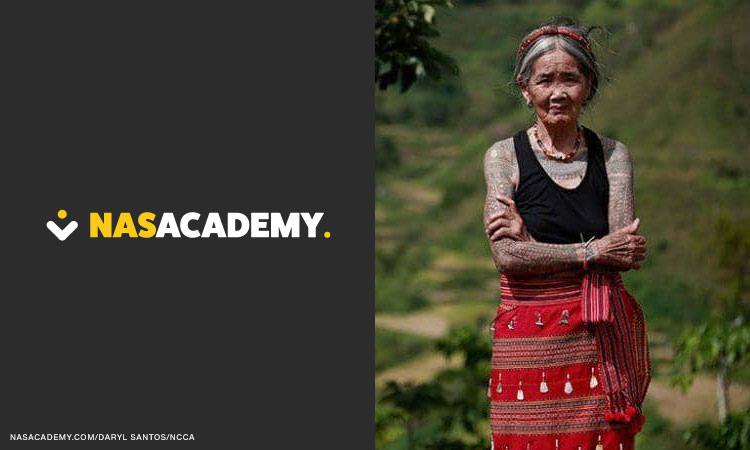


Metro Manila (CNN Philippines, August 5) — Nas Academy on Thursday maintained Filipino tattooist Apo Whang-Od consented to teaching the site’s tattoo online course, which a relative of the artist called a “scam.”
In a statement, the digital learning platform founded by Arab Israeli vlogger Nas Daily said the 104-year-old mambabatok herself affixed her thumbprint in the contract, “signifying her full consent” to the Whang-Od Academy.
Her formal approval came after her niece Estella Palangdao translated the contents of the document, according to the company.
“This is the clearest evidence that it is not a scam and achieved the consent of her and her immediate family,” it said.
Nas Academy added the artist and her family “loved” the idea and have been their partner in building the project. It also noted everybody was compensated for their time.
The world-famous tattooist from Kalinga was advertised to teach the masterclass priced at ₱750, but her grandniece Gracia Palicas on Wednesday said Whang-Od never agreed to do the course.
In a Facebook post, Palicas asked for help “to stop this disrespect to the legacy of Apo Whang Od and the Butbot Tribe,” saying her grandmother never signed a contract.
After the warning, Nas Daily came under fire, with netizens accusing him of exploiting Filipino culture. However, his company refuted these allegations, saying it only “wanted to share [Whang-Od’s] culture for future generations to appreciate and respect.”
“(Forty percent) of Nas Academy is made up of Filipinos. So for us, this is personal,” it said. “We care deeply about the Philippines and respect the many cultures and traditions that exist across the country.”
The online platform took down the class on Wednesday following the backlash. However, it said this is just temporary and was done “out of respect” for Whang-Od’s family while it “resolves any issues that have arisen from these falsehoods.”
Meanwhile, the National Commission on Indigenous Peoples – Cordillera Administrative Region (NCIP-CAR) said it has already initiated “appropriate intervention” regarding the matter.
NCIP-CAR regional director Marlon Bosantog in a statement said while they welcome initiatives to promote their cultures, attempts to make profit out of indigenous people’s practices without their consent “will be dealt with harshly” through appropriate laws.
“We are thankful for the immediate response and concern from the public,” he added. “It shows that the exploitation of our Indigenous Peoples is a public matter deserving of moral outrage.”