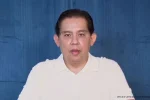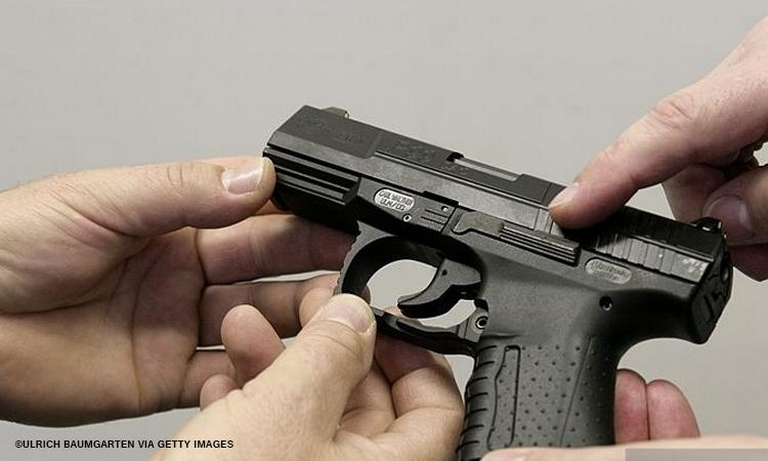


Metro Manila (CNN Philippines, June 29) — Presidential Spokesperson Harry Roque said there is no policy yet on arming civilians, an idea floated last week by President Rodrigo Duterte to help police in crime prevention.
“He is open to the idea pero wala pa naman pong finality. At siguro the best view expressed so far is the view of PNP Chief (Philippine National Police chief Gen. Guillermo) Eleazar which I share, that kailangan intindihin naman natin na kapag ang mga volunteer groups ay mayroong banta sa buhay nila eh mayroon din silang karapatan na depensahan ang kanilang mga buhay,” Roque said in a briefing.
[Translation: He is open to the idea, but there’s no finality yet. And maybe the best view expressed so far is that of PNP Chief Gen. Guillermo Eleazar which I share, that we need to understand that when there are threats to the lives of the volunteer groups, they also have the right to defend themselves.]
He also assured that if it will become a policy “there will be a corresponding training to be given to everyone.” But for now, Roque said, it is speculative to discuss the matter.
Eleazar earlier said arming civilian organizations to help in the fight against crime is meant to protect the groups and not meant to encourage vigilantism.
However, a few lawmakers have opposed the idea. Senator Panfilo Lacson earlier warned that issuing firearms to civilian groups may only result in more crime, while Senate Minority Leader Franklin Drilon noted that “what can solve the country’s growing problems on criminality and its main drivers — poverty and hunger –- is good governance, not guns.”
Speaking to CNN Philippines’ The Final Word, Commission on Human Rights Spokesperson Atty. Jacqueline Ann de Guia said there is no need to implement such an idea since the PNP is competent enough to do its job.
“We believe highly that the Philippine National Police is more than competent to do their job not to unduly burden citizens who may be well-intentioned, but at the end are not qualified, not properly trained, not properly screened,” she explained, adding that one cannot expect civilians to learn overnight all protocols in the proper handling of firearms.
To prevent crime, De Guia said the police should be heard and must show the public that they can serve and protect the people. She added that if authorities think they lack the numbers, they should do more hiring instead of giving the responsibility to civilians.