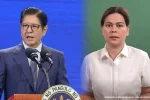


Metro Manila (CNN Philippines, April 22) — The Palace has downplayed the Philippines’ lower ranking in this year’s World Press Freedom Index, but questioned the factors that led to the country moving down the list.
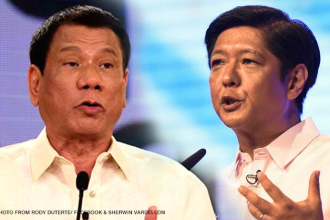
“Dalawang posisyon lang po iyan, two positions lower,” said Presidential Spokesperson Harry Roque of the country’s current place in the list by Reporters Without Borders. “De minimis po iyan, wala masyadong ibig sabihin.”
[Translation: That’s de minimis, it doesn’t mean much.]
The Philippines ranks 138th out of 180 countries in the index this 2021, maintaining its descent in the list starting in 2018.
However, the spokesman disagreed with two particular reasons the international press freedom watchdog cited for its lower ranking of Manila.
“We see nothing wrong with it pero [but] of course, we dispute also the ranking because iyong Reporter’s Without Borders considered as affront to press freedom itong [this] Rappler issue,” said Roque, recounting in particular how the media organization’s license to do business was revoked in 2018 by the Securities and Exchange Commission. The regulatory body’s appointees then were of former President Benigno Aquino III and not President Rodrigo Duterte’s, he noted.
In its write-up on the Philippines, the Reporters Without Borders expressed how the “hot-headed” chief executive along with his staff “embarked on a grotesque judicial harassment campaign against the news website Rappler and its editor, Maria Ressa, who has been the target of at least ten arrest warrants on a range of charges, all equally far-fetched.”
Roque likewise contested the inclusion of the issue surrounding ABS-CBN, noting it was a matter of securing a franchise for its operations.
“The Philippine Congress, most of which supports the president, refused in the summer of 2020 to renew the franchise of the country’s biggest TV network,” said the global organization, adding how this deprived “millions of Filipinos of absolutely essential public interest reporting during the pandemic.”
Both issues should not have led to the decline in the country’s recent ranking, the official further argued.
“So far, President Duterte’s lowest grade is Aquino’s highest. It is high time to set the record straight, there is no shrinking space for media in the Philippines based on this year’s World Press Freedom Index of the RSF,” said Presidential Task Force on Media Security executive director Joey Sy Egco in a separate statement.
The country placed 156th in 2010, 140th in 2011-2012, 147th in 2013, 149th in 2014 and 141st in 2015 in the index. The Philippines’ ranking is also the same as its placement in the list in 2016, both the last year of Aquino’s term and the first of Duterte’s.
Media should not be ‘onion-skinned’
When asked about how the administration will handle any findings of harassment and red-tagging of journalists, Roque first said he has no knowledge of the President red-baiting anyone in the profession.
“Ang Presidente po, sa tagal niya sa pulitika, alam niya kung ano talaga ang papel ng media. So hinahayaan niyang gawin ang kanilang mga katungkulan,” he said.
[Translation: The President has been in politics for so long, so he knows the role media plays. He just lets them fulfill their duties.]
However, he issued the media a message on the President’s rather fiery retorts to equally staunch criticisms against him.
“In the same way na hindi natin inaasahan maging balat-sibuyas ang Presidente, huwag ding balat-sibuyas ang media kapag sumagot ang Presidente,” Roque noted.
[Translation: In the same way that we don’t expect the President to be onion-skinned, the media shouldn’t be onion-skinned as well once he actually responds.]
Reporters Without Borders also noted how online harassment campaigns initiated by pro-Duterte troll armies involved cyber-attacks on alternative news sites and even the website of the National Union of Journalists of the Philippines.
It flagged as well how red-tagging “returned in force” last year, wherein journalists and media outlets are among those identified by the police and militaries as “legitimate targets for arbitrary arrest or, worse still, summary execution.”
RELATED: NDF-Mindanao spokesman killed; journo, union organizer arrested on Int’l Human Rights Day