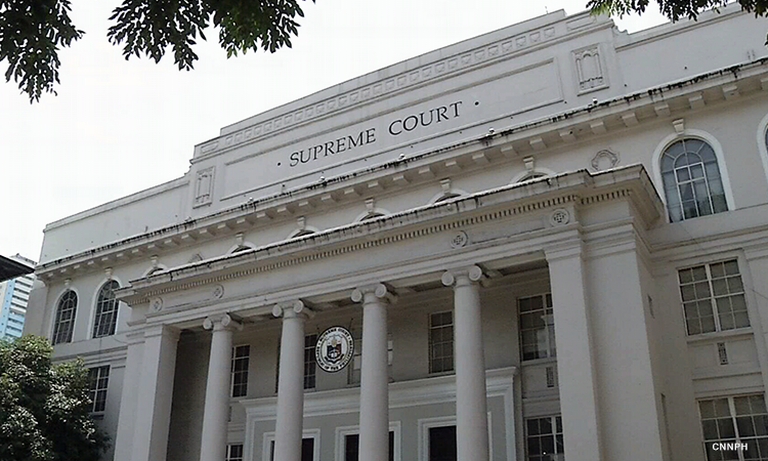


Metro Manila (CNN Philippines, February 25) — Legitimate children have the right to adopt their mother’s surname, the Supreme Court ruled, as it cited the State’s commitment to ensure gender equality.
Associate Justice Marvic Leonen made this clear in a 15-page decision he penned, which was uploaded on the SC website on Monday. The high tribunal reversed rulings of the Court of Appeals and the Regional Trial Court of Zamboanga City, which both denied a request for a change of surname.
The petitioner, Anacleto B. Alanis III, appealed to be allowed to legally use his mother’s maiden name “Ballaho,” saying it was what he has been using since childhood. The mother also single-handedly raised him and his siblings, the petitioner said.
According to the RTC, however, permitting him to drop his last name would be in violation of the Family Code and Civil Code, which provide that legitimate children shall principally use their fathers’ surnames.
But in its pronouncement, the SC stressed that the fundamental equality of women and men is guaranteed by no less than the Constitution. It pointed to Article 2 Section 14, which it said “implies the State’s positive duty to actively dismantle the existing patriarchy by addressing the culture that supports it.”
The high court further noted that the Philippines is a signatory to the Convention on the Elimination of All Forms of Discrimination Against Women.
“Non-discrimination against women is also an emerging customary norm,” it said. “Thus, the State has the duty to actively modify what is in its power to modify, to ensure that women are not discriminated.”
It also called the RTC’s application of the Article 364 of the Civil Code as incorrect, saying that while the provision states that legitimate children shall principally use the surname of the father, “principally” does not mean “exclusively.”
“Accordingly, where the text of a law allows for an interpretation that treats women and men more equally, that is the correct interpretation,” it said.