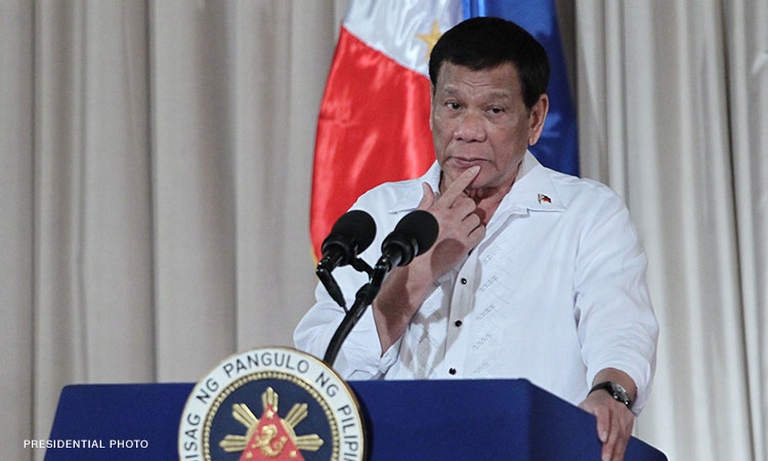


Metro Manila (CNN Philippines, February 16) — President Rodrigo Duterte has issued proclamations granting amnesty to members of rebel groups who have committed crimes to fight for their political beliefs.
Malacañang on Tuesday released separate proclamations for Moro Islamic Liberation Front, Moro National Liberation Front, Rebolusyonaryong Partido ng Manggagawa ng Pilipinas/Revolutionary Proletarian Army/Alex Boncayao Brigade, and the Communist Terrorist Group that were signed by Duterte on February 5.
Crimes covered by the amnesty are: rebellion or insurrection; conspiracy and proposal to commit rebellion or insurrection; disloyalty of public officers or employees; inciting to rebellion or insurrection’ sedition; conspiracy to commit sedition; inciting to sedition; illegal assembly and association; direct and indirect assault; resistance and disobedience to a person in authority; tumults and other disturbances of public order; unlawful use of means of publication and unlawful utterances; alarms and scandals; illegal possession of firearms, ammunition or explosives, provided that these crimes were committed in furtherance of, incident to, or in connection with the crimes of rebellion or insurrection; and those charged, detained, or convicted of common crimes but who can establish by substantial evidence that they have actually committed said crimes in pursuit of political beliefs.
However, those already charged under the Anti-Terrorism Act have been excluded. Crimes also not covered by amnesty are kidnap for ransom, massacre, rape, terrorism, and other crimes committed against chastity as defined in the Revised Penal Code, as well as those identified by the United Nations as crimes that can never be amnestied like genocide, crimes against humanity, war crimes, torture, enforced disappearances, and other human rights violations.
Amnesty must be filed with the National Amnesty Commission under oath within one year from the effectivity of the proclamation, or upon concurrence by a majority of members of Congress.
The NAC will also issue implementing rules and regulations not later than 60 days upon effectivity.